
Cannabis was already used for its psychoactive properties 2,500 years ago

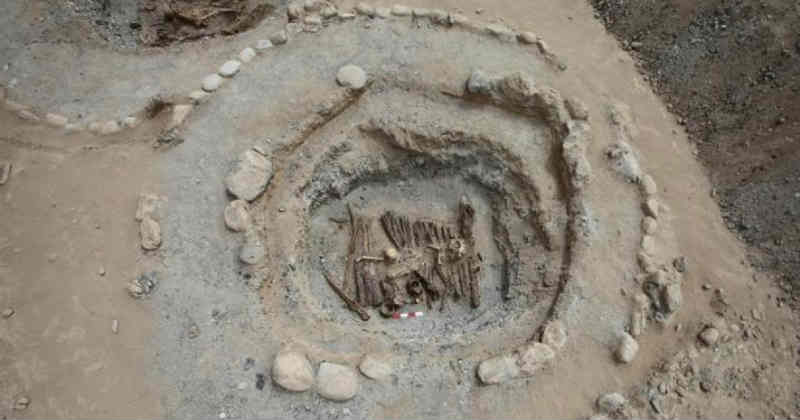
Cannabis has been used for thousands of years. Parts of the cannabis plant or traces of it have been found on several occasions at archaeological sites in Asia. However, it remains unclear when the plant was domesticated and whether it was used for its psychoactive properties. A New Discovery suggests that cannabis may well have been cultivated and used in funeral rites for its psychotropic properties 2,500 years ago.
Cannabis strains with high THC content?
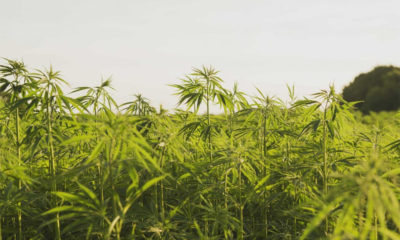
In 500 B.C., cannabis grew wild in many regions of Asia and was already being used for its fibers in the manufacture of rope and clothing. Scientists estimate that it is believed to have appeared 28 million years ago on the Tibetan Plateau. However, the THC content of wild varieties is generally low or, at the very least, balanced with their CBD content. The question, then, is: when was cannabis specifically cultivated to increase its THC production?
Archaeologists have uncovered artifacts in the Pamir Mountains in eastern Tajikistan, a region that served as a corridor connecting the various cultures of Eurasia (China, Tajikistan, Afghanistan) and as a trade route (the Silk Road). Ten wooden fire pits containing stones with burn marks were unearthed from eight graves in the Jirzankal cemetery on the Pamir Plateau. Chemical analyses revealed traces of cannabis with high levels of THC.
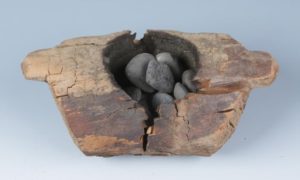
Scientists compared the cannabis biomarkers found in the fire pits with ancient cannabis (790–520 B.C.) discovered at the Jiayi Cemetery in Turpan during a previous excavation. That study showed that cannabinoids are well-preserved even though they degrade over time. The main cannabinoid detected at Jirzankal is CBN; this is the molecule into which THC breaks down when it oxidizes due to exposure to air, light, and heat. However, no traces of CBD or its degradation products were detected.
This discovery suggests that the strain in question contained much more THC than CBD and that it may have been artificially created—through selection and hybridization—precisely for its psychoactive properties. That said, scientists note that wild cannabis could have had a high THC content due to specific climatic conditions—a phenomenon known as genetic plasticity in plants. Nevertheless, this cannabis would have been specifically sought after for its psychoactive properties.
Cannabis at the Center of a Ritual
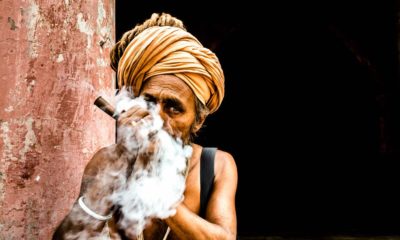
The discovery of nearly intact dried cannabis, dating from 681 B.C., found in the Yanghai tombs had already suggested a possible therapeutic or ritual use of high-THC cannabis in prehistoric China. However, there was no evidence that it was smoked. The presence of a wooden bowl used as a mortar suggested that it was instead crushed and then ingested. In contrast, in The Stories Herodotus (480–425 B.C.), the «Father of History» mentions how the peoples of the Caspian steppes smoked cannabis by burning it in a bowl with hot stones as part of a purification ritual following funerals
The presence of cannabis traces in the fire pits does indeed suggest that the cannabis was intentionally burned after being placed on the hot stones. The absence of seeds, meanwhile, suggests that they were removed, either because they lacked the desired properties or because they could have been used to grow other plants. However, unlike Herodotus’ accounts, it appears that cannabis was an integral part of the funeral rite here. Researchers suggest that it may have served as a means of communicating with the divine or the spirits of the deceased.
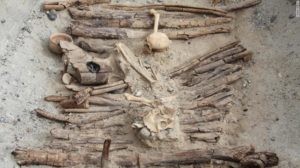
Analysis of the exhumed human bones also revealed perforations in some of the skulls. Researchers believe these may be evidence of human sacrifices. Tools were also found. Taken together, these findings paint a picture of a funeral rite involving «flames, rhythmic music, and hallucinogenic smoke intended to guide those present into an altered state of consciousness,» according to the archaeologists. Among the remains, 10 were those of migrants, and only one migrant grave contained a funeral pyre. This suggests that the ritual was likely a local custom.
In any case, according to archaeologists, it seems that cannabis use for its psychoactive properties is believed to have originated in Central Asia, whereas in East Asia, cannabis was primarily cultivated for its seeds—used in food and oil production—or for its fibers, which were used in textiles and rope. The use of psychoactive cannabis is believed to have subsequently spread along the trade routes crossing Asia.
«Our study suggests that knowledge of smoked cannabis and cannabis strains that produce high levels of cannabinoids [particularly THC] was part of the cultural traditions that were passed down along these trade routes,», explains Robert Spengler, the study’s lead archaeobotanist. «Modern perspectives on cannabis vary across cultures, but it is clear that human use of this plant—whether medicinal, ritual, or recreational—dates back millennia.».















CBD is said to promote athletic recovery, without improving performance

294 cannabis clubs in Chile: a booming movement with uneven distribution

Chronic Sciatica: New York Approves First Clinical Trial of a THC-Based Medication

United States: The DEA is accelerating the integration of medical cannabis at the federal level

Florida is nearing one million patients using medical cannabis

Uruguay Revives Its Plan to Allow Tourists to Legally Access Cannabis

In Brazil, researchers are developing an innovative CBD eye drop

Autism: Medical Cannabis Is Linked to Reduced Anxiety

The $28 billion U.S. hemp market remains under threat

Jamaica Eases Small Farmers' Access to the Cannabis Market
-
 Business6 days ago
The legal cannabis market in New York exceeds 4 billion $ in revenue
-

 Cannabis in France2 weeks ago
Which countries legalized medical cannabis before France?
-
Business2 weeks ago
South Korea is preparing to begin local production of medical cannabis to meet rising demand
-
Cannabis in the Netherlands4 weeks ago
One year after the launch of the Dutch cannabis experiment, the first trends are emerging
-
Cannabis in Thailand2 weeks ago
From the boom in dispensaries to a purely medical approach: Thailand is revising its cannabis policy
-
Cannabis in France4 weeks ago
French medical cannabis remains stalled at the Ministry of Health
-
Cannabis in Argentina3 weeks ago
Argentina Opens Its Market to Hemp Flowers Containing 1% of THC
-
Cannabis and driving2 weeks ago
Medical Cannabis and Driving: New South Wales Ends Automatic Penalties for THC















You must be logged in to post a comment Login