The «typical» cannabis consumer? There is none, according to an American report

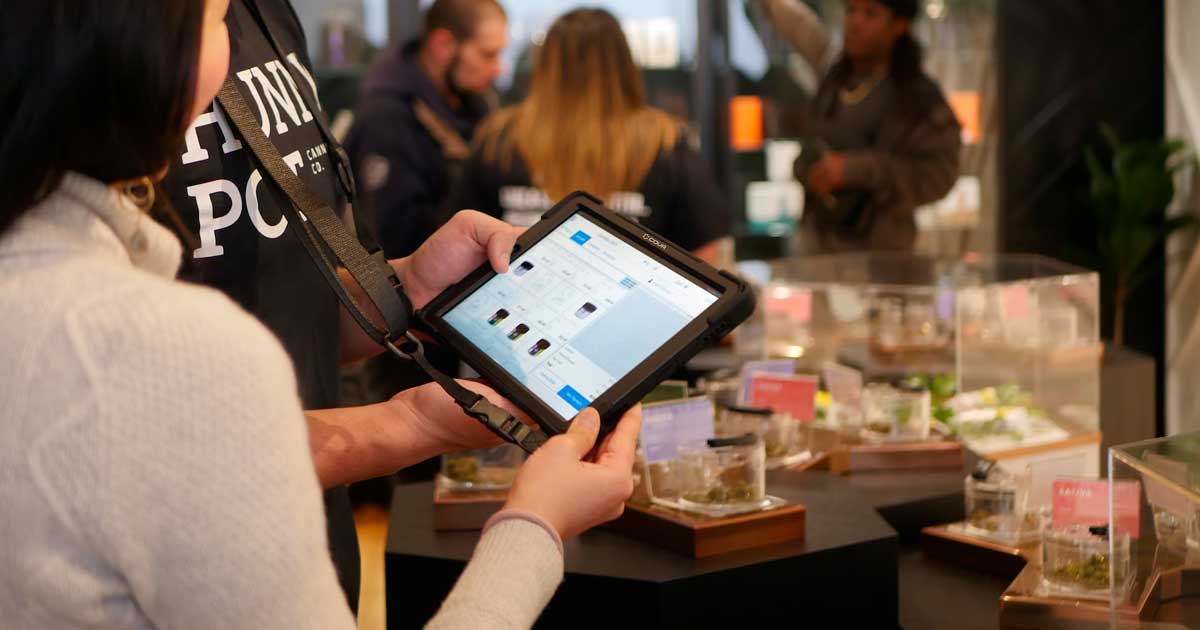
Cannabis users in the U.S. cover a wide demographic spectrum, but almost all are looking for a way to disconnect, according to a new report.
In February 2023, researchers at New Frontier Data surveyed over 5,500 people about their cannabis use. The results show that while cannabis users cover a wide range of backgrounds, economic brackets and political positions, many are active and almost all are looking for something to help them relax.
According to the report, 42% of adult participants said they had used cannabis in the past and would probably use it again, with 37% describing themselves as «current users».
Of these, 37 % said they had increased their use in the past year, with over a third consuming cannabis every other day. Although more than half of all respondents live in a State where adult-use cannabis is legal, The authors indicate that consumption frequency does not vary significantly according to market type.
Demographics are almost evenly split between men (54 %) and women (46 %), but the majority identify as white (63%), followed by Hispanic/Latino (14%) and Black (14%).
Only 10 % of those surveyed were aged between 18 and 24, with 25-44 year olds accounting for just under half (47 %). Some 18 % were aged 45-54, 15 % 55-64 and 10 % over 65.
The majority of consumers were working people, most earning between $25 and $75,000, and 38% had a bachelor's degree or higher. 38% have children under 18.
When asked about their political orientation, 36 % describe themselves as «liberal» and 26 % as «conservative».
Reasons for cannabis use
The line between medical and recreational use is blurred. Most of those surveyed indicated that they used cannabis to achieve a «specific goal», with 83% of them stating that they used it to relax, combat anxiety and sleep.
While most of those surveyed reported using cannabis «for recreational purposes», over half indicated that their use was both medicinal and recreational, with chronic pain being the most common indication, followed closely by anxiety, depression and insomnia.
Three quarters of declared «medical users» were treating a specific illness diagnosed by a doctor. Almost all (94%) reported that their condition had improved since they started using cannabis.
A significant proportion of non-consumers also said they would be willing to try cannabis if they fell ill with a condition that could be relieved by cannabis.
How do people use cannabis?
Joints are the most common method of consumption, followed by edibles.
Even in states where adult-use cannabis is legal, access to a wide range of products is limited. Less than half of consumers had access to products other than flower, pre-rolled and edibles.
THC potency and product effect are the attributes that consumers consider most relevant when choosing a product.
Among flower consumers, 77 % said variety was important and 47 % placed importance on minor cannabinoid and terpene profiles.
Where do consumers get their cannabis?
While just under half of those surveyed (43%) buy their cannabis from a dispensary, many still buy from friends or family, 15% have it delivered and 10% get it from a dealer.
Only 2% of those surveyed claim to grow their own cannabis at home.
Cannabis users need more options
While the report indicates a strong position and potential growth for the cannabis industry, the report's authors argue that producers and regulators must do more to meet consumer needs.
«The demographics of cannabis users are diverse, with users spread across age groups, genders, economic brackets and political affiliations.», says the report.
«The majority of cannabis consumers use the product for both medical and recreational purposes. This highlights the need to develop products focused on specific effects, such as increased energy or pain relief, and to understand that a consumer may seek several distinct effects in different contexts.»
The authors add: «Access to forms of cannabis other than flower and edibles remains limited for many consumers, even in states where use is restricted to adults. As such, regulators should ensure that a wider variety of cannabis products is made available to consumers, and existing operators who have focused primarily on flowers and edibles should expand their product offering to reach new consumers, while providing existing consumers with additional product options.»






















Dr. Pascal Douek, a tireless advocate for medical cannabis in France, has died

Kentucky now has 26 medical cannabis dispensaries

«Vincy Gold»: Humboldt Seed Company on the Hunt for Saint Vincent Sativas

Cronos Completes the Acquisition of CanAdelaar for 57.5 million euros

Cannabis with a "bloody" twist: Discover Sensi True Blood and Sensi Sangria, the two new strains from Sensi Seeds

Hemp: The Council of the EU Takes a Stand on New Production and Marketing Rules

Missouri's legal cannabis market accounts for 93 % of consumer spending

THC Gummies: How to Read a Certificate of Analysis Before Buying

British patients now have access to THCV-rich cannabis flowers

Spain: Medical Cannabis Is Coming to About 50 Hospitals
-
 Business3 weeks ago
The legal cannabis market in New York exceeds 4 billion $ in revenue
-
Cannabis in France2 weeks ago
France already has 3,000 cannabis retail outlets. None of them are legal.
-
Cannabis in the U.S.2 weeks ago
A DEA report confirms that there are no fatal cannabis overdoses
-
Cannabis in France4 weeks ago
France’s Drug Policy Chief Defends Cannabis Prohibition... and Runs Into the Facts
-
Studies on cannabis2 weeks ago
Cannabis Oil and Endometriosis: A Promising Study for Pain Relief
-
Business2 weeks ago
Tilray is accelerating its operations in Europe thanks to a license in Portugal
-
CBD3 weeks ago
In Brazil, researchers are developing an innovative CBD eye drop
-
Cannabis in France2 weeks ago
CBD in France: Traceability, Retail Stores, THC and Driving… What the New Bill Proposes















You must be logged in to post a comment Login