Study: cannabinoids effective against colon cancer

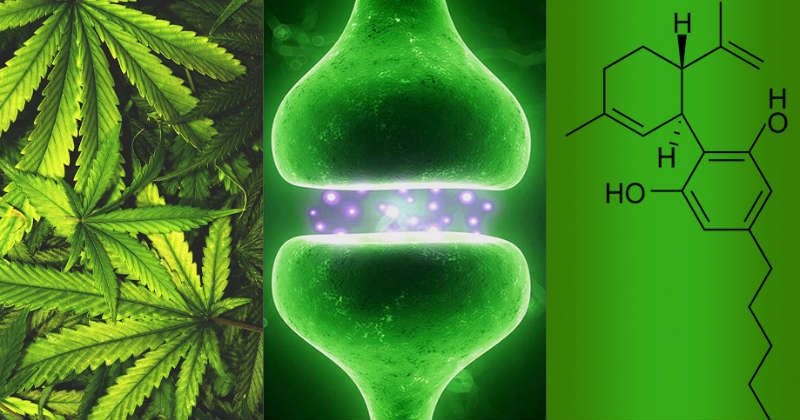
Colon cancer is the third most common cancer and the fourth most deadly worldwide. A recent study shows that purified cannabinoids inhibit the proliferation and metastasis of cancer cells.
There are many many different types of colon cancer They are generally induced by a series of molecular changes that promote the formation of polyps that can degenerate into cancer. Adenomatous polyposis lesions are present in 10% of cases, and are a sign of precancerous formation. The study demonstrated an effect of certain cannabinoids on polypoid and adenomatous cells.
Study methods
The method used consists in extracting molecules from the plant and then studying their respective effects on the body's cells, as well as the potential effect of their synergy. The molecular segments selected were called F7 (segment containing the’tetrahydrocannabinolic acid THCA) and F3 (segment containing the’cannabigerolic acid CBGA).
These two molecules are the precursors of cannabigerol (CBG) and THC, the latter are obtained from CBGA and THCA by decarboxylation, which consists in detaching a carbon atom through the action of heat. This is how cannabis becomes psychoactive when smoked or vaporized, but not when ingested.
Results
The study shows the (cyto)toxic activity of these segments towards colon cancer cells, but also shows that they slow down the activity of healthy cells. The combined action of F7+F3, however, has an effect on the intra- and extra-cellular signals that control cell behavior and are therefore central to cancer development.
The signal produced by the Wnt family of glycoproteins is at the root of processes such as cell proliferation and multiplication, oncogenesis, colon cancer and melanoma. 90% colorectal cancers are produced by the activation of the signal that leads to the accumulation of the β-catenin protein, which travels to the nucleus of the cell to trigger the rewriting of its genes, enabling it to reproduce ad infinitum and form tumors. Frizzled receptors are the major receptors of the Wnt signal, and blocking them is one of the main aims of anti-cancer treatments. Frizzled class 1 receptor activity has been shown to be reduced by the combined action of F7+F3.
The F7+F3 combination also triggers the action of certain genes or proteins that promote apoptosis (programmed death) of carcinogenic cells, such as the p53 gene or the PUMA protein. It also prevents the action of certain cytokines, liquid substances synthesized in immune system cells, which in some cases help the migration of carcinogenic cells and contribute to the activation of the WNT signal. By altering the action of the cytokine TNF-α, F7+F3 may be able to prevent cancers linked to its action. The combination has also been shown to be effective against adenomatous cells, with less toxicity on healthy cells.
In short, these molecules and their combination could prove highly effective in the prevention and control of cancers, as they significantly inhibit their activity. Their synergy could also have anti-cancer therapeutic virtues, as it plays a key role in the prevention of cancer. a role in cancer cell apoptosis and gene expression.
Limits and scope of the study
However, the researchers point out that the results of the study may differ in one experiment from those of another. in vivo. Indeed, in such experiments, the synergy observed is essentially additive, i.e. the effects accumulate without interacting. However, a combined treatment could still be an improvement.
What's more, use of the unrefined plant could already induce a potential synergy and prove more effective than isolated components. The researchers recommend further studies into the interactions of the plant's molecules.
A growing number of studies have shown that certain cannabinoids can prevent the proliferation, metastasis and spread of cancer. induce cell apoptosis many cancers (breast, lung, prostate, skin, intestinal...) by altering intercellular signals, essential for cell survival and growth. Others have shown that certain terpenes alone had anti-cancer properties.












Medical Cannabis in Germany: THC Prices Vary by a Factor of 12

France already has 3,000 cannabis retail outlets. None of them are legal.

Morocco's exports of legal cannabis have expanded to 15 countries

Aurora Cannabis Doubles Its Production Capacity in Germany

Tilray is accelerating its operations in Europe thanks to a license in Portugal

Boston will host the 10th annual State of the Cannabis Industry Conference on October 26

A DEA report confirms that there are no fatal cannabis overdoses

A British patient is challenging the NHS's refusal to reimburse medical cannabis

October 2026 CBD Highlights: 10 Strains and Hash to Discover from 5 French Producers

CBD in France: Traceability, Retail Stores, THC and Driving… What the New Bill Proposes
-
 Business2 weeks ago
The legal cannabis market in New York exceeds 4 billion $ in revenue
-

 Cannabis in France3 weeks ago
Which countries legalized medical cannabis before France?
-
Business3 weeks ago
South Korea is preparing to begin local production of medical cannabis to meet rising demand
-
Cannabis in Thailand3 weeks ago
From the boom in dispensaries to a purely medical approach: Thailand is revising its cannabis policy
-
Cannabis and driving3 weeks ago
Medical Cannabis and Driving: New South Wales Ends Automatic Penalties for THC
-
Cannabis in Argentina4 weeks ago
Argentina Opens Its Market to Hemp Flowers Containing 1% of THC
-
Autism3 weeks ago
Autism and Cannabis: Results from the First Placebo-Controlled Trial of NTI164
-
Cannabis in France2 weeks ago
France’s Drug Policy Chief Defends Cannabis Prohibition... and Runs Into the Facts

















You must be logged in to post a comment Login