Canada: Amerindians want to sell cannabis without government approval

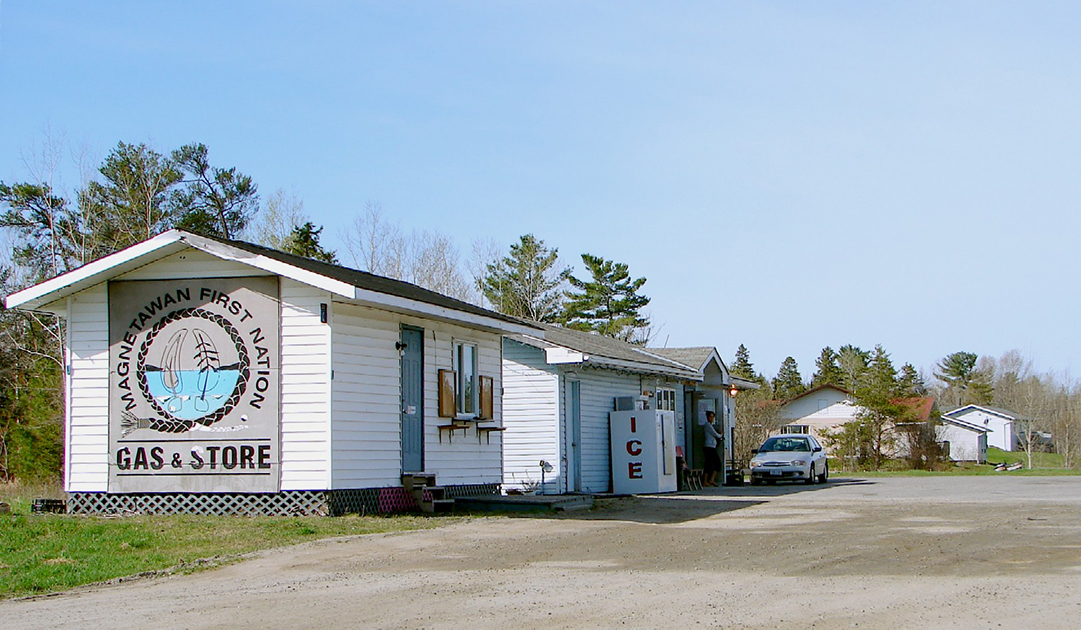
They invoke the «traditional pharmacopoeia» or the primacy of Aboriginal law over Canadian law. Several members of «First Nations» tribes, as Canada calls them, are defying the government. For several months now, they have been opening cannabis stores without having obtained a license, which is required to sell the plant.
«Here, the province of Saskatchewan no longer exists».», says Chief Ira McArthur, with Radio-Canada. He is the head of the Pheasant Rump Nakota. This tribe of around a hundred people lives on an Amerindian reserve in Saskatchewan, a rural province in central Canada. On his 5,500-hectare territory, he believes there is no longer any provincial or federal law. Native law takes precedence. This allows him to sell cannabis without any government stamp of approval.
And it's not the only one. A little further north, the tribes of Peepeekisis (700 people) and Muscowpetung (500 inhabitants) are doing the same. The latter has even published a law called Muscowpetung First Nations Cannabis Act, available on its website. In particular, it authorizes the opening of cannabis stores to those who have obtained a license from the Council, made up of tribal chiefs.
Native American income «considerably lower»
A little further west, in the province of British Columbia, another Native American is going one step further. Cory Brewer has opened a cannabis store outside his community's territory. To do so, he relies on the weight of tradition. This member of the Syilx nation relies in particular on the United Nations Declaration on the Rights of Indigenous Peoples, 2007, which stipulates that : « indigenous peoples have the right to their traditional pharmacopoeia and the right to preserve their medical practices».». That includes cannabis, for Cory Brewer.
For specialized lawyers, interviewed by Radio-Canada, This law applies to groups, not individuals. Moreover, even though it has come into force, Canada has not voted for the United Nations Declaration on the Rights of Indigenous Peoples. Neither have Australia or the United States. What these three countries have in common is the presence of peoples who were colonized and are now demanding greater recognition of their rights.
In Canada, in particular, the situation of the «First Nations» is very bad. An article by researchers published in the prestigious Canadian Encyclopedia even talks «of political and economic marginalization».» of these Amerindians. In particular, they suffer from «The unemployment rate is twice that of non-Aboriginal people. Consequence: «the median income of Aboriginals (18,962 $) is considerably lower than that of non-Aboriginals (27,097 $)». The four authors do, however, note one positive aspect: «aboriginal entrepreneurship is on the rise».». Including in the cannabis sector.


















JIHE 2026: Japan’s Largest Trade Show Dedicated to Hemp and CBD Returns to Tokyo with More Than 100 Industry Players
New Caledonia: The Courts Clear the Way for the Return of CBD

The Brazilian medical cannabis market continues to grow

Morocco: Three Cannabis-Based Medications Approved for the Treatment of Epilepsy

Canopy Growth Receives New EU-GMP Certification to Strengthen Its Presence in Europe

Three years after legalizing medical cannabis, Albania continues to establish regulations for it

The first plant-based medical THC spray arrives in the United Kingdom

Medical Cannabis in Germany: THC Prices Vary by a Factor of 12

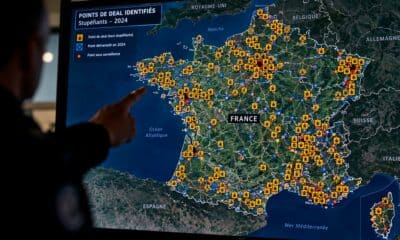
France already has 3,000 cannabis retail outlets. None of them are legal.

Morocco's exports of legal cannabis have expanded to 15 countries
-
 Business2 weeks ago
The legal cannabis market in New York exceeds 4 billion $ in revenue
-

 Cannabis in France4 weeks ago
Which countries legalized medical cannabis before France?
-
Business4 weeks ago
South Korea is preparing to begin local production of medical cannabis to meet rising demand
-
Cannabis in France4 days ago
France already has 3,000 cannabis retail outlets. None of them are legal.
-
Cannabis in Thailand4 weeks ago
From the boom in dispensaries to a purely medical approach: Thailand is revising its cannabis policy
-
Cannabis in the U.S.5 days ago
A DEA report confirms that there are no fatal cannabis overdoses
-
Cannabis and driving3 weeks ago
Medical Cannabis and Driving: New South Wales Ends Automatic Penalties for THC
-
Cannabis in France3 weeks ago
France’s Drug Policy Chief Defends Cannabis Prohibition... and Runs Into the Facts















You must be logged in to post a comment Login