

The French Supreme Court offers CBD stores some respite

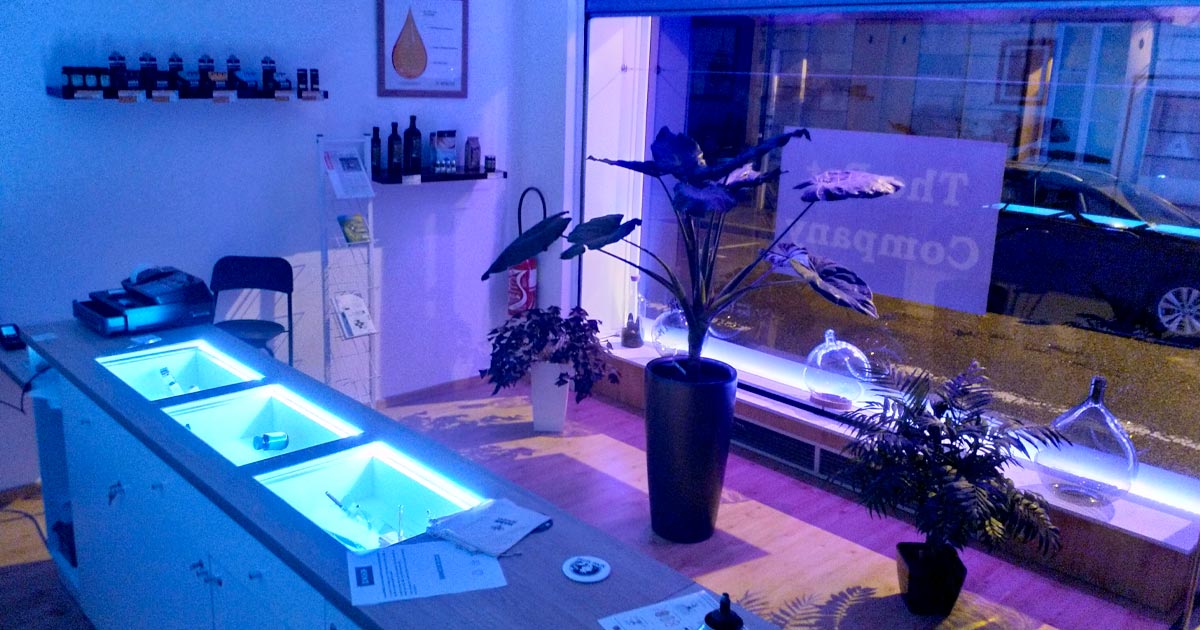
The decision was eagerly awaited despite its limited scope. In a ruling handed down yesterday, June 15, the Court of Cassation ruled that CBD stores cannot be shut down without first demonstrating that they have violated the law.
So far, the financial strangulation strategy initiated by the Mildeca's position in 2018 then currently at Matignon This involves raids, the automatic closure of the store, the seizure of inventory, and the freezing of assets—a strategy typically reserved for drug cases.
In the case heard by the Court, The Pot Company, a CBD shop in Dijon, was sued for selling CBD products «some of which tested positive» for THC. It was not the first shop in the city to have been «raided,», the prosecutor in Dijon applying oneself with particular diligence the dispatch sent to French prosecutors by the Directorate of Criminal Affairs and Pardons (DACG).
According to Yann Bisiou, an associate professor of private law and criminal justice and an expert in drug law, this is a »good decision. It’s smart. We couldn’t have asked for more from a procedural ruling.»
The Court had postponed its ruling pending the Kanavape decision, and «hoping that the government will take a stance,» says Yann Bisiou. «She has now found a way to avoid ruling on the merits of the case and is leaving it up to the government to draft regulations.».
However, the Court did not take into account the Kanavape ruling in its reasoning. It simply notes that under French law, CBD can be either legal or illegal. And that the presence of THC is not sufficient to classify a substance as a narcotic. The ruling does not concern hemp flowers, even though the reasoning could be extended to this type of product. Above all, it «encourages hypocrisy: the less shops say about their products, the less risk they run,» notes Yann Bisiou.
Determining the legality of a CBD product essentially involves tracing it back to its source, which is technically and scientifically complex—even more so when there are no regulations in place to govern the production or importation of CBD-based products.
The decision ultimately serves to protect CBD stores. «We’re returning to a situation of legality. In principle, CBD isn’t necessarily a narcotic. Before exceptional procedures can be applied, it must first be proven that it is. The strategy of economic strangulation has fallen through,» concludes Yann Bisiou.
In another case, the Court of Cassation will issue its ruling on June 23. That ruling will directly address the legal status of hemp flowers.






















The «cannabis» fine raised to 500 euros under the RIPOST Act

Sacha Baron Cohen Brings Ali G Back to Life During a Surprise Appearance at Wimbledon

Botswana Paves the Way for Commercial Hemp Cultivation

The First Authorized Medical Cannabis Cultivation in the Canary Islands

Germany Ends Public Health Insurance Coverage for Medical Cannabis Flowers

Cannabis Legalization in Pennsylvania Once Again on Hold

Democratic senators are reviving a bill to legalize cannabis at the federal level in the United States

A THC:CBD oil shows promising results in reducing agitation in people with dementia

San Francisco Allows «Cannabis Cafés»

Kenya Denies Rastafarians the Right to Use Cannabis
-

 Cannabis in Europe4 weeks ago
Bosnia and Herzegovina Continues to Roll Out Medical Cannabis Following Its Legalization
-
Cannabis in France4 weeks ago
France Submits the Long-Awaited Decree on the Reimbursement of Medical Cannabis to the Council of State
-
Cannabis in the U.S.4 weeks ago
The DEA Begins Hearings on the Federal Rescheduling of Cannabis
-
Business3 weeks ago
China Invests $10 Million in Medical Cannabis in Lebanon
-
Cannabis in Thailand4 weeks ago
Thailand Threatens Cannabis Shops with Severe Penalties
-
Cannabis in Australia2 weeks ago
South Australia is working to identify more water-efficient hemp varieties
-
Exchange4 weeks ago
Glass House will be the second U.S. cannabis company to list on the New York Stock Exchange
-
Cannabis in Africa2 weeks ago
Kenya Denies Rastafarians the Right to Use Cannabis














You must be logged in to post a comment Login