Black South African farmers struggle to penetrate booming cannabis market

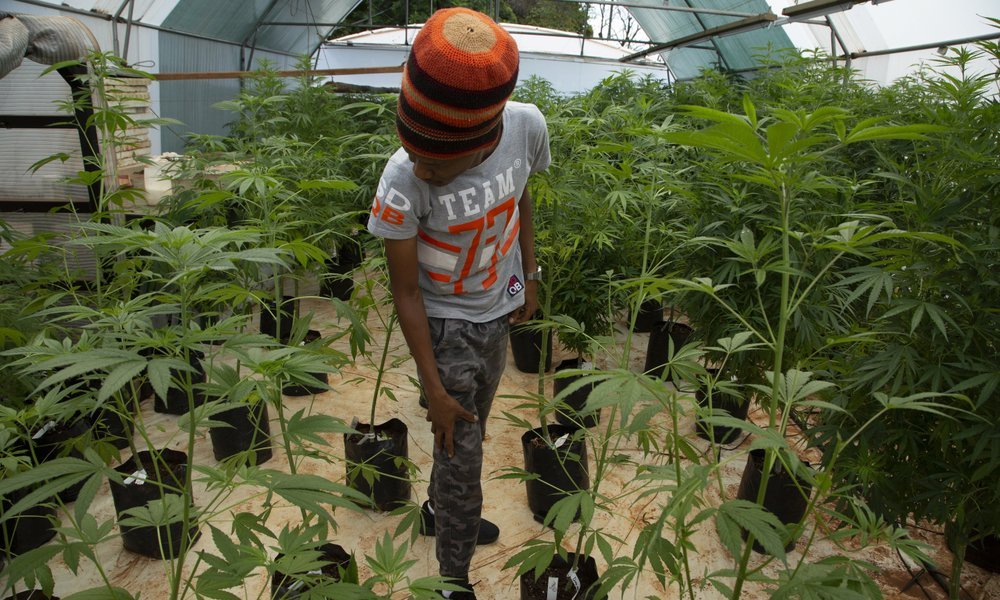
HENNOPS, South Africa (AP) - Piles of bright green cannabis plants, freshly harvested from nearby greenhouses, are expertly sorted on a laboratory table by workers wearing gloves and charlottes who cut the leaves and flowers and place them in bins for further processing.
Druid's Garden Farm in Hennops, about 32 km north of Johannesburg, is licensed to research and legally produce cannabis and other traditional medicines for sale in South Africa and on international markets.
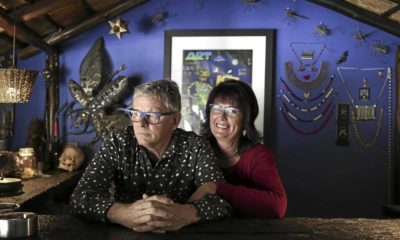
The farm's founder, Cian McClelland, said one of his goals was to help small black farmers enter the potentially lucrative cannabis in South Africa.
«One of the most important aspects of this industry for us is finding ways to uplift small farmers, particularly rural black farmers,» McClelland said. «We'd like to play an active role across the country, in partnership with Heritage Trust, to help... provide access to those markets.»
McClelland knows that rural black farmers, who grow cannabis traditionally but illegally, are now fighting to benefit from the country's relaxation of cannabis laws.
Following the decision of the Constitutional Court in 2018 decriminalize the personal use and cultivation of cannabis, South Africa's cannabis industry could be worth more than $23 billion by 2023, according to a recent report by Prohibition Partners.
However, some fear that black farmers who have worked for decades in what has been an illegal industry will miss out on the potential boom.
Many small-scale growers cannot afford to obtain the necessary licenses to cultivate cannabis for medical and research purposes.
Strict requirements include obtaining police permits, registering a specified plot size, erecting high-tech security fencing, obtaining irrigation systems and setting up agreements with foreign buyers, among others. The cost of setting up a legal cannabis farm is estimated at between $200,000 and $350,000, according to South African agricultural publication Landbouweekblad.
The new cannabis industry could soon be controlled by big pharma, squeezing out long-time producers, according to agricultural experts.
Some successful black farmers like Itumeleng Tau are working to train emerging farmers to grow and process cannabis to the standards required to obtain medicinal licenses.
«If a small farmer in rural areas has to have two hectares of land or one hectare, fully fenced, when he was farming without fencing and nobody was stealing from him, that's pretty impractical,» Tau explained.
Moleboheng Semela, a cannabis campaigner and General Secretary of the Cannabis Development Council, is among those fighting to obtain licenses for those who had previously grown and sold cannabis illegally.
His organization helps emerging farmers obtain permits to grow cannabis and produce medicines.
«We have these communities that were involved in the cannabis industry before the court decision, but we've seen our government focus more on (producers of) pharmaceuticals,» said Semela.
South Africa's cannabis industry is growing so fast that cannabis conventions are springing up across the country.
A recent cannabis expo held at Johannesburg's chic Sandton Convention Center attracted hundreds of cannabis activists, farmers, growers and exhibitors from around the world. The expo grew from 58 exhibitor booths last year to over 200 booths this year, according to expo director Silas Howard.
«It just shows how much and how fast this industry has grown,» said Howard.
South African President Cyril Ramaphosa recently touted the country's cannabis industry as an important sector in the country's fight against unemployment.
«We note that cannabis cultivation can play an important role in helping the country's poorest regions,» Ramaphosa told a community meeting in the rural town of Lusikisiki in the Eastern Cape province in September last year. The province is among the regions of South Africa where cannabis has been grown by many farmers for generations, as a means of livelihood despite laws prohibiting it. Last year, the Eastern Cape provincial government sent a delegation to Canada to study cannabis cultivation and product development.
However, South African law enforcement agencies remain determined to catch those who produce without a license. In November, police arrested three people for operating a laboratory hydroponics in Brits, outside the capital Pretoria, confiscating over 200,000$ of cannabis.
«The investigation is aimed at cracking down on the illegal proliferation of cannabis dispensaries across the country,» said police spokesman Captain Tlangelani Rikhotso.
At Druid's Garden, Cian McClelland, said the bar doesn't have to be so high for newcomers.
«Opting for a full pharmaceutical license is very expensive and out of reach for most people in rural areas,» he says. «So what we're advocating is to use our center as a training center, to bring people from rural communities and teach them low-tech models that are within their means so they can go back to their communities and implement them relatively easily.»
By Mogomotsi Magome















Medical Cannabis in Germany: THC Prices Vary by a Factor of 12

France already has 3,000 cannabis retail outlets. None of them are legal.

Morocco's exports of legal cannabis have expanded to 15 countries

Aurora Cannabis Doubles Its Production Capacity in Germany

Tilray is accelerating its operations in Europe thanks to a license in Portugal

Boston will host the 10th annual State of the Cannabis Industry Conference on October 26

A DEA report confirms that there are no fatal cannabis overdoses

A British patient is challenging the NHS's refusal to reimburse medical cannabis

October 2026 CBD Highlights: 10 Strains and Hash to Discover from 5 French Producers

CBD in France: Traceability, Retail Stores, THC and Driving… What the New Bill Proposes
-
 Business2 weeks ago
The legal cannabis market in New York exceeds 4 billion $ in revenue
-

 Cannabis in France3 weeks ago
Which countries legalized medical cannabis before France?
-
Business3 weeks ago
South Korea is preparing to begin local production of medical cannabis to meet rising demand
-
Cannabis in Thailand3 weeks ago
From the boom in dispensaries to a purely medical approach: Thailand is revising its cannabis policy
-
Cannabis and driving3 weeks ago
Medical Cannabis and Driving: New South Wales Ends Automatic Penalties for THC
-
Cannabis in Argentina4 weeks ago
Argentina Opens Its Market to Hemp Flowers Containing 1% of THC
-
Autism3 weeks ago
Autism and Cannabis: Results from the First Placebo-Controlled Trial of NTI164
-
Cannabis in France2 weeks ago
France’s Drug Policy Chief Defends Cannabis Prohibition... and Runs Into the Facts
















You must be logged in to post a comment Login