

5 years of legalized medical cannabis in Germany: what has been achieved?

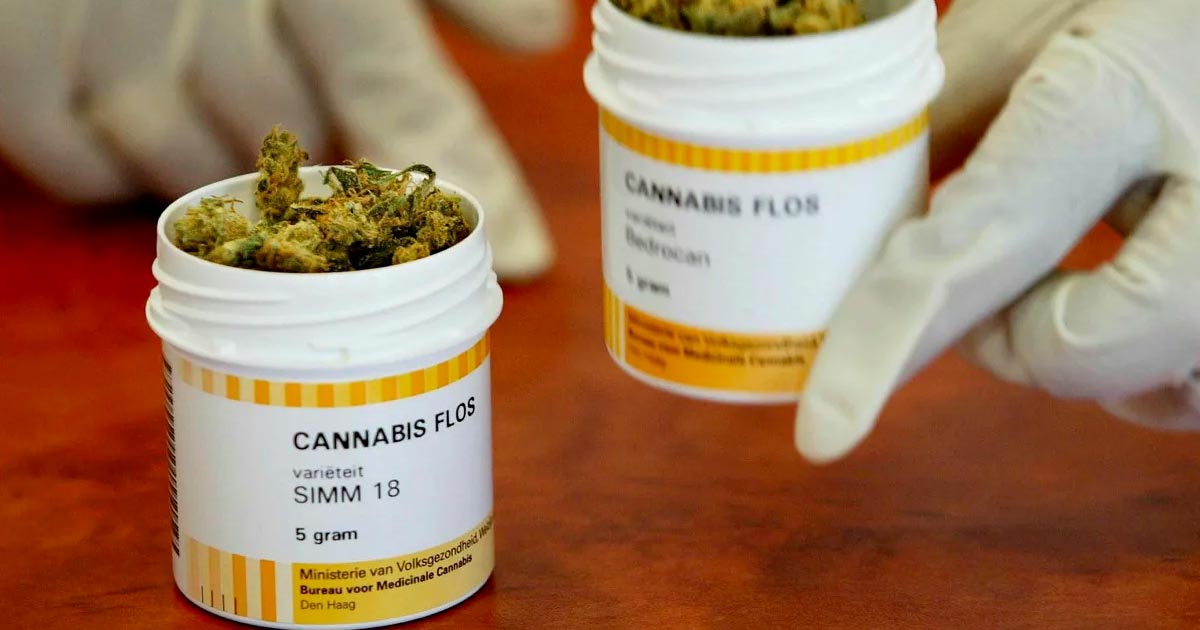
Five years ago, the Bundestag paved the way for prescription cannabis in Germany. Since then, doctors have been able to prescribe medical cannabis to patients suffering from serious illnesses and in the absence of any alternative therapy.
According to the latest estimates, some 100,000 patients are currently being treated with cannabis, 100 times more than before legalization, when 1,000 patients had an exemption from the Narcotic Control Act that allowed them to benefit from access to cannabis. Dutch medical cannabis.
The German system
With the changes made in march 2017 in accordance with the law on narcotics (BtMG) and the ordinance on the prescription of narcotics (BtMVV), cannabis flowers and extracts, as well as pharmaceutical preparations such as dronabinol, can be prescribed on a prescription dedicated to narcotics. at health insurance expense.
Patients with serious illnesses are entitled to medical cannabis. Doctors must obtain approval from the health insurance fund before starting treatment, which can only be refused in justified exceptional cases. Patients are entitled to a maximum of 100g of flowers for 30 days, or 1g of pure THC extract.
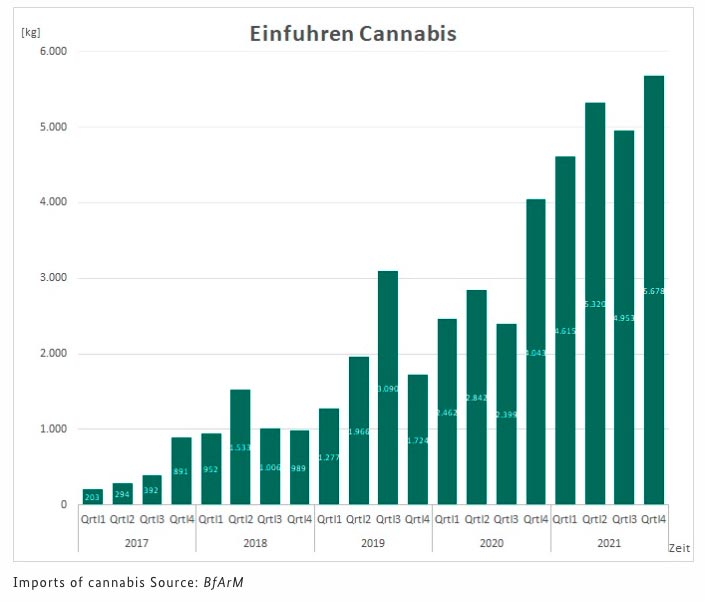
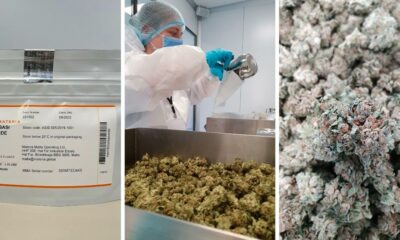
The country obtains its supplies almost exclusively from abroad. national production licenses who took their time to be awarded. Cannabis imports have thus risen from 75% between 2020 and 2021 to around 30 tonnes a year, mixing flowers and extracts.
Constraints to overcome
The German market is now Europe's largest medical cannabis market, while France awaits. In the space of 5 years, the range of medical cannabis on offer has expanded: there are now some 150 varieties and 60 different extracts available on the German market. In addition to the supply difficulties that on the import of non-negligible quantities of narcotics, patients still have difficulty accessing cannabis.
It's not always easy for doctors to manage medical cannabis. There is no single form of therapy for all patients, who require more individual follow-up. The training of healthcare professionals plays a key role in fine in the accessibility of medical cannabis. If German doctors have additional training in «special pain therapy» or are trained in «palliative medicine», they can now prescribe products more easily medical cannabis to their patients after a 20-hour training session and continuous learning.
Medical cannabis also weighs heavily on health insurance funds. Imported and often sold to pharmacies by wholesalers who drive up the final price of the drug, it is billed at nearly 3 times the price of medical cannabis in the Netherlands, This is a major financial burden for the health insurance companies that reimburse patients for the drug.
The future legalization of cannabis for adults in Germany open up access to medical cannabis or, on the contrary, create a shortage of available cannabis? See you in 5 years' time for the answer.




















Democratic senators are reviving a bill to legalize cannabis at the federal level in the United States

A THC:CBD oil shows promising results in reducing agitation in people with dementia

San Francisco Allows «Cannabis Cafés»

Kenya Denies Rastafarians the Right to Use Cannabis

German patients prefer medical cannabis with a high THC content

Curaleaf Is the First to Register Medical Cannabis Products in Spain

South Australia is working to identify more water-efficient hemp varieties

Massachusetts voters will vote in November on whether to repeal the legalization of cannabis

[Le trois-feuilles] The 2026 World Cup Provides a Global Showcase for Legal Cannabis

Wyoming Rejects the Reclassification of Cannabis
-

 Cannabis in France4 weeks ago
France Sets July as the Deadline for the Widespread Adoption of Medical Cannabis
-
Cannabis in Europe2 weeks ago
Bosnia and Herzegovina Continues to Roll Out Medical Cannabis Following Its Legalization
-
Cannabis in France2 weeks ago
France Submits the Long-Awaited Decree on the Reimbursement of Medical Cannabis to the Council of State
-
Cannabis in the U.S.2 weeks ago
The DEA Begins Hearings on the Federal Rescheduling of Cannabis
-
Cannabis in Ireland3 weeks ago
The Irish Parliament recommends decriminalizing all drugs
-
Business4 weeks ago
Sanity Group is expanding its presence in Switzerland through a distribution agreement with Astrasana
-
Cannabis in France4 weeks ago
Medical Cannabis in France: What the First Major Study Reveals About Its Actual Impact
-
Cannabis in Switzerland3 weeks ago
St. Gallen, Switzerland, Launches Its 8th Legal Cannabis Pilot Project















You must be logged in to post a comment Login