

Benoît Hamon on ONPC: between courage and nonsense

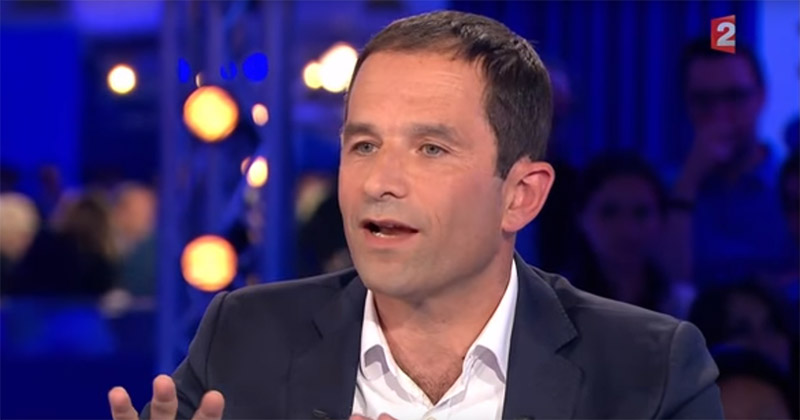
Benoît Hamon had already stated this in mid-August when he announced his candidacy for the Democratic primary. He reiterated it on the set of *On n’est pas couché* this weekend. He is in favor of the legalization of cannabis in France, with distribution managed and controlled by the government to combat «the underground economy and violence.».
Just like Daniel Vaillant At the end of his remarks, in which he reiterated his support for legalization, Benoît Hamon defended a position that will continue to be seen as courageous for some time to come in a France that remains prohibitionist. But his remarks left us in limbo for one major reason: when discussing a topic, it’s best to have a firm grasp of it, especially when the person addressing it risks being vilified by the entire political establishment.
While Benoît Hamon is comfortable answering the more conventional questions posed by Laurent Ruquier, Yann Moix, or Vanessa Burggraf, he is clearly less so when it comes to the issue of cannabis. His initial observation is spot on: France is the country with the strictest laws and the highest consumption. Good. But Benoît—we’ll take the liberty of addressing you informally here—here’s where you went wrong:
- THC isn't the «toxic substance» in cannabis. Maybe you meant intoxicating, not toxic. THC is indeed the active ingredient that «gets you high,» but it's also the one that heals, cancer, for example, and which can also treat many symptoms associated with serious illnesses.
- Cannabis is supposedly «legal in the Netherlands.» Not quite. Its sale is authorized and regulated by coffee shops—licensed businesses that are forced to source their supply from the black market, since the cultivation of recreational cannabis for commercial use is not legal. For citizens, possession is decriminalized up to 5 grams, and everyone is allowed to grow 5 plants.
- «22 U.S. states» are said to have addressed the issue. Almost. In fact, there are 25 states plus the District of Columbia, four of which have fully legalized cannabis. Five other states are also putting the measure to a vote the legalization of cannabis in early November, which would bring the number of citizens living in a U.S. state where cannabis is legal to 65 million—nearly the entire population of France.
- You briefly mention «real medical arguments,» which you clumsily pit against Yann Moix’s argument about relinquishing authority (we’ll come back to that in a moment 😉 ). That’s important, isn’t it? To realize that there’s a plant that Numerous scientific studies point to effective therapeutic uses, but whose use is now banned in France. You might then point out that France has authorized medical cannabis. We would then reply that Sativex, the only authorized cannabinoid-based medication, is still not on the market because the Ministry of Health is blocking its retail price (Ms. Touraine is asking for 201% of the price proposed by the distributor, which is already lower than in other European countries following initial negotiations), and that no other pharmaceutical company dares to offer its products for fear of getting caught up in numerous and costly procedures.
- Yann Moix tells you, «Legalization means giving up authority,» and you seem taken aback by this argument. It all depends on your point of view, but ours is that legalization is precisely about reclaiming the authority that the state has left in the hands of traffickers. And you say this in essence, but it deserved a clear and frank statement in response to Moix. Yann also talks about the product’s dangers. And it is precisely because cannabis use is not harmless that the state must take charge of it. As Sarkozy would say, Europe certainly legislates on the size of cucumbers, a far less dangerous product (it all depends on how it’s used, but still…).
- And then you end on a sour note: «We should decriminalize cannabis.» Yes. But that’s not all—as you said yourself, decriminalization doesn’t tackle trafficking.
So it really is you, Benoît—well done, you’re tackling a thorny issue. We don’t yet know if this is purely for political gain or if you truly believe in it, but that doesn’t matter. On the other hand, this is a topic that, in our view, requires a solid grasp of the subject matter to discuss it effectively, lest you be attacked by your opponents and ridiculed by those who are genuinely interested in the issue.
So, Benoît, next time you want to talk about cannabis on a TV show, give us a call—we’ll help you prepare (we’re serious).
Benoît Hamon's remarks on the legalization of cannabis in France on September 3, 2016, on France 2



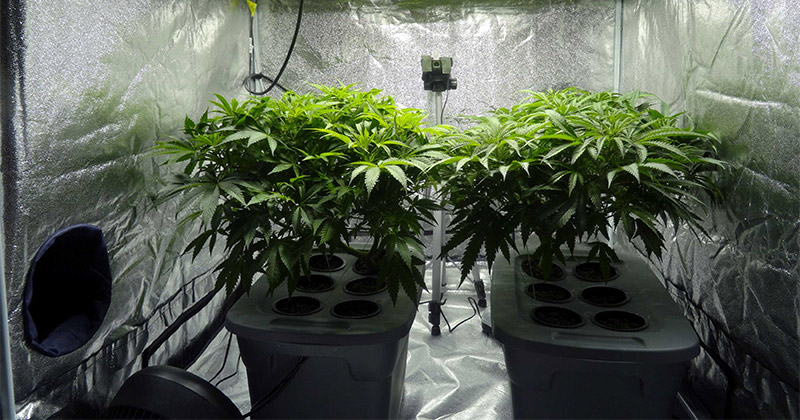
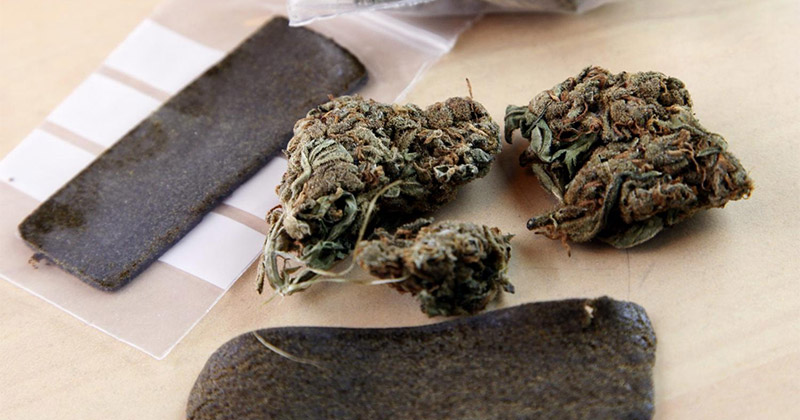
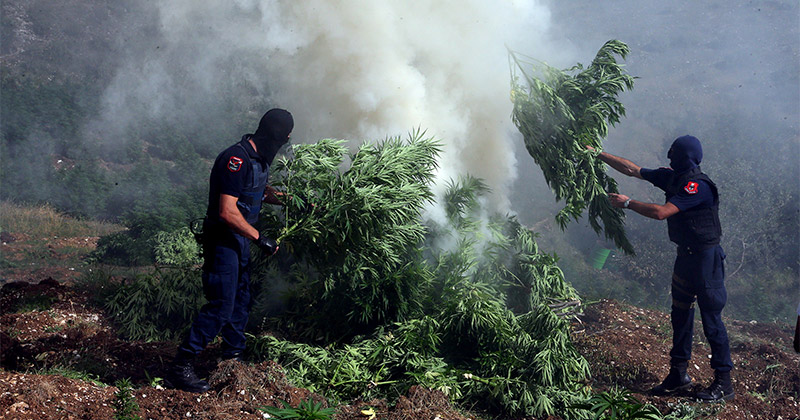



The «cannabis» fine raised to 500 euros under the RIPOST Act

Sacha Baron Cohen Brings Ali G Back to Life During a Surprise Appearance at Wimbledon

Botswana Paves the Way for Commercial Hemp Cultivation

The First Authorized Medical Cannabis Cultivation in the Canary Islands

Germany Ends Public Health Insurance Coverage for Medical Cannabis Flowers

Cannabis Legalization in Pennsylvania Once Again on Hold

Democratic senators are reviving a bill to legalize cannabis at the federal level in the United States

A THC:CBD oil shows promising results in reducing agitation in people with dementia

San Francisco Allows «Cannabis Cafés»

Kenya Denies Rastafarians the Right to Use Cannabis
-

 Cannabis in Europe4 weeks ago
Bosnia and Herzegovina Continues to Roll Out Medical Cannabis Following Its Legalization
-
Cannabis in France4 weeks ago
France Submits the Long-Awaited Decree on the Reimbursement of Medical Cannabis to the Council of State
-
Cannabis in the U.S.4 weeks ago
The DEA Begins Hearings on the Federal Rescheduling of Cannabis
-
Business3 weeks ago
China Invests $10 Million in Medical Cannabis in Lebanon
-
Cannabis in Thailand4 weeks ago
Thailand Threatens Cannabis Shops with Severe Penalties
-
Cannabis in Australia3 weeks ago
South Australia is working to identify more water-efficient hemp varieties
-
Exchange4 weeks ago
Glass House will be the second U.S. cannabis company to list on the New York Stock Exchange
-
Cannabis in Africa2 weeks ago
Kenya Denies Rastafarians the Right to Use Cannabis














Syl
September 7, 2016 at 1:15 p.m.
Send him an email to offer to brief him 😉