8 studies on the uses of medical cannabis published in 2016

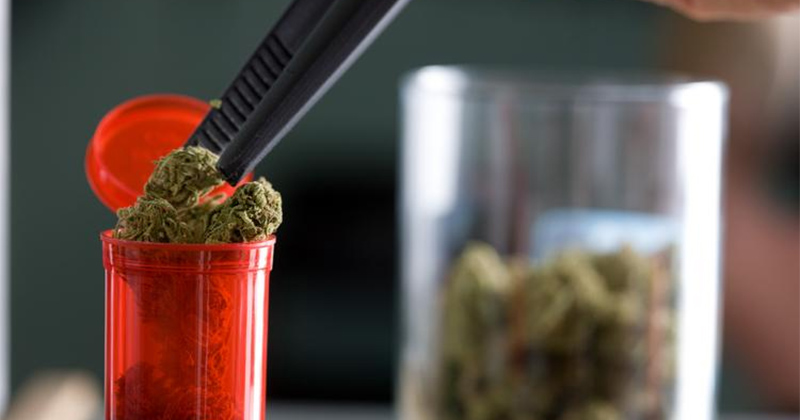
More and more countries are turning to the legalization of medical cannabis. 25 American states have already legalized its use, and the trend is being exported to Europe (Netherlands, Belgium, Spain, Germany, Italy, etc.), Australia and Israel. To better understand why health policies are now turning their attention to this plant that has been used for over 8,000 years, here are 8 studies published in 2016 on the therapeutic uses of cannabis.
Cannabis users die less often from heart attacks
This study was presented at a meeting of the American College of Cardiology in April. It was based on mortality rate of 3,800 cannabis users after a heart attack. The researchers found that the mortality rate was lower than the million similar cases of non-cannabis users in the United States. In addition, researchers in Colorado complement this study by reporting that fewer pacemakers are implanted in cannabis smokers.
The reason for this difference in rates is not known, and this trend remains to be verified over the long term.
Cannabis can help combat bipolar disorder
This study was published on June 6 by Massachusetts psychiatrists in the journal Plos one. The study found that bipolar cannabis users were better able to manage anger and chronic anxiety. Moreover, cannabis users did not suffer from cognitive impairment.
Cannabinoids can slow down osteoarthritis.
A study published in US National Institute of health proves that cannabis can slow the destruction of joint cartilage.
Cannabis makes you less aggressive than alcohol
We already told you about this study showing that consumers of cannabis were less aggressive than alcohol consumers.
The legalization of medical cannabis leads to less absenteeism at work.
Of the states that have legalized medical cannabis, the newspaper Health Economics is seeing a reduction in absenteeism. This is due to the sharp drop in absenteeism due to illness or pain.
CBD on track for epilepsy treatment
We also told you about these children with epilepsy who return to a more or less decent life after CBD treatment. Entire families are migrating to states where treatments are at the cutting edge of the field.
Cannabis does not affect IQ or school performance.
Teenagers who smoke cannabis have often been seen as future failures. But the journal of Psychopharmacology and Us National Institute of health contradict this assertion. However, students are apparently less focused during lessons.
Cannabinoids can slow cancer.
A study published in May by US national Institue of health invokes a promising future in the fight against cancer. While cannabis is already used to relieve pain and restore appetite, scientists suspect that cannabinoids have an action against the development of cancer cells, and have already had results pointing in this direction.










Medical Cannabis in Germany: THC Prices Vary by a Factor of 12

France already has 3,000 cannabis retail outlets. None of them are legal.

Morocco's exports of legal cannabis have expanded to 15 countries

Aurora Cannabis Doubles Its Production Capacity in Germany

Tilray is accelerating its operations in Europe thanks to a license in Portugal

Boston will host the 10th annual State of the Cannabis Industry Conference on October 26

A DEA report confirms that there are no fatal cannabis overdoses

A British patient is challenging the NHS's refusal to reimburse medical cannabis

October 2026 CBD Highlights: 10 Strains and Hash to Discover from 5 French Producers

CBD in France: Traceability, Retail Stores, THC and Driving… What the New Bill Proposes
-
 Business2 weeks ago
The legal cannabis market in New York exceeds 4 billion $ in revenue
-

 Cannabis in France3 weeks ago
Which countries legalized medical cannabis before France?
-
Business3 weeks ago
South Korea is preparing to begin local production of medical cannabis to meet rising demand
-
Cannabis in Thailand3 weeks ago
From the boom in dispensaries to a purely medical approach: Thailand is revising its cannabis policy
-
Cannabis and driving3 weeks ago
Medical Cannabis and Driving: New South Wales Ends Automatic Penalties for THC
-
Cannabis in Argentina4 weeks ago
Argentina Opens Its Market to Hemp Flowers Containing 1% of THC
-
Autism3 weeks ago
Autism and Cannabis: Results from the First Placebo-Controlled Trial of NTI164
-
Cannabis in France2 weeks ago
France’s Drug Policy Chief Defends Cannabis Prohibition... and Runs Into the Facts

















Gimenez Sagement
August 8, 2016 at 17 h 37 min
Colorado researchers complement this study by reporting that fewer pacemakers are implanted in cannabis smokers.
aren't there restrictions on transplants as well? .... If that's the case, we don't transplant a Marie Jouana smoker, so the figures say what we like to hear. Or maybe it's like foie gras, good for healthy arteries. .