
US government-grown weed looks like nothing

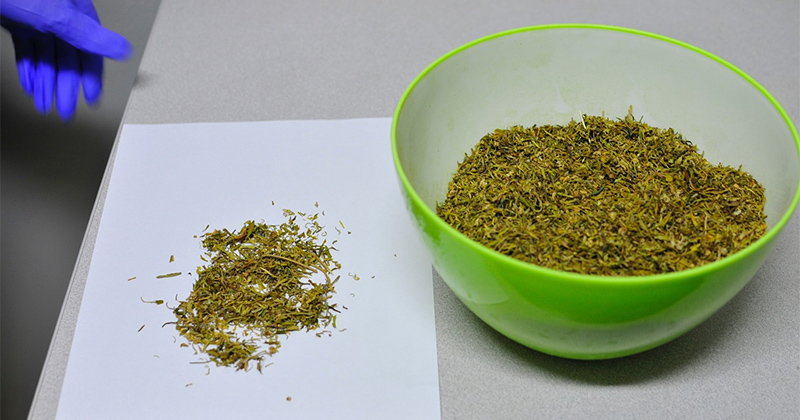
Just take 10 seconds to look at the photo above. If you’ve never seen cannabis before, it’s understandable if you don’t recognize it. This bowl of «weed» is actually the cannabis grown by the U.S. government for federal patients and scientific research.
Since the late 1960s, the U.S. government has required that cannabis used in scientific studies come from federal plantations. Scientists, however, need a product that resembles what people actually consume. But according to the Washington Post, government-produced weed doesn't resemble weed at all.
That, in fact, is what Sue Sisley, a scientist who wants to conduct a study on the effectiveness of medical cannabis for war veterans suffering from post-traumatic stress disorder. While real weed is usually bushy and dark green, government-issued weed is stringy and very light in color. It’s also full of cannabis branches and stems, which cannabis enthusiasts don’t consume. «It doesn’t look like cannabis, it doesn’t smell like cannabis.» simply put, Sisley.
Jake Browne, a cannabis critic for TheCannabist, agrees. «In 20 years of using cannabis, I’ve never seen anything like this. People normally smoke the plant’s flowers, but here you can clearly see branches and leaves—parts of the plant that should be removed. Smoking this would be like eating an apple with the seeds and the stem it grew on still attached.»
All federal cannabis is grown at the University of Mississippi, under the supervision of the National Institute on Drug Abuse (NIDA). Last summer, the DEA had initiated a reform to allow other organizations to grow marijuana for scientific purposes. But so far, none have been approved.
The problem with this government-grown weed goes beyond its appearance. It’s supposed to contain 13% of THC, but Sue Sisley tested it at 8% instead, whereas commercial strains average around 15 to 20%, with some reaching 30%. It is therefore difficult for a researcher to replicate the effects of cannabis on the body using products that are completely different from those actually consumed. No Big Bud or White Widow in sight.
This weed also isn’t tested for pesticides or mold, even though most U.S. states that have legalized it already do so before putting weed on the market. In fact, the weed Sue Sisley received had mold levels that far exceeded the standards in states like Colorado and Washington.
NIDA readily acknowledges that there is definite interest within the scientific community in having access to a wider variety of cannabis. And it promises to soon offer strains with more than 13% of THC. Our take is, above all, that they’d be wise to hire a breeder and a grower!








U.S. Congress Comes to the Rescue of THC-Infused Beverages

New York Opens Its Farmers' Markets to Small-Scale Cannabis Producers

India Approves a Synthetic CBD Drug for Anxiety

Rwanda: A New License Revives the Country's Ambitions in Medical Cannabis

Curaleaf Announces a Takeover Bid for Aurora Cannabis

The EU Simplifies Regulations Governing Hemp Cultivation

A Nepalese province legalizes medical cannabis

Eight years after legalization, cannabis use in California has not increased

French Polynesia Is Finally Ready to Launch Its «Medical Cannabis» Pilot Program After Months of Delays

Quick Hit July 2026: What We Missed in Recent Weeks
-

 Business2 weeks ago
New York Opens Its Farmers' Markets to Small-Scale Cannabis Producers
-
Cannabis in France3 weeks ago
French Polynesia Is Finally Ready to Launch Its «Medical Cannabis» Pilot Program After Months of Delays
-
Cannabis in Nepal3 weeks ago
A Nepalese province legalizes medical cannabis
-
Cannabis in California3 weeks ago
Eight years after legalization, cannabis use in California has not increased
-
Cannabis in India2 weeks ago
India Approves a Synthetic CBD Drug for Anxiety
-
Cannabis in Africa2 weeks ago
Rwanda: A New License Revives the Country's Ambitions in Medical Cannabis
-
Cannabis in Europe2 weeks ago
The EU Simplifies Regulations Governing Hemp Cultivation
-
Cannabis in Canada3 weeks ago
Quick Hit July 2026: What We Missed in Recent Weeks








You must be logged in to post a comment Login