
United Nations examines international cannabis laws

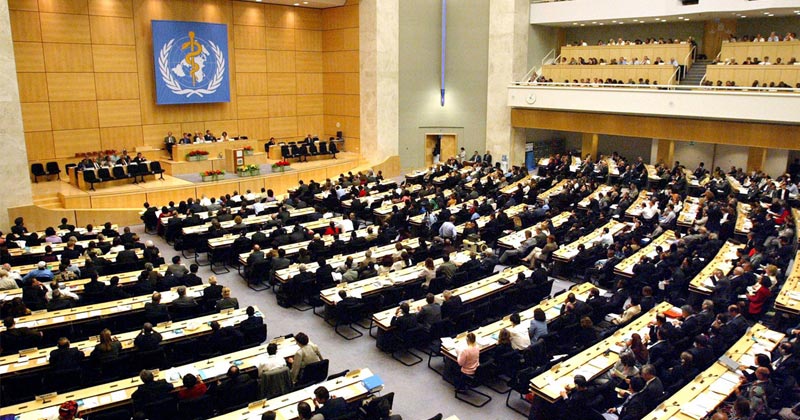
For the first time, a World Health Organization (WHO) committee is reviewing the status of cannabis under international law. The initial documents released contain several arguments in favor of the medical use of cannabis.
The committee's preliminary report, which is set to be officially released this week, could even influence international drug policy and the classification of cannabis in international treaties.
In addition to reaffirming its previous findings on CBD, considered safe and with proven therapeutic properties, the WHO focused on the entire plant to examine, in particular, cannabis tinctures and extracts, THC, and its isomers.
Preliminary Findings of the WHO Committee
In terms of risks, the The committee acknowledged that no one had died from a cannabis overdose and described it as a «relatively safe drug.».
The association between cannabis use and the risk of cardiovascular events «appears to be weak at best,» according to the committee. It also cites a «wealth of preclinical literature» showing that cannabinoids «reduce the proliferation of cancer cells» and inhibit «cancer cell migration and angiogenesis [the proliferation of blood vessels characteristic of malignant tumors and the development of metastases] in many types of cancer cells.».
As for the medical benefits, the committee a examined Several conditions treated with cannabis in countries or states where its medical use is legal: loss of appetite, chronic pain, epilepsy, neuropathic pain, opioid withdrawal, post-traumatic stress disorder, and sleep disorders.
A review of the scientific literature on the effectiveness of cannabis-based treatments for these conditions showed that cannabinoids are effective in reducing pain, promoting sleep, and improving motor function in people with Parkinson’s disease. The committee nevertheless noted a lack of clinical trials to support a decision on most of these conditions.
The last section of the preliminary exam focused on the epidemiology of cannabis. While acknowledging that cannabis «has therapeutic potential,» the committee notes that there are short- and long-term concerns about cannabis use «that could be relevant to public health.».
According to the commission, the most serious effects include «cognitive effects, including impaired short-term memory, impaired judgment, and impaired motor coordination, increasing the risk of injury» and «impaired judgment,» which «may also lead to problematic decisions regarding the increased risk of sexually transmitted diseases.».
The committee determined that regular and heavy cannabis use was associated with «brain disorders (particularly in adolescents), academic performance issues, and partially long-lasting cognitive impairments, with an increased likelihood of dropping out of school » and »an increased risk of chronic psychotic disorders (including schizophrenia) among individuals predisposed to such disorders.»
If the preliminary review is approved by the WHO, further studies will be conducted by the WHO before a final recommendation on the status of cannabis is submitted to United Nations Secretary-General Antonio Gutteres, who had pursued a policy of decriminalization of all drugs in Portugal when he was the country's prime minister.







CBD is said to promote athletic recovery, without improving performance

294 cannabis clubs in Chile: a booming movement with uneven distribution

Chronic Sciatica: New York Approves First Clinical Trial of a THC-Based Medication

United States: The DEA is accelerating the integration of medical cannabis at the federal level

Florida is nearing one million patients using medical cannabis

Uruguay Revives Its Plan to Allow Tourists to Legally Access Cannabis

In Brazil, researchers are developing an innovative CBD eye drop

Autism: Medical Cannabis Is Linked to Reduced Anxiety

The $28 billion U.S. hemp market remains under threat

Jamaica Eases Small Farmers' Access to the Cannabis Market
-
 Business5 days ago
The legal cannabis market in New York exceeds 4 billion $ in revenue
-
Cannabis and driving4 weeks ago
Cannabis and CBD: French Drivers Can Now Lose Their License Even Without a Positive Test Result
-

 Cannabis in France2 weeks ago
Which countries legalized medical cannabis before France?
-
Business2 weeks ago
South Korea is preparing to begin local production of medical cannabis to meet rising demand
-
Cannabis in the Netherlands4 weeks ago
One year after the launch of the Dutch cannabis experiment, the first trends are emerging
-
Cannabis in Thailand2 weeks ago
From the boom in dispensaries to a purely medical approach: Thailand is revising its cannabis policy
-
Cannabis in France4 weeks ago
French medical cannabis remains stalled at the Ministry of Health
-
Cannabis in Argentina3 weeks ago
Argentina Opens Its Market to Hemp Flowers Containing 1% of THC

















You must be logged in to post a comment Login