Will Thailand reverse its legalization of cannabis?

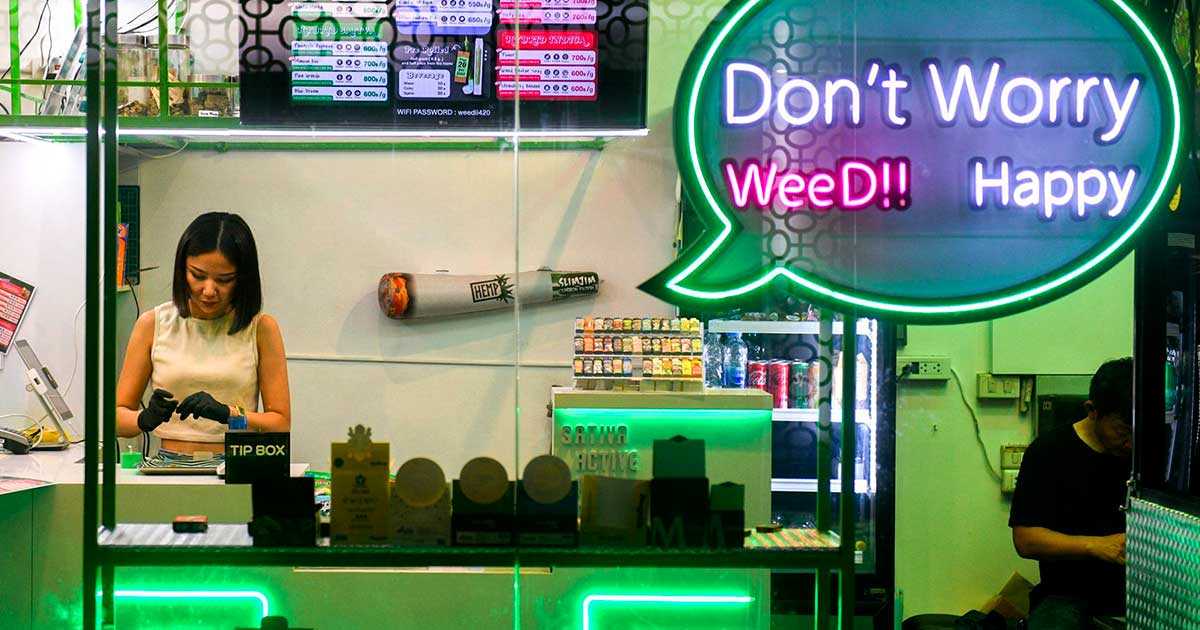
The recent Thai elections, in which the party Move Forward overturned the the conservative party that had decriminalized cannabis, are causing local cannabis entrepreneurs to fear the worst
A proposal for Move Forward In fact, it aims to reclassify cannabis as a narcotic one year after its decriminalization. While the The legal framework is, in fact, still very lax and although no agreement had been reached on legalization under the previous government, 12,000 businesses received licenses to operate in the cannabis industry, and some 1.1 million people registered with the government to grow cannabis at home.
Conservative Policy of a Progressive Movement
The prospect of stricter regulations was not necessarily well received by the cannabis community. Some 5,200 people and 200 companies signed an online petition asserting that reclassifying cannabis as a narcotic would constitute a violation of people’s rights. And the young progressives who helped the opposition parties secure victory also felt let down.
«I thought they were supposed to move forward,» laments Mr. Suphamet Hetrakul of Teera Ventures, a cannabis farm owner and wholesaler, to Reuters, referring to the translation of Move Forward. «A reversal would undermine Thailand’s credibility.»
Given the proliferation of stores, growers, and consumers, will the Thai government be able to completely reverse course?
Regulate the market
The Move Forward intends to «reclassify cannabis as a controlled substance… with new laws regulating and supporting its beneficial uses.» And while the details are not yet known, it is clear that the party ultimately wants to regulate cannabis and oversee its market.
Last Thursday, a party representative, Sirikanya Tansakun, defended the proposal to reclassify cannabis, arguing that it was necessary to close the legal loophole. But she promised that businesses would receive support once the party passed the legislation in Parliament.
Although there appears to be little prospect of a crackdown, she said that unlicensed street vendors and smuggled drug imports would be stopped.
«Those who have invested legally will be protected and will be able to continue their activities,» Ms. Sirikanya told reporters.
























Medical Cannabis in Germany: THC Prices Vary by a Factor of 12

France already has 3,000 cannabis retail outlets. None of them are legal.

Morocco's exports of legal cannabis have expanded to 15 countries

Aurora Cannabis Doubles Its Production Capacity in Germany

Tilray is accelerating its operations in Europe thanks to a license in Portugal

Boston will host the 10th annual State of the Cannabis Industry Conference on October 26

A DEA report confirms that there are no fatal cannabis overdoses

A British patient is challenging the NHS's refusal to reimburse medical cannabis

October 2026 CBD Highlights: 10 Strains and Hash to Discover from 5 French Producers

CBD in France: Traceability, Retail Stores, THC and Driving… What the New Bill Proposes
-
 Business2 weeks ago
The legal cannabis market in New York exceeds 4 billion $ in revenue
-

 Cannabis in France3 weeks ago
Which countries legalized medical cannabis before France?
-
Business3 weeks ago
South Korea is preparing to begin local production of medical cannabis to meet rising demand
-
Cannabis in Thailand3 weeks ago
From the boom in dispensaries to a purely medical approach: Thailand is revising its cannabis policy
-
Cannabis and driving3 weeks ago
Medical Cannabis and Driving: New South Wales Ends Automatic Penalties for THC
-
Autism3 weeks ago
Autism and Cannabis: Results from the First Placebo-Controlled Trial of NTI164
-
Cannabis in France2 weeks ago
France’s Drug Policy Chief Defends Cannabis Prohibition... and Runs Into the Facts
-
CBD1 week ago
In Brazil, researchers are developing an innovative CBD eye drop

















cbdtech
May 28, 2023 at 2:08 p.m.
Unfortunately, the problem with laws is that they fail to change people’s mindsets. The recent elections in Thailand are a case in point: the Move Forward Party ousted the conservative party that had decriminalized cannabis. However, a proposal by this new party aims to reclassify cannabis as a narcotic, just one year after its decriminalization. This about-face highlights the current limitations.