
Sir William Brooke O'Shaughnessy, pioneer of medical cannabis

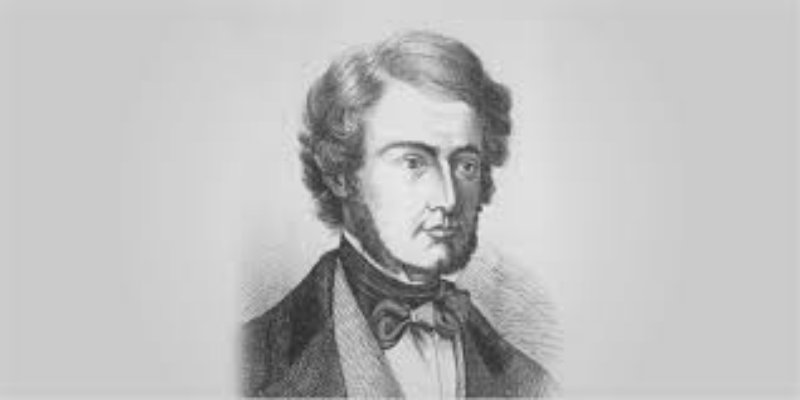
Sir William Brooke O’Shaughnessy was one of the pioneers of the therapeutic use of cannabis. A portrait of a young Irish genius who was a pioneer in medical cannabis.
A Misunderstood Genius
William O’Shaughnessy was born in 1809 in Ireland. At age 20, he earned his medical degree from the University of Edinburgh. The elective program offered by the University of Edinburgh allowed him to study chemistry and toxicology. At age 23, he moved to London and studied patients affected by the cholera epidemic. He launched the medical journal The Lancet shortly thereafter. In his journal, he advised patients to undergo seawater treatments to combat dehydration and mineral deficiencies caused by incessant diarrhea. Thanks to his advice, the cholera mortality rate fell from 70 to 40%.
Research on Cannabis
He was then sent to India, which was considered the source of the virus’s spread at the time. There, he founded the medical college in Calcutta, where he studied traditional Indian medicine. He was particularly interested in Indian hemp, the country’s traditional medicine. His clinical trials on animals proved successful, and he submitted a thesis titled Paper on Indian Hemp at the British Academy of Sciences.
Based on his experiments with animals, he concluded that Indian hemp could help treat epilepsy or tetanus. He was one of the first to conduct clinical trials on animals. He was unable to eliminate the symptoms of tetanus, but he noticed that cannabis helped reduce patients’ muscle spasms. William O’Shaughnessy observed that the plant’s medicinal properties diminished once the female plant was pollinated by a male.
He also notes that high-dose treatments with Indian hemp can cause hallucinations. Upon his return to England, he brought back cannabis seeds to diversify the British pharmacopoeia. He also partnered with pharmacist Peter Squire, who legally marketed cannabis tinctures.
An Obscure End to Life
He conducted numerous experiments and invented his own telegraph system. He was noticed by the Governor-General of India, Lord Dalhousie, who tasked him with modernizing India’s infrastructure. In 1856, 5,000 kilometers of telegraph lines were built thanks to him. Lord Dalhousie then requested that he be knighted. William was knighted by the Queen Victoria and becomes Sir O’Shaughnessy. .
A change in the hierarchy marked the end of his reign. He was then shunned and soon requested to return to England. He died in 1889 amid widespread indifference.







Newsweed Launches Its Own AI
A new tax of 0.5% could disrupt the hemp industry in Canada

Medical Cannabis and Driving: New South Wales Ends Automatic Penalties for THC

China's Yongji Health Takes Control of Tasmanian Botanics

Autism and Cannabis: Results from the First Placebo-Controlled Trial of NTI164

Which countries legalized medical cannabis before France?

From the boom in dispensaries to a purely medical approach: Thailand is revising its cannabis policy

South Korea is preparing to begin local production of medical cannabis to meet rising demand

In the United States, cannabis use among high school students has reached an all-time low

Medical cannabis use surges by 64 % in Denmark
-
 Cannabis and driving3 weeks ago
Cannabis and CBD: French Drivers Can Now Lose Their License Even Without a Positive Test Result
-

 Cannabis in France4 days ago
Which countries legalized medical cannabis before France?
-
Cannabis in France3 weeks ago
Cannabis Legalization: The LFI Bill Has a Major Problem—THC
-
Cannabis in the Netherlands2 weeks ago
One year after the launch of the Dutch cannabis experiment, the first trends are emerging
-
Business4 days ago
South Korea is preparing to begin local production of medical cannabis to meet rising demand
-
Cannabis in Argentina2 weeks ago
Argentina Opens Its Market to Hemp Flowers Containing 1% of THC
-
Cannabis in France2 weeks ago
French medical cannabis remains stalled at the Ministry of Health
-
Cannabis in Thailand4 days ago
From the boom in dispensaries to a purely medical approach: Thailand is revising its cannabis policy













You must be logged in to post a comment Login