Cannabis legalization in Canada, province by province

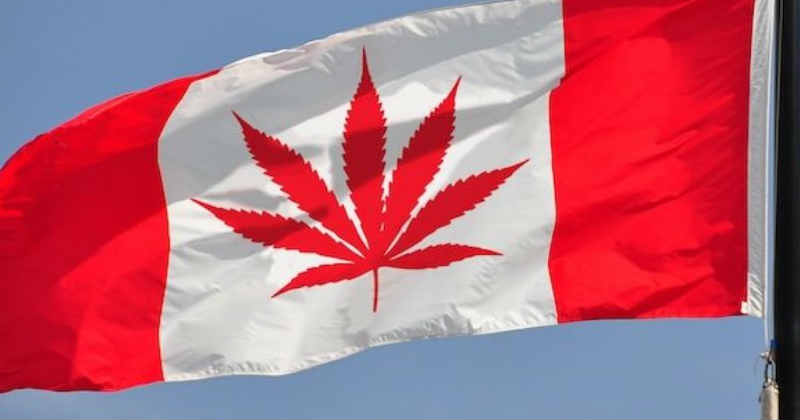
With D-9 to go launch of legal cannabis sales in Canada, We thought it would be a good idea to give you a province-by-province rundown of the situation. From October 17 will be legal for cannabis flowers, cannabis oil and certain by-products, but not for cannabis products. edibles. Responsibility for regulations is shared between the federal government, the provinces and the municipalities. Production, for example, will be supervised at federal level. Licenses will be granted directly by a national government body. The distribution model, on the other hand, is left to the discretion of the provinces.
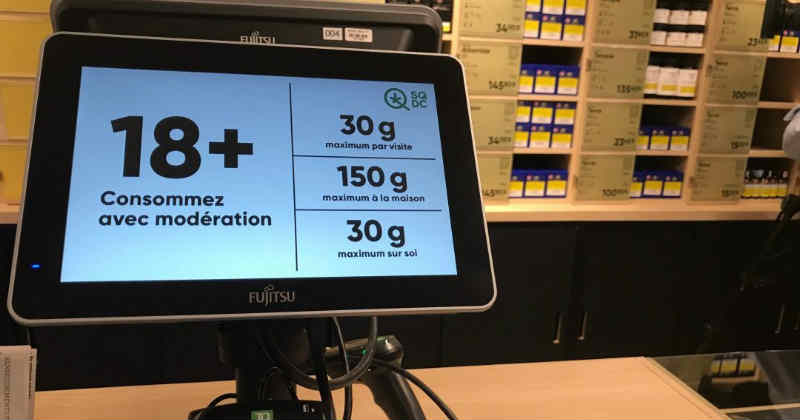
The Cannabis Act, which we reviewed here,The federal government sets age (18), possession (30 grams) and cultivation (4 plants) limits as minimum standards, but the provinces have the right to opt for more restrictive regulations. Visit Cannabis Act also prohibits consumption in vehicles, but allows transport under certain packaging conditions.
The Canadian provinces will be responsible for taxation, charges for non-compliance, education and public health, driving under the influence, consumption and the distribution model.
Municipalities share some of these prerogatives, such as store location. Medical cannabis, on the other hand, is not subject to provincial legislation and can be purchased directly from growers.
Alberta
Consumption The legal age is 18, and consumption is authorized in public places where smoking is also permitted. In accordance with Cannabis Act it is prohibited in vehicles, even by passengers. Alberta has decided to retain the federal limits on possession and self-cultivation.
Distribution Alberta has opted for a private distribution model. On the other hand AGLC (Alberta Gaming and Liquor Commission), which is responsible for supplying the stores. It takes care of transporting the merchandise from the producers to the stores. The latter can only sell sealed products that meet quality and safety standards. Children under the age of 18 are not allowed in the stores, even when accompanied, and staff must be thoroughly checked and trained.
Cannabis and driving The limit for cannabis concentration in the blood is 5 nanograms of THC per milliliter, above which drivers are liable to prison sentences for repeat offenses. Between 2 and 5 ng/ml, drivers are liable to a fine of 1000$ CA. Alberta has zero tolerance for learner drivers.
British Columbia
Consumption The legal age is 19, consumption is authorized in public places where cigarettes are allowed, and possession and self-cultivation are authorized within the limits defined by the law. Cannabis Act. However, the provincial government specifies that the plants must not be visible from the outside, or they may be fined.
Distribution In British Columbia, consumers will have the choice of buying cannabis from government-run outlets, licensed private stores and online. A state monopoly has been established for wholesale sales, and private stores must purchase directly from the Liquor Distribution Branch. On the other hand, the province is behind schedule in setting up its distribution program and, for the moment, only one legal sales outlet is ready for October 17.
However, around a hundred private stores have already applied to the province for permits. Some of them already have a permit from the City of Vancouver, which had regularized these counters in 2015, but the new federal and provincial laws don't recognize them. As a result, they will probably close their doors on October 17, only to reopen later after obtaining a proper permit (or not, for that matter, as British Columbia is quite lax on the subject). An online cannabis sales system should be ready in time, but Minister Mike Farnworth admits that the whole edifice won't take shape just yet. He points out that implementation of the law will be gradual, as permits are granted.
Cannabis and driving The province has introduced a zero-tolerance policy for learner drivers and a 90-day licence suspension for drivers under the influence. In addition, the province has created a series of charges for cannabis-related offences, with fines ranging from 2,000$ CA to 100,000$CA and up to one year in prison.
Prince Edward Island
Consumption The legal age is set at 19, and consumption is possible only in private homes or in certain places set aside for the purpose. Possession and self-cultivation limits are those set at federal level, i.e. 30 grams and 4 plants.
Distribution The province has established a state monopoly for cannabis distribution. At launch, there will be only 4 cannabis stores in the province (Charlottetown, Summerside, Montague, West Prince), which is relatively small (5,660km²), located according to population concentration. The province is planning a possible expansion based on demand. In the meantime, an online sales platform, also run by the government, will be available as soon as it agrees on the company responsible for home delivery. The government is also exploring the possibility of selling plants and seeds.
Cannabis and driving : Legislation on driving under the influence of cannabis is the same as for driving under the influence of alcohol, with heavier charges if a minor is present.
Manitoba
Consumption The legal age is 19, and the consumption limit is 30 grams. However, consumption in public places and self-cultivation are strictly prohibited. Growing cannabis at home carries a penalty of 2,542$CA, and smoking in a public place carries a fine of 672$CA.
Distribution The province has opted for a hybrid model of public and private stores. They will sell cannabis supplied by the Manitoba Liquor and Lotterries and will therefore have no direct contact with producers. It will be forbidden to sell alcohol and cannabis in the same store. The stores will be located throughout the province, including on native reserves. The provincial government has set itself the goal of making legal cannabis available within a half-hour commute to 90 % of the population within two years.
Cannabis and driving Driving under the influence: driving under the influence is of course prohibited, and the province imposes fines of 672$CA for anyone who consumes while driving, and 237$ for anyone who transports cannabis without complying with packaging conditions.
Taxes The province also has a specific tax on the sale of cannabis, called the Cannabis Retailer Social Responsibility Fee (SRF), which will be levied on the annual revenues of cannabis sellers to fund prevention and education programs. It will take effect on January 1, 2019.
New Brunswick
Consumption The legal age is 19, and there is a limit of 30 grams on purchases and possession in public. On the other hand, there is no limit on possession in the home. Self-cultivation is authorized (4 plants), but in a separate area if indoors, and behind a fence at least 1.52 m high if outdoors. Cannabis may not be consumed in public places.
Distribution : The only place to buy legal cannabis will be at Cannabis NB, a a subsidiary of the New Brunswick Liquor Corporation. It will also be possible to order cannabis online from the subsidiary's website.
Nova Scotia
Consumption The legal age is 19, and possession is limited to 30 grams. Cannabis may be consumed in public places under the same restrictions as cigarettes. Violation of these restrictions is punishable by a 2,000$ fine. There are no limits on the possession of cannabis at home, as long as it is for personal use.
Distribution The Nova Scotia Liquor Corporation will be the only organization authorized to sell cannabis in stores and online.
Cannabis and driving The charge for driving under the influence is a 1000$CA fine and a one-year license suspension. In the event of a repeat offence within 10 years, the province provides for prison sentences. For levels below the criminal limit, license suspensions are limited to one week to one month. There is zero tolerance for learner drivers.
Ontario
Consumption The legal age is 19, and consumption is possible in public places and indoor venues designated for this purpose. Possession is limited to 30 grams.
Distribution The previous Ontario government had opted for a public monopoly system, but with a change of government, province now authorizes private sales. This late initiative has somewhat delayed implementation of the program, which won't be ready until 2019. By then, an online sales system will be available: the Ontario Cannabis Store. L’Alcohol and Gaming Commission of Ontario (AGCO) will license private stores that purchase exclusively from the Ontario Cannabis Store.
Cannabis and driving Driving under the influence of cannabis is subject to the same restrictions as other drugs, including prison sentences, license suspensions, fines and vehicle confiscation.
Quebec
Consumption The legal age is 18, and the home possession limit is 150 grams of dried cannabis, regardless of the number of people living in the home. Self-cultivation is prohibited, and public consumption is subject to the same restrictions as smoking. However, the, a recent change of government could well raise the legal age from 18 to 21 and ban consumption in public places.
Distribution Distribution is subject to a state monopoly, with only the Société Québécoise du Cannabis authorized to sell the merchandise. It sells various products in its specialist stores, These include cooking oil, pre-rolled joints, ground or encapsulated cannabis and mouthwash-like oral atomizers.
Cannabis and driving The province of Quebec, unlike other provinces, has set a limit in terms of presence in saliva, not presence in blood. This method makes it possible to target more recent consumption. As a result, it applies a zero-tolerance policy.
Saskatchewan
Consumption The legal drinking age is 19. Public consumption is prohibited. Self-cultivation is authorized up to a maximum of four plants.
Distribution The government has opted for an open market model, with private vendors competing for both wholesale and retail sales.
Cannabis and driving the province applies zero tolerance.
Newfoundland and Labrador
Consumption The legal age is 19. Self-cultivation is authorized (4 plants) and possession must not exceed 30 grams. Charges for cannabis offences can range from a simple warning to fines of 100,000$ CA and 14-year prison sentences.
Distribution supply, wholesale and retail sales are regulated by the Newfoundland and Labrador Liquor Corporation (NLC), which will grant licenses to private sellers. Some thirty applications are currently being examined by the organization, and an online sales site is already up and running.
Cannabis and driving The legal limit is set at 2.5 nanograms of THC in the blood, but zero tolerance is applied to learner drivers, drivers under 22 and commercial drivers.
Nunavut
Consumption The legal age is 19, and public consumption is authorized within the same limits as cigarettes.
Distribution The government has submitted its decisions for public consultation, and they are not yet final. However, it seems that the province will opt for a private distribution model, with operators mandated by a government commission to set the type of cannabis made available, product prices, points of sale and advertising restrictions. The Government is also proposing to allow the Nunavut Liquor Corporation or its agent to sell cannabis to Nunavummiut through retail outlets and online. The province also plans to allow the importation of cannabis due to climatic conditions not conducive to local cultivation.
Northwest Territories
Consumption The legal drinking age is 19. Consumption is permitted in public areas, provided there are no public events or gatherings of children. Self-cultivation is permitted, but seeds must be purchased from a legal supplier.
Distribution The plan is to make cannabis available for sale in provincially-run liquor stores, i.e. through a state monopoly. However, this system will not be ready in October, and cannabis will only be available by online order on the Government Commission's website.
Yukon
Consumption The legal age is 18, and consumption is restricted to private property. Possession limits are 30 grams outside the home and indefinite at home. Self-cultivation is authorized up to a maximum of 4 plants. Anyone supplying cannabis to a minor is liable to a prison sentence of up to 14 years.
Distribution The province is behind schedule in establishing its distribution model. For the moment, a single government-run store and an online sales platform are operational. The aim is to authorize retail sales by licensed private entrepreneurs. To date, there are no regulations in place. However, the government body in charge of the market has announced that it will buy locally produced cannabis (subject to having a federal license).
Conclusions
In terms of possession and cultivation restrictions, the provinces have largely copied the federal government's minimum standards. At provincial level, the emphasis is on responsible cannabis legalization, with severe penalties for underage consumption. It's also notable that supply and distribution are mostly handled by government agencies. To date, only one province has established a totally open market system.
Emphasis is also placed on driving under the influence, but as cannabis remains in the bloodstream for quite some time, saliva detection systems have been introduced, although it is not yet clear whether they are really effective. For the time being, the standard procedure is based on the expertise of officers specializing in the recognition of high-risk drivers. Anyone suspected of driving under the influence will have to undergo a standard sobriety test, including coordination tests. In the event of failure, a Drug Recognition Expert (DRE) officer will be tasked with determining whether driving under the influence has occurred, in which case a blood sample will be requested, along with a provisional suspension of the driver's license.
Provinces can introduce taxes, notably to fund education and prevention programs, but there is also a national tax that benefits the national and provincial governments. Under this system, the Government of Canada will impose a tax on cannabis of approximately 1 $/gram or 10 % of its retail price, whichever is greater, and will share 75% of its revenues with the provinces and territories. The federal government's share will be capped at $100 million per year.
The regulatory system is likely to evolve. Criticism is already being voiced about a legalization that would in fact be nothing more than a new prohibition: the legal framework at launch will be very limited, with a state monopoly that oversees a few possibilities, without however taking into account the specificities of each individual. Self-cultivation limited to 4 plants, for example, seems too restrictive for plant lovers.








Medical Cannabis in Germany: THC Prices Vary by a Factor of 12

France already has 3,000 cannabis retail outlets. None of them are legal.

Morocco's exports of legal cannabis have expanded to 15 countries

Aurora Cannabis Doubles Its Production Capacity in Germany

Tilray is accelerating its operations in Europe thanks to a license in Portugal

Boston will host the 10th annual State of the Cannabis Industry Conference on October 26

A DEA report confirms that there are no fatal cannabis overdoses

A British patient is challenging the NHS's refusal to reimburse medical cannabis

October 2026 CBD Highlights: 10 Strains and Hash to Discover from 5 French Producers

CBD in France: Traceability, Retail Stores, THC and Driving… What the New Bill Proposes
-
 Business2 weeks ago
The legal cannabis market in New York exceeds 4 billion $ in revenue
-

 Cannabis in France3 weeks ago
Which countries legalized medical cannabis before France?
-
Business3 weeks ago
South Korea is preparing to begin local production of medical cannabis to meet rising demand
-
Cannabis in Thailand3 weeks ago
From the boom in dispensaries to a purely medical approach: Thailand is revising its cannabis policy
-
Cannabis and driving3 weeks ago
Medical Cannabis and Driving: New South Wales Ends Automatic Penalties for THC
-
Cannabis in Argentina4 weeks ago
Argentina Opens Its Market to Hemp Flowers Containing 1% of THC
-
Autism3 weeks ago
Autism and Cannabis: Results from the First Placebo-Controlled Trial of NTI164
-
Cannabis in France2 weeks ago
France’s Drug Policy Chief Defends Cannabis Prohibition... and Runs Into the Facts

















You must be logged in to post a comment Login