Interior and Justice present measures to tackle organized crime

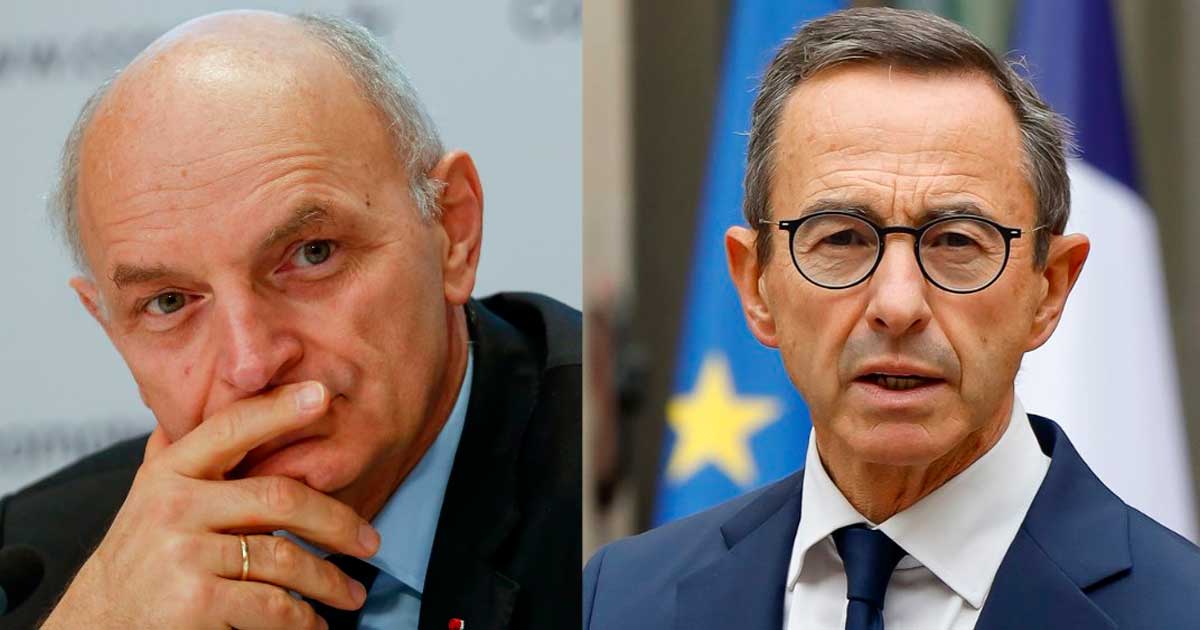
The French Ministers of the Interior and Justice today unveiled their strategy for fighting organized crime and bringing drug trafficking to its knees.
Describing organized crime as a «tentacular menace» that harms innocent people and social cohesion, Didier Migaud stressed the need for a decisive response. Their plan, drawn largely from a recent Senate report, is built around a series of immediate actions, followed by legislative reforms that they believe will create a «united front» in the fight against organized crime and enable them to finally win the «war on drugs».
First phase: immediate action for prevention, prosecution and protection
The first phase of the plan includes several immediate actions targeting crime from multiple angles. The plan includes a public awareness campaign designed to sensitize France's 5 million illegal drug users to the links between drug use and violence and the exploitation of organized crime.
They are calling for stiffer fines and better recovery, which barely exceeds 35% today, The recently announced anti-corruption plan, which will be launched in collaboration with the French Anti-Corruption Agency (AFA), is aimed at closing off the access points that organized crime might have to companies and public bodies. The recently announced anti-corruption plan, to be launched in collaboration with the French Anti-Corruption Agency (AFA), aims to close the access points that organized crime might have within companies and administrative bodies.
The anti-narco plan also focuses on improving investigative capabilities. It calls for wider deployment of digital forensic tools and greater emphasis on financial investigations.
«Criminal networks don't stop at borders,» emphasized Didier Migaud, calling for stronger international partnerships, particularly in countries that serve as sources for drug trafficking.
Mr. Migaud has announced the installation of a liaison magistrate in Colombia to strengthen international cooperation. In Europe, he is stepping up efforts by adding a fourth magistrate to France's Permanent Representation to the European Union, with the ultimate aim of creating a European judicial shield against organized crime.
Prosecutions will be based on a streamlined, well-coordinated structure, with the emphasis on a national coordination unit for organized crime cases and on increasing the number of prosecution teams, particularly in high-impact regions such as Marseille.
This unified approach will enable local prosecutors to work closely with national and regional teams, while data-sharing systems and centralized information management will ensure efficient, collaborative case handling.
Second phase: legislative reforms for lasting change
While immediate measures form the backbone of the plan, the Ministry of Justice recognizes the need for more permanent legal changes, which it hopes will be adopted by Parliament in the coming months. Among the proposed reforms is a new support framework for «repentant» traffickers, including incentive sentences for those who help law enforcement. Didier Migaud's proposal also calls for enhanced investigative capabilities in organized crime cases, notably by extending certain interrogation practices currently used in terrorism cases to organized crime investigations.
On the judicial front, Justice aims to extend specialized criminal courts to cases of organized crime, to minimize the risk of jury intimidation. It also proposes to extend the offence of ’association de malfaiteurs« to murder, and to create a new set of standards for prosecuting minors over the age of 16 involved in serious criminal activity.
Supporting victims and strengthening penalties
Didier Migaud stressed the importance of not forgetting the victims of organized crime. The Minister of Justice announced the creation of a special mission headed by the Déléguée interministérielle à l'aide aux victimes (DIAV) to assess the specific needs of victims in crime-affected regions.
In line with the principle of «taking from criminals and giving back to victims», Mr. Migaud stressed the importance of asset seizure and confiscation. In his view, criminal assets should be reallocated to support those affected by organized crime - a policy that saw a property in Marseille seized from a trafficker and used to provide housing for victims in 2023.
Finally, the Minister of Justice proposed measures to prevent crime in prisons, such as the introduction of detection systems to monitor high-risk inmates and the deployment of specialized containment zones to limit their influence.
Recent security enhancements at the Baumettes prison in Marseille, including anti-drone systems and mobile jamming devices, are examples of a targeted approach to limiting the influence of organized crime, even within prisons.
A common response... but similar to the last 50 years
Retailleau and Migaud will they do better than their predecessors ? Their political opponents doubt it, and history proves them right.
In an op-ed published on Huff, a number of Socialist politicians argue for a holistic approach, suggesting the creation of a national anti-drugs prosecutor's office similar to the anti-terrorism division, as well as greater support for the Judicial Police (PJ), which has proved effective in the fight against organized crime and terrorism.
They also propose strengthening the role of the Anti-Drug Office (Ofast), creating a unified national strategy, and reinforcing youth protection to prevent vulnerable minors from being exploited by criminal networks.
But they also call for a mature, nuanced approach to drug policy that recognizes different uses while promoting responsible consumption. With the legalization and decriminalization of cannabis, in particular, becoming increasingly widespread in Europe, France is at a pivotal point in tackling related problems with a balanced approach that integrates police, social services and health strategies, rather than relying solely on repressive measures.
And indeed, the health aspect of drug use is once again forgotten, as the Minister of Health is not involved in this anti-narcotics plan which, if it produces results, will have difficulty in fundamentally destabilizing a business worth 5 billion euros in France alone.

























Medical Cannabis in Germany: THC Prices Vary by a Factor of 12

France already has 3,000 cannabis retail outlets. None of them are legal.

Morocco's exports of legal cannabis have expanded to 15 countries

Aurora Cannabis Doubles Its Production Capacity in Germany

Tilray is accelerating its operations in Europe thanks to a license in Portugal

Boston will host the 10th annual State of the Cannabis Industry Conference on October 26

A DEA report confirms that there are no fatal cannabis overdoses

A British patient is challenging the NHS's refusal to reimburse medical cannabis

October 2026 CBD Highlights: 10 Strains and Hash to Discover from 5 French Producers

CBD in France: Traceability, Retail Stores, THC and Driving… What the New Bill Proposes
-
 Business2 weeks ago
The legal cannabis market in New York exceeds 4 billion $ in revenue
-

 Cannabis in France3 weeks ago
Which countries legalized medical cannabis before France?
-
Business3 weeks ago
South Korea is preparing to begin local production of medical cannabis to meet rising demand
-
Cannabis in Thailand3 weeks ago
From the boom in dispensaries to a purely medical approach: Thailand is revising its cannabis policy
-
Cannabis and driving3 weeks ago
Medical Cannabis and Driving: New South Wales Ends Automatic Penalties for THC
-
Autism3 weeks ago
Autism and Cannabis: Results from the First Placebo-Controlled Trial of NTI164
-
Cannabis in France2 weeks ago
France’s Drug Policy Chief Defends Cannabis Prohibition... and Runs Into the Facts
-
CBD1 week ago
In Brazil, researchers are developing an innovative CBD eye drop

















David
10 November 2024 at 9 h 54 min
In a legalizing Europe, mafia markets run the risk of seeing their markets collapse, with the added likelihood of increased competition on the domestic market. The proposed measures should enable the latter to maintain high profits, thanks to the regulatory intervention of government authorities and forces. Good idea Bruno!
tomtom
10 November 2024 at 13 h 47 min
But so, 100% agree!
With this plan one more time, who gets the most out of it? Politicians and drug dealers.
If there's one group of people who don't want legalization or non-regulation right now, it's the drug dealers.
In fact, the latter will hardly be concerned by this new proposal, just like the old one: we're cleaning up their act and allowing them to carry on with their business. Great plan Bruno, let's continue to take and make consumers feel guilty, while letting drug dealers continue to dominate the market. After all, this policy suits the current and previous powers very well, so why change?