DEA seeks candidates to grow cannabis

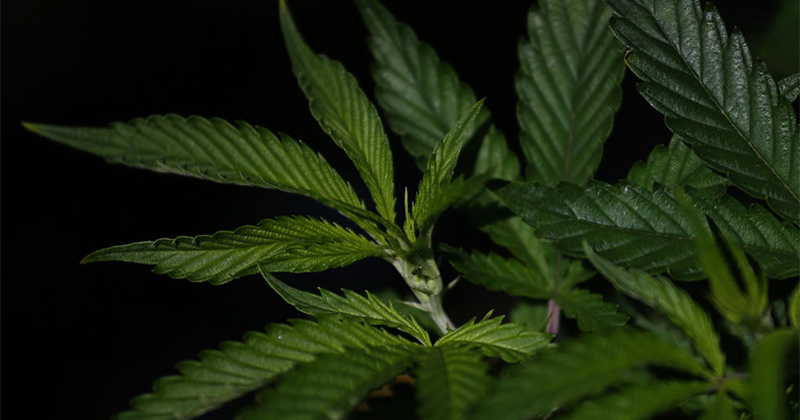
Wanted: People to grow cannabis for the federal government. Benefits: A multimillion-dollar contract and a chance to advance medical research. Requirements: The ability to manage the costs and challenges of growing an illegal drug for the federal government.
And that’s the real conundrum of this announcement. For more than 40 years, the University of Mississippi was the only institution with a government license to grow cannabis for federal scientific research. But as of August, the DEA (the U.S. Drug Enforcement Administration) has announced plans to grant cultivation permits to other producers, in an effort to increase the supply and variety of cannabis available for research.
But no one is applying. A dozen agricultural schools were contacted, including some with programs in industrial hemp cultivation. They weren't interested.
The eligibility requirements are likely the reason. To apply for the program, candidates must demonstrate that they can implement strict security measures to protect the cannabis and be prepared to comply with a whole host of requirements. Depending on the size of the plantation, this will require significant investment. Some experts estimate the cost at several million dollars. So it may not necessarily be worth the effort.
And current growers have no reason to apply either. Their very existence—permitted by states that have legalized medical or recreational cannabis and granted licenses to certain producers—violates federal law. Participation in the program could therefore backfire on them under federal law.
You would therefore have to be new to the market and have never violated the Controlled Substances Act (Controlled Substances Act). It is therefore conceivable that GW Pharmaceutical—the company behind Sativex and Epidiolex, which grows its raw materials in the United Kingdom—might take an interest in this large market.
In any case, the DEA is still looking for growers. The agency has not set a deadline for its recruitment process and has stated that it only wants enough cannabis to meet research needs—nothing more.
Once growers have received their licenses from the DEA, another concern will arise: where will they source their plants to start their first crop? They could obtain clones from the University of Mississippi, but that would not expand the range of genetics available for scientific studies. Or they could purchase seeds or plants from Canada or Israel, with the appropriate authorizations. Or they could source them from a current producer, with the DEA’s approval.
In any case, the agency announced that it «would require producers to obtain their seeds from a legal source, and that the DEA would help new producers do so.».






Medical Cannabis in Germany: THC Prices Vary by a Factor of 12

France already has 3,000 cannabis retail outlets. None of them are legal.

Morocco's exports of legal cannabis have expanded to 15 countries

Aurora Cannabis Doubles Its Production Capacity in Germany

Tilray is accelerating its operations in Europe thanks to a license in Portugal

Boston will host the 10th annual State of the Cannabis Industry Conference on October 26

A DEA report confirms that there are no fatal cannabis overdoses

A British patient is challenging the NHS's refusal to reimburse medical cannabis

October 2026 CBD Highlights: 10 Strains and Hash to Discover from 5 French Producers

CBD in France: Traceability, Retail Stores, THC and Driving… What the New Bill Proposes
-
 Business2 weeks ago
The legal cannabis market in New York exceeds 4 billion $ in revenue
-

 Cannabis in France3 weeks ago
Which countries legalized medical cannabis before France?
-
Business3 weeks ago
South Korea is preparing to begin local production of medical cannabis to meet rising demand
-
Cannabis in Thailand3 weeks ago
From the boom in dispensaries to a purely medical approach: Thailand is revising its cannabis policy
-
Cannabis and driving3 weeks ago
Medical Cannabis and Driving: New South Wales Ends Automatic Penalties for THC
-
Cannabis in Argentina4 weeks ago
Argentina Opens Its Market to Hemp Flowers Containing 1% of THC
-
Autism3 weeks ago
Autism and Cannabis: Results from the First Placebo-Controlled Trial of NTI164
-
Cannabis in France2 weeks ago
France’s Drug Policy Chief Defends Cannabis Prohibition... and Runs Into the Facts

















You must be logged in to post a comment Login