The European Parliament studies the issue of medical cannabis


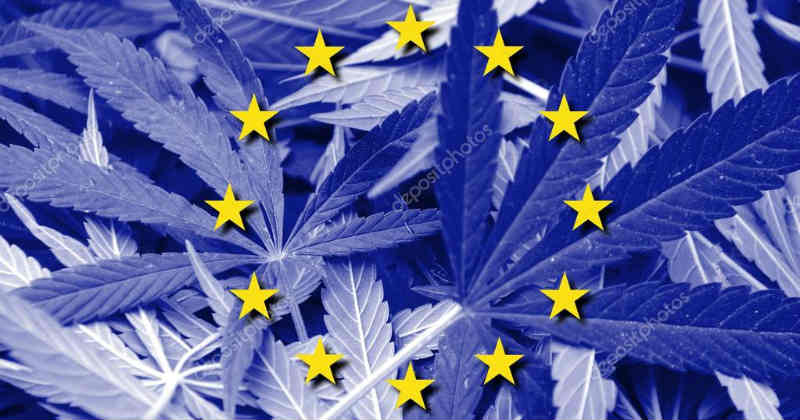
Members of the European Parliament’s Committee on the Environment, Public Health, and Food Safety are currently drafting a motion for a resolution on medical cannabis. Although the text is still in the draft stage, the committee’s preliminary conclusions suggest the possibility of European legislation on the medical use of cannabis.
The original text, in status of amendments, is proposed by the following committee members: Dubravka Šuica, Guillaume Balas (cocorico! A French member of Génération.s), Urszula Krupa, Catherine Bearder, Martin Häusling, Estefanía Torres Martínez, and Piernicola Pedicini.
Acknowledgment of the Facts
First, the report acknowledges that cannabis contains both psychoactive and non-intoxicating compounds, as well as addictive and non-addictive compounds, and recognizes the therapeutic benefits of certain cannabinoids for a wide range of medical conditions. The commission notes the growing interest in cannabis-based medications but expresses concern about the confusion surrounding the term «medical cannabis » and recommends distinguishing between cannabis in flower form and cannabis-based medications that have been clinically tested and approved by pharmaceutical regulatory agencies.
The report goes on to state that international law does not prohibit the use of cannabis-based products for therapeutic purposes, but that national laws vary widely on the subject, which can pose a problem for patient treatment within the Schengen Area. In fact, some patients may be acting legally on one side of the border and be considered criminals on the other. So far, only Sativex has been the subject of a centralized procedure, hence its marketing authorization, which was granted with great difficulty in France, and then its suspension, but not on the scale of the entire European market.
The report then notes the lack or scarcity of professional training for medical staff on this issue and considers that scientific research on medical cannabis has been underunderfunded and should be addressed accordingly in the upcoming 9th Framework Program, which sets out the European Union’s research and innovation programs. It also calls on Member States to launch research programs, foster innovation in the field of medical cannabis, and train personnel.
Toward a European Solution
Lawmakers are considering developing a European strategy that would harmonize standards for research, development, authorization, marketing, pharmacovigilance, and abuse prevention for cannabis-based medicines. Harmonized legislation would ensure uniform products and regulations throughout the European Union, thereby providing patients with a verified, high-quality medication.
He highlights the positive effects on public health and safety that such a legal framework could bring: «Comprehensive regulation of medical cannabis could provide additional resources to public authorities, curb the black market for medical cannabis, help monitor points of sale, restrict minors» access to the substance, and provide patients with safe and legal access to medical cannabis—with special precautions for young people and pregnant women.”.
The text calls on the European Commission to establish a department dedicated to medical cannabis to centralize regulatory proposals and provide a comprehensive overview of information, discussions, studies, and, more generally, all matters related to medical cannabis. In this regard, it emphasizes the importance of cooperation with the WHO, which is currently working on the Revision of the status of cannabisand suggests establishing a coordination network: «Establish a network bringing together the EMEA, the EMCDDA, and the relevant national authorities to ensure the effective implementation of the strategy on cannabis-based medicines.».
Members of the European Parliament are also calling on Member States to reconsider their current legislation on this issue as soon as scientific research has advanced sufficiently to prove with certainty that cannabis-based medication is a health necessity and a right available to patients in the absence of other equally effective medications. On this point, they establish the obligation of each Member State to ensure safe and legal access to the medication, accompanied by monitoring by licensed physicians, for all patients in need. To guarantee patients’ rights, Member States will be required to establish local production or a reliable import system and to integrate the medication into the existing public health care system.
To be continued
This motion for a resolution, introduced by members of the European Parliament—known as an “own-initiative report” in European parliamentary jargon—originated in the parliamentary committee responsible for health matters. Once amended by MEPs, the text must be submitted to the European Commission, which must approve it so that it can proceed through the traditional legislative process—that is, either be debated and amended in the Parliament and the Council of Ministers, or be adopted directly.
If the resolution is adopted following a lengthy process that could last more than eight months, it would then be binding on the member states.














«Vincy Gold»: Humboldt Seed Company on the Hunt for Saint Vincent Sativas

Cronos Completes the Acquisition of CanAdelaar for 57.5 million euros

Cannabis with a "bloody" twist: Discover Sensi True Blood and Sensi Sangria, the two new strains from Sensi Seeds

Hemp: The Council of the EU Takes a Stand on New Production and Marketing Rules

Missouri's legal cannabis market accounts for 93 % of consumer spending

THC Gummies: How to Read a Certificate of Analysis Before Buying

British patients now have access to THCV-rich cannabis flowers

Spain: Medical Cannabis Is Coming to About 50 Hospitals

JIHE 2026: Japan’s Largest Trade Show Dedicated to Hemp and CBD Returns to Tokyo with More Than 100 Industry Players

New Caledonia: The Courts Clear the Way for the Return of CBD
-
 Business3 weeks ago
The legal cannabis market in New York exceeds 4 billion $ in revenue
-

 Cannabis in France4 weeks ago
Which countries legalized medical cannabis before France?
-
Cannabis in France1 week ago
France already has 3,000 cannabis retail outlets. None of them are legal.
-
Cannabis in the U.S.1 week ago
A DEA report confirms that there are no fatal cannabis overdoses
-
Cannabis and driving4 weeks ago
Medical Cannabis and Driving: New South Wales Ends Automatic Penalties for THC
-
Cannabis in France3 weeks ago
France’s Drug Policy Chief Defends Cannabis Prohibition... and Runs Into the Facts
-
Studies on cannabis2 weeks ago
Cannabis Oil and Endometriosis: A Promising Study for Pain Relief
-
CBD2 weeks ago
In Brazil, researchers are developing an innovative CBD eye drop

















You must be logged in to post a comment Login