
Cannabis legalization: is Europe doomed to deadlock?


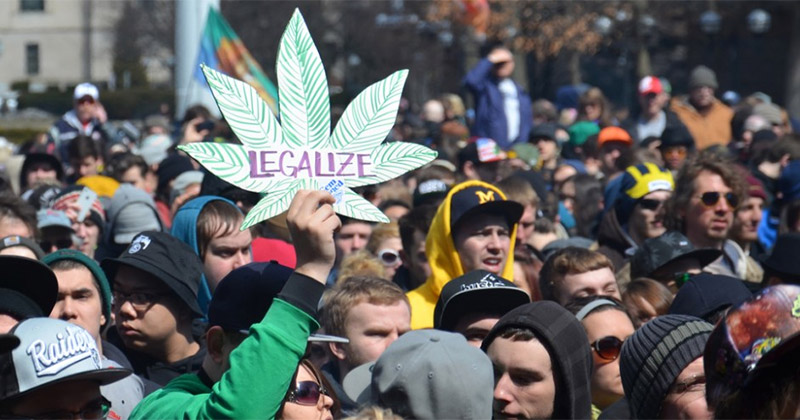
On Monday, October 10, 2016, a meeting and debate on the issue of cannabis legalization was held at the Senate, at the initiative of the senator from Val-de-Marne Esther Benbassa, author of the bill titled «Controlled Legalization of Cannabis,» by Didier Jayle, full professor of the Chair of Addiction Studies at the Conservatoire national des Arts et Métiers (CNAM) and former director of the Interministerial Mission for the Fight Against Drugs and Drug Addiction (MILDt, since renamed MILDECA), and Henri Bergeron, a professor at Sciences Po, in partnership with Fédération Addiction.
Who spoke?
This conference brought together professionals and experts on cannabis—and, more broadly, on drugs—to discuss the major themes within this field: public health and prevention, justice and law enforcement (with the participation of Jean-Pierre Havrin, Honorary Inspector General of the National Police (the equivalent of a police commissioner), Economic Issues.
The consensus was widespread: France’s current cannabis policy is a failure; it has failed to stem the rise in cannabis use, failed to protect teenagers from cannabis, and failed to prevent criminal networks from proliferating and now supplying all cannabis users (aside from home cultivation, of course).
Beyond this purely French perspective, several foreign speakers were able to share their experiences, which was undoubtedly the most interesting part.
Ethan Nadelmann, director of the Drug Policy Alliance, the largest U.S. advocacy group working for drug law reform, which has played a major role in the current legal changes in the United States. His remarks are rare and inspiring, and we will try to summarize them briefly. His main point is that the United States was at the origin of the global ban on cannabis for various reasons, more economic and segregationist than related to public health. This prohibition has caused a dramatic surge in cannabis trafficking and use. In addition to posing public health problems, today the majority of people incarcerated in the U.S. for minor cannabis-related offenses are Black, even though consumption rates are the same regardless of ethnicity. The war on drugs there has become racist, and in addition to punishing drug users, it targets certain segments of the population. Prohibition also fails to protect children and adolescents. The shift taking place in the United States—driven by the emergence of citizen movements, advocacy groups, and a growing industry—is calling into question the global prohibition of cannabis as a whole. Medical cannabis has paved the way for legalization and government-regulated management of cannabis production and sales.
Serge Brochu, a professor of criminology at the University of Montreal, spoke about Canada’s current experience. He rightly reminds us that in the spring of 2015, the majority of Canadians opposed the legalization of cannabis, and Justin Trudeau was in third place in the polls and leading a minority party. Trudeau based part of his campaign on cannabis legalization and was elected Prime Minister of Canada in November 2015. Determined to keep his promises, he immediately appointed a commission of experts to study the issue and announced that the bill would be introduced in the spring of 2017. Within two years, Canada should therefore have legalized cannabis, taking into account both the views of citizens—gathered through consultations held across the country this summer—and those of experts on the subject via the «task force» working on possible legalization models. Many questions remain unanswered—regarding production, regulation, access, and the protection of public health—but they will be resolved shortly.
Frank Zobel and Olivier Guéniat, the director of Addiction Suisse and the chief of police for Neuchâtel, respectively, came to discuss the cannabis situation in Switzerland, and in particular the failure so far to regulate consumption—both through prohibition and through the drafting of a new law to legalize cannabis. The Future Swiss Experiments were also discussed, with very pragmatic and realistic visions of what Switzerland should look like in the future.
What should we take away from this?
If there’s one thing to take away from this, it’s that no, Europe is not doomed to a dead end.
On the one hand, because it has already implemented numerous reforms in some of its member countries to expand access to medical cannabis or to authorize the Cannabis Social Clubs.
Second, because countries that have not yet begun this discussion are starting to take notice. If there were no problems, there would be no need to change. But today, whether it’s a matter of protecting young people, managing sensitive urban areas, ensuring access to medical cannabis for patients, or the criminalization of users, the statistics show that prohibition is ineffective and dangerous. Whether or not it’s an election issue, France is beginning to take a closer look at cannabis. For better or for worse? We’ll have to wait and see.
And that makes three, because the classic example of prohibition—the United States—is itself changing. In November, California, with a population of 39 million—10 times that of Uruguay, which was the first country to legalize cannabis—, is expected to vote on the legalization of recreational cannabis. It could serve as the first domino to set off a chain reaction among all the other states—and perhaps even lead to federal reform. Neighboring countries—Canada, Mexico, and, a little further afield, all of Latin America—are also moving toward reforming their current laws to better combat trafficking and implement new, more effective policies on drug access and public health.
Will France, an «old country on an old continent,» remain alone and isolated in its backward-looking stance on decriminalizing cannabis? I don’t think so.









CBD is said to promote athletic recovery, without improving performance

294 cannabis clubs in Chile: a booming movement with uneven distribution

Chronic Sciatica: New York Approves First Clinical Trial of a THC-Based Medication

United States: The DEA is accelerating the integration of medical cannabis at the federal level

Florida is nearing one million patients using medical cannabis

Uruguay Revives Its Plan to Allow Tourists to Legally Access Cannabis

In Brazil, researchers are developing an innovative CBD eye drop

Autism: Medical Cannabis Is Linked to Reduced Anxiety

The $28 billion U.S. hemp market remains under threat

Jamaica Eases Small Farmers' Access to the Cannabis Market
-
 Business5 days ago
The legal cannabis market in New York exceeds 4 billion $ in revenue
-
Cannabis and driving4 weeks ago
Cannabis and CBD: French Drivers Can Now Lose Their License Even Without a Positive Test Result
-

 Cannabis in France2 weeks ago
Which countries legalized medical cannabis before France?
-
Business2 weeks ago
South Korea is preparing to begin local production of medical cannabis to meet rising demand
-
Cannabis in the Netherlands4 weeks ago
One year after the launch of the Dutch cannabis experiment, the first trends are emerging
-
Cannabis in Thailand2 weeks ago
From the boom in dispensaries to a purely medical approach: Thailand is revising its cannabis policy
-
Cannabis in France4 weeks ago
French medical cannabis remains stalled at the Ministry of Health
-
Cannabis in Argentina3 weeks ago
Argentina Opens Its Market to Hemp Flowers Containing 1% of THC

















Anker J
October 30, 2016 at 9:01 p.m.
still in last place in France