
The effects of cannabis legalization in the United States

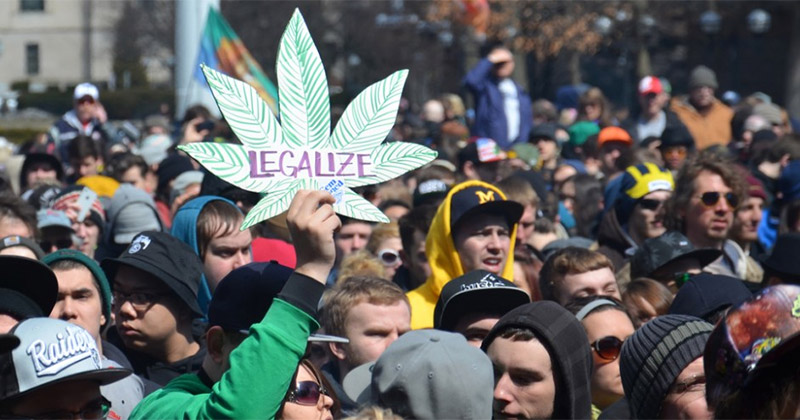
The consequences of the cannabis legalization in the United States are slowly but surely beginning to emerge. A recent study published by the Cato Institute, an American libertarian think tank, to prove or disprove the claims made by activists on both sides of the legalization debate.
The report « Dose of Reality: The Effects of State Marijuana »examines marijuana and alcohol use, taxes and the economy, cannabis prices, traffic accidents, public health, and the effects on adolescents in Colorado, Washington, Oregon, and Alaska by comparing pre- and post-legalization data.".
Taxes and the Economy
Undoubtedly, the most notable effect of cannabis legalization is the revenue generated from taxes. The study shows that states that have legalized the use of medical or recreational cannabis «have unexpectedly reaped significant benefits in tax revenue.» Taxes are collected on sales of medical and recreational cannabis in the form of excise taxes, state taxes, or local taxes.
In 2015, Colorado generated a total of $135 million from recreational consumers alone, of which 26% was subsequently used for school construction projects and improvements to the education system.
Similarly, Washington State collected $70 million in taxes during its first year of legalization. In Oregon, where legalization took effect in January 2016, tax revenue now stands at nearly $15 million.
The cannabis industry appears to have a positive impact on employment rates. In 2014, unemployment fell sharply in Colorado, coinciding with the opening of cannabis retail stores in the state.
The real estate market in Denver is booming, with many believing that the success of the cannabis industry is the cause and is driving up rents.
Cannabis, Alcohol, and Other Drug Use
When comparing the other predicted effects of legalization, the study finds a «lack of significant negative consequences.» The theory of cannabis as a gateway drug leading to alcohol or other drugs is not reflected in the statistics. The The U.S. Attorney General recently stated, in fact, that that this theory, often used as an argument against legalization, did not hold true.
Neither Colorado nor Washington saw an increase in alcohol or cocaine use following the policy changes. While these rates have remained unchanged, admission rates to treatment centers for excessive cannabis use have decreased in Colorado and in the Seattle area.
The study speculates that «these patterns suggest that the dramatic increase in cannabis abuse that some people predicted prior to legalization has not materialized.».
Youth, Crime, Trafficking, and Public Health
Concerns regarding young people’s alcohol consumption and academic performance were also taken into account. Since no increase in consumption was observed, the study states that «the results do not suggest any major change in consumption, which therefore implies that there is no major change in academic performance.».
Unfortunately, the data on crime, traffic accidents, and public health are inconclusive. The study also highlights the multitude of factors that can influence these data and the difficulty of isolating only the figures directly related to cannabis.
«All of the trends observed in marijuana use could provide evidence of a cultural explanation behind legalization: as cannabis becomes more commonplace and less stigmatized, citizens and lawmakers are less opposed to legalization. In essence, the increase in cannabis use may not be a consequence of legalization, but rather its cause,» the study concludes.
Along with this report, the Drug Policy Alliance a recently posted online their figures and analyses on the same topic, under the title «So Far, So Good.» This study points in the same direction and reaches similar conclusions: a steady decline in cannabis-related arrests, no increase in youth use or traffic accidents, and massive tax revenue gains. The only thing that hasn’t changed is the prosecution, which primarily targets Black people. Although their consumption rates are the same as those of white people, African Americans continue to be arrested at disproportionately high rates.








Contest: Win a trip to Quebec to experience the hemp harvest firsthand

Bedrocan on Hold Amid Uncertainty Over Medical Cannabis

Newsweed Launches Its Own AI
A new tax of 0.5% could disrupt the hemp industry in Canada

Medical Cannabis and Driving: New South Wales Ends Automatic Penalties for THC

China's Yongji Health Takes Control of Tasmanian Botanics

Autism and Cannabis: Results from the First Placebo-Controlled Trial of NTI164

Which countries legalized medical cannabis before France?

From the boom in dispensaries to a purely medical approach: Thailand is revising its cannabis policy

South Korea is preparing to begin local production of medical cannabis to meet rising demand
-
 Cannabis and driving3 weeks ago
Cannabis and CBD: French Drivers Can Now Lose Their License Even Without a Positive Test Result
-

 Cannabis in France6 days ago
Which countries legalized medical cannabis before France?
-
Cannabis in France3 weeks ago
Cannabis Legalization: The LFI Bill Has a Major Problem—THC
-
Cannabis in the Netherlands2 weeks ago
One year after the launch of the Dutch cannabis experiment, the first trends are emerging
-
Business6 days ago
South Korea is preparing to begin local production of medical cannabis to meet rising demand
-
Cannabis in Thailand6 days ago
From the boom in dispensaries to a purely medical approach: Thailand is revising its cannabis policy
-
Cannabis in Argentina2 weeks ago
Argentina Opens Its Market to Hemp Flowers Containing 1% of THC
-
Cannabis in France2 weeks ago
French medical cannabis remains stalled at the Ministry of Health













You must be logged in to post a comment Login