Canada: new device to control THC levels at the wheel

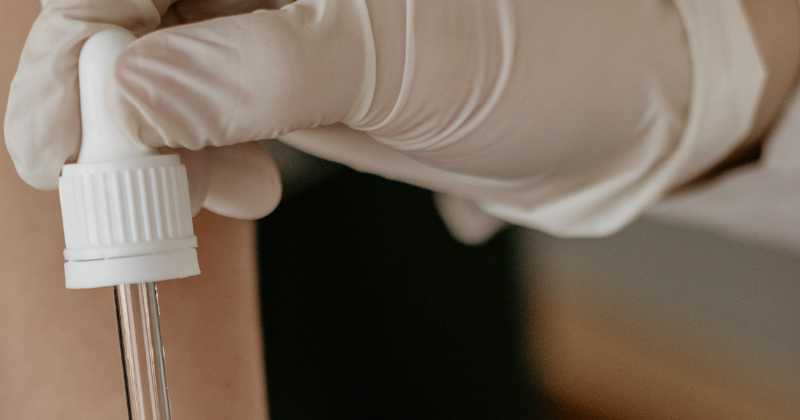
The Canadian government has just authorized the use of a new device, the Abbott SoToxa, capable of testing THC levels in the saliva of drivers. This device is the second of its kind, as another device—the Drager DrugTest 5000—was approved a few months ago. Canada’s Drug-Impaired Driving Act sets a threshold of 2 nanograms of THC per milliliter of blood for a simple offense and 5 nanograms per milliliter for a combined offense. The penalty A first offense can result in a fine of up to 1,000 Canadian dollars, and up to 120 days in prison for a repeat offense with a blood alcohol concentration of more than 5 ng/mL.
These measures to monitor potential impairment of attention caused by cannabis use were authorized in December 2018 in Canada, although the government is struggling to expand their use across the country. Some law enforcement officers have doubts about the tool’s actual usefulness, since the presence of THC in saliva does not necessarily indicate that the individual is still under the influence of the drug. In fact, the rate at which THC leaves the body depends on several factors, such as weight, body fat percentage, or the amount consumed.
Furthermore, the device is also highly sensitive to outdoor temperatures, particularly cold weather. Given Canada’s climate, one can expect malfunctions and biased results, which lawyers could easily challenge. The police have therefore clarified that they will use it only in temperature-controlled environments, such as inside a police vehicle or a mobile unit at a checkpoint.
The device will therefore be used only to «confirm the suspicion of drug use,» according to a government statement. This, «combined with other observations made by the police officer, may lead to a more thorough investigation, either by requesting a drug recognition assessment or a blood sample,» the government stated. However, the blood draw must take place no later than two hours after the police stop.
However, measuring THC levels in saliva is not an effective way to determine actual impairment of attention, as indicated in a study by the University of Marseille in 2017. These findings were also confirmed by the State of Michigan, which had shown in a recent study that blood tests were highly unreliable for determining whether drivers were sober.





Medical Cannabis in Germany: THC Prices Vary by a Factor of 12

France already has 3,000 cannabis retail outlets. None of them are legal.

Morocco's exports of legal cannabis have expanded to 15 countries

Aurora Cannabis Doubles Its Production Capacity in Germany

Tilray is accelerating its operations in Europe thanks to a license in Portugal

Boston will host the 10th annual State of the Cannabis Industry Conference on October 26

A DEA report confirms that there are no fatal cannabis overdoses

A British patient is challenging the NHS's refusal to reimburse medical cannabis

October 2026 CBD Highlights: 10 Strains and Hash to Discover from 5 French Producers

CBD in France: Traceability, Retail Stores, THC and Driving… What the New Bill Proposes
-
 Business2 weeks ago
The legal cannabis market in New York exceeds 4 billion $ in revenue
-

 Cannabis in France3 weeks ago
Which countries legalized medical cannabis before France?
-
Business3 weeks ago
South Korea is preparing to begin local production of medical cannabis to meet rising demand
-
Cannabis in Thailand3 weeks ago
From the boom in dispensaries to a purely medical approach: Thailand is revising its cannabis policy
-
Cannabis and driving3 weeks ago
Medical Cannabis and Driving: New South Wales Ends Automatic Penalties for THC
-
Cannabis in Argentina4 weeks ago
Argentina Opens Its Market to Hemp Flowers Containing 1% of THC
-
Autism3 weeks ago
Autism and Cannabis: Results from the First Placebo-Controlled Trial of NTI164
-
Cannabis in France2 weeks ago
France’s Drug Policy Chief Defends Cannabis Prohibition... and Runs Into the Facts

















You must be logged in to post a comment Login