
California to vote in November to legalize cannabis

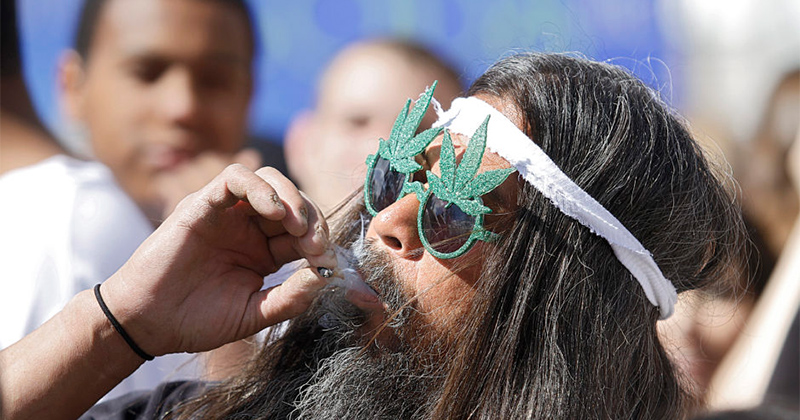
Citizens Californians of voting age may choose to legalize recreational cannabis after the initiative gathered the required number of signatures to appear on the November ballot.
A vote in favor of the legalization of cannabis in California would mean that 1 in 6 Americans would live in a state where the sale of cannabis is legal, including the entire West Coast.
This initiative is being promoted by a well-funded and politically connected coalition, led in particular by Former Facebook President Sean Parker.
«Today marks a new beginning for California, as we move to replace the costly, harmful, and ineffective prohibition system with a robust, legal, and responsible system for adult use, complete with its own rules and rights ,» said Jason Kinney, a campaign spokesperson.
The legalization of cannabis in California would allow people over the age of 21 to purchase one ounce (28 grams) of cannabis and cannabis-infused products at licensed stores, and to grow up to six plants for personal use.
Smoking marijuana would still be prohibited in places where smoking tobacco is also prohibited, including restaurants, bars, and enclosed public spaces.
The sale of medical and recreational cannabis will be subject to an excise tax of 15%. Cities and counties will be able to ban cannabis-related businesses and impose their own fees and taxes.
Government officials estimate that the measure could generate 1 billion $ in revenue per year and reduce public safety costs (police, courts, prisons) by tens of millions of $. Funds from the initiative, which requires a simple majority to pass, will cover regulatory costs, research on the effects of legalization, and drug addiction treatment, among other things.
The legalization initiative is supported by major players in the U.S. cannabis industry: the California chapter of the NAACP (National Association for the Advancement of Colored People, an organization that advocates for the rights of African Americans—as the Black community is widely stigmatized and overrepresented in cannabis-related legal cases), the California Medical Association and the California Democratic Party. Their main arguments are that legalization would:
- to combat racial and social discrimination
- make it harder for people under 21 to access cannabis
- facilitate the fight against trafficking
Conversely, opponents include the California Republican Party and groups representing police chiefs and hospitals, and they highlight the risks to road safety and the overall impact on society.
Californians had rejected a similar proposal in 2010, two years before Colorado and Washington State liberalized their approach to cannabis.
In addition to California, Maine and Nevada will vote in November on whether to allow the recreational use of cannabis.







CBD is said to promote athletic recovery, without improving performance

294 cannabis clubs in Chile: a booming movement with uneven distribution

Chronic Sciatica: New York Approves First Clinical Trial of a THC-Based Medication

United States: The DEA is accelerating the integration of medical cannabis at the federal level

Florida is nearing one million patients using medical cannabis

Uruguay Revives Its Plan to Allow Tourists to Legally Access Cannabis

In Brazil, researchers are developing an innovative CBD eye drop

Autism: Medical Cannabis Is Linked to Reduced Anxiety

The $28 billion U.S. hemp market remains under threat

Jamaica Eases Small Farmers' Access to the Cannabis Market
-
 Business5 days ago
The legal cannabis market in New York exceeds 4 billion $ in revenue
-
Cannabis and driving4 weeks ago
Cannabis and CBD: French Drivers Can Now Lose Their License Even Without a Positive Test Result
-

 Cannabis in France2 weeks ago
Which countries legalized medical cannabis before France?
-
Business2 weeks ago
South Korea is preparing to begin local production of medical cannabis to meet rising demand
-
Cannabis in the Netherlands4 weeks ago
One year after the launch of the Dutch cannabis experiment, the first trends are emerging
-
Cannabis in Thailand2 weeks ago
From the boom in dispensaries to a purely medical approach: Thailand is revising its cannabis policy
-
Cannabis in France4 weeks ago
French medical cannabis remains stalled at the Ministry of Health
-
Cannabis in Argentina3 weeks ago
Argentina Opens Its Market to Hemp Flowers Containing 1% of THC

















You must be logged in to post a comment Login