California to vote in November to legalize cannabis

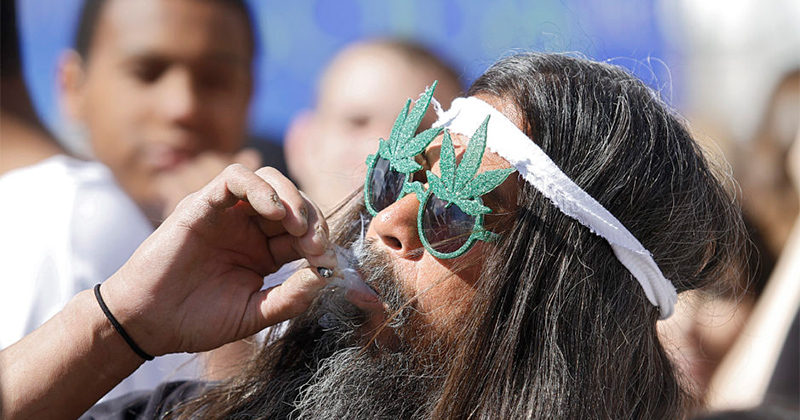
Citizens Californians of voting age may choose to legalize recreational cannabis after the initiative gathered the required number of signatures to appear on the November ballot.
A vote in favor of the legalization of cannabis in California would mean that 1 in 6 Americans would live in a state where the sale of cannabis is legal, including the entire West Coast.
This initiative is being promoted by a well-funded and politically connected coalition, led in particular by Former Facebook President Sean Parker.
«Today marks a new beginning for California, as we move to replace the costly, harmful, and ineffective prohibition system with a robust, legal, and responsible system for adult use, complete with its own rules and rights ,» said Jason Kinney, a campaign spokesperson.
The legalization of cannabis in California would allow people over the age of 21 to purchase one ounce (28 grams) of cannabis and cannabis-infused products at licensed stores, and to grow up to six plants for personal use.
Smoking marijuana would still be prohibited in places where smoking tobacco is also prohibited, including restaurants, bars, and enclosed public spaces.
The sale of medical and recreational cannabis will be subject to an excise tax of 15%. Cities and counties will be able to ban cannabis-related businesses and impose their own fees and taxes.
Government officials estimate that the measure could generate 1 billion $ in revenue per year and reduce public safety costs (police, courts, prisons) by tens of millions of $. Funds from the initiative, which requires a simple majority to pass, will cover regulatory costs, research on the effects of legalization, and drug addiction treatment, among other things.
The legalization initiative is supported by major players in the U.S. cannabis industry: the California chapter of the NAACP (National Association for the Advancement of Colored People, an organization that advocates for the rights of African Americans—as the Black community is widely stigmatized and overrepresented in cannabis-related legal cases), the California Medical Association and the California Democratic Party. Their main arguments are that legalization would:
- to combat racial and social discrimination
- make it harder for people under 21 to access cannabis
- facilitate the fight against trafficking
Conversely, opponents include the California Republican Party and groups representing police chiefs and hospitals, and they highlight the risks to road safety and the overall impact on society.
Californians had rejected a similar proposal in 2010, two years before Colorado and Washington State liberalized their approach to cannabis.
In addition to California, Maine and Nevada will vote in November on whether to allow the recreational use of cannabis.











Germany: Pharmacists Propose a Pilot Program to Sell Recreational Cannabis in Pharmacies

France Is More Reluctant to Legalize Cannabis Than the EU Average, According to a New EUDA Survey

Scientists Create Cannabinoid-Free Hemp

MediPharm is preparing to launch its cannabis inhaler in Europe

Sensi Seeds and High Times are teaming up to launch five new cannabis strains

Brains Bioceutical is aiming for the Nasdaq with a valuation of $750 million

CBD in French Polynesia: Sublingual Oils Soon to Be Available Over the Counter

Cannabis legalization in Mexico returns to the Senate after five years of political deadlock

Massachusetts Gives the Green Light to Drive-Thru Cannabis Sales

Finland Wants to Legalize Cannabis Based on the German Model
-
 Cannabis in Quebec4 weeks ago
Cannabis: What France Could Learn from Quebec, Eight Years After Legalization
-
Cannabis in New Zealand4 weeks ago
Chronic Pain: New Zealand Is Testing Cannabis to Improve Sleep
-
Cannabis in France4 weeks ago
Dr. Pascal Douek, a tireless advocate for medical cannabis in France, has died
-
Cannabis in France4 weeks ago
Medical cannabis: The Greens introduce two amendments to accelerate its widespread adoption
-
Cannabis in Canada4 weeks ago
A Canadian study reveals the pleasant psychotropic effects of high-dose CBD
-
Studies on cannabis4 weeks ago
More THC, barely any additional effects: A new study challenges common assumptions about the potency of cannabis
-
Cannabis in Argentina4 weeks ago
The Argentine province of Chubut is creating its own framework for medical cannabis
-
Cannabis in France3 weeks ago
Medical Cannabis: Patients Issue a Formal Notice to the Government to Break the Deadlock

















You must be logged in to post a comment Login