UK halts CBD sales

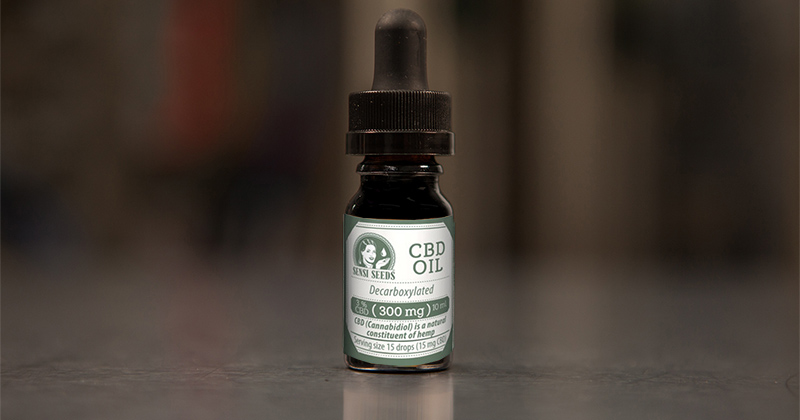
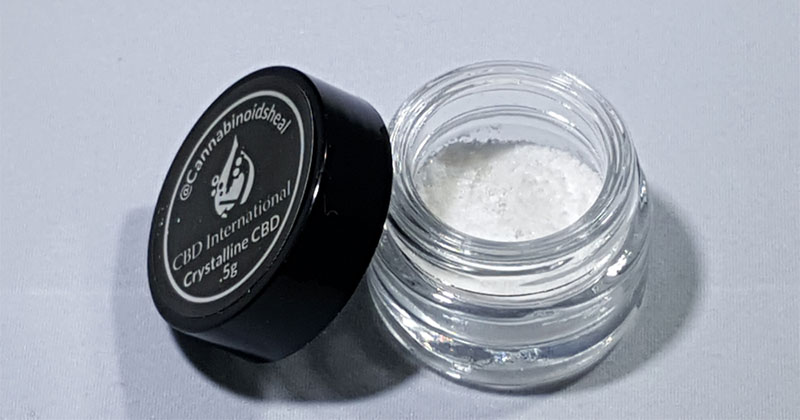
Last Monday, the producers and distributors of cannabidiol CBD businesses in the United Kingdom have begun receiving letters from the Medicines and Healthcare products Regulatory Agency (MHRA) instructing them to stop selling, supplying, promoting, advertising, or ordering CBD products within 28 days. The letters also stated that CBD now meets the definition of a medical product. This revision of the definition will leave British patients without legal access to CBD.
MHRA representatives are expected to issue a statement today to clarify this position.
Peter Carroll, from the campaign End Our Pain, a British patient advocacy group that campaigns for medical cannabis, stated that «it understands the need to impose controls on the CBD market to protect people from unscrupulous suppliers and to ensure that people fully understand what they are taking.» But it added that it «fears this sudden move will cause enormous distress to people who rely on these products. It will drive many people to seek out CBD on the black market.».
The decision complicates the status of medical cannabis in the United Kingdom. The classification of CBD—one of the main active compounds in cannabis—as a medical product conflicts with the 2001 regulatory law (Misuse of Drugs Regulations) which classifies cannabis as having «no medical value.» This adds a new exception to the 2001 law; the first exception was Sativex, which is available—subject to numerous restrictions—to people with multiple sclerosis.
CBD has skyrocketed in popularity recently. Consumers use it in various forms, whether to relax, quit nicotine, or for a wide range of medical treatments. The CBD is associated with a number of medical applications with strong evidence of its effectiveness in treating epilepsy, anxiety, depression, and multiple sclerosis, among other conditions.
GW Pharmaceuticals, the manufacturer of Sativex, has recently published the results of clinical trials Phase III trial of Epidiolex, a liquid formulation of CBD. The company hopes to quickly obtain marketing authorization in Europe to treat severe forms of epilepsy, such as Dravet syndrome and Lennox-Gastaut syndrome.
It is still unclear whether current CBD sellers will be able to obtain a license to sell CBD. Medical products must meet certain standards before they can be sold, a process that generally takes years.
Many concerns have been raised about the unregulated CBD market. Until now, companies could sell CBD as long as they made no medical claims about the product. Some companies blithely ignored this restriction or supplied products of dubious origin and quality. The implementation of new rules will likely be welcomed by the industry, which is primarily concerned about whether it will ever be able to sell CBD again—and how soon.
The short 28-day deadline is likely to prompt people who need CBD to stock up. But it’s clear that the timing isn’t in the patients’ best interest.
Via Leafly







The Brazilian medical cannabis market continues to grow

Morocco: Three Cannabis-Based Medications Approved for the Treatment of Epilepsy

Canopy Growth Receives New EU-GMP Certification to Strengthen Its Presence in Europe

Three years after legalizing medical cannabis, Albania continues to establish regulations for it

The first plant-based medical THC spray arrives in the United Kingdom

Medical Cannabis in Germany: THC Prices Vary by a Factor of 12

France already has 3,000 cannabis retail outlets. None of them are legal.

Morocco's exports of legal cannabis have expanded to 15 countries

Aurora Cannabis Doubles Its Production Capacity in Germany

Tilray is accelerating its operations in Europe thanks to a license in Portugal
-
 Business2 weeks ago
The legal cannabis market in New York exceeds 4 billion $ in revenue
-

 Cannabis in France4 weeks ago
Which countries legalized medical cannabis before France?
-
Business4 weeks ago
South Korea is preparing to begin local production of medical cannabis to meet rising demand
-
Cannabis in France4 days ago
France already has 3,000 cannabis retail outlets. None of them are legal.
-
Cannabis in Thailand4 weeks ago
From the boom in dispensaries to a purely medical approach: Thailand is revising its cannabis policy
-
Cannabis in the U.S.5 days ago
A DEA report confirms that there are no fatal cannabis overdoses
-
Cannabis and driving3 weeks ago
Medical Cannabis and Driving: New South Wales Ends Automatic Penalties for THC
-
Cannabis in France3 weeks ago
France’s Drug Policy Chief Defends Cannabis Prohibition... and Runs Into the Facts
















You must be logged in to post a comment Login