Partnership between Scotts Miracle-Gro and Canadian cannabis producer Flowr Corp.

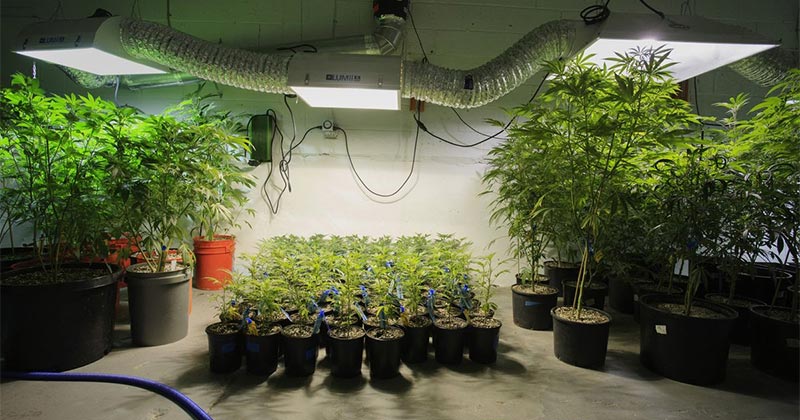
Hawthorne Gardening Co., a subsidiary of Scotts Miracle-Gro Co., has just announced a partnership with Canadian cannabis producer Flowr Corp. for the construction of a 50,000m² research laboratory in British Columbia. The aim of this partnership is to test fertilizers produced by Hawthorne on the Cannabis plant, a study hitherto impossible because the company is based in New York: «we were obliged to go through an imperfect process by selling products without testing them on the plants in question (...) Cannabis is such a complex and poorly understood plant at this stage of its evolution that it doesn't seem satisfactory to test them on petunias» said Chris Hagedorn, Managing Director of Hawthorne.
An economic opportunity
«We quickly realized that cannabis and hydroponics were a major opportunity,» explains the general manager. The hydroponic cultivation is an above-ground production method, so the roots don't draw their nutrients from a nutrient liquid. The cannabis industry relies heavily on indoor cultivation to avoid climatic hazards impacting production, and to achieve higher yields all year round. Producers of fertilizers and liquid nutrients benefit greatly from the development of this industry. Hawthorne already devotes 90 % of its sales to the cannabis industry. However, this is the first official partnership between the two sectors.
As the market has developed and branched out, many new intersections have appeared, and the moral ban on the plant has been lifted. Recently the alcohol industry, which has entered the market and entered into partnerships. It's only natural that the gardening sector should join the boat: «It's become more acceptable to our investor base, to our board and management team, and the motivation is obvious: it's a high-growth sector».
Flowr aims to be among the highest-yielding plant producers. Their facilities already produce 250 grams of cannabis per square meter, compared with an industry average of 100 grams. According to the company's president and co-founder, the goal is to produce 450 grams. The company already has a supply agreement with the provincial governments of Ontario and British Columbia, as well as with a German distributor for medical cannabis.
Nature's place in industry
As competition intensifies, the quest for the highest rate of return is evacuating the potential for production methods that leave nothing to chance but the action of nature. Instead, energy-intensive production, often enhanced by chemical components and selection of the best plants, takes over. Visit breeding is, of course, commonplace in the cannabis industry, enabling THC levels to be concentrated or certain effects to be targeted as part of a therapeutic treatment. The partners' future laboratory aims to study the plant's genetics and its effects on human physiology.
If the company's image Flowr is rather eco-friendly, with quality plants produced without pesticides. Scotts is more sulphurous. The company is one of Monsanto's main partners. recently sentenced for its Round-up product, which is said to cause cancer. Lawsuits against the company abound, and it has a diabolical reputation. The company Scotts, has been involved in a number of lawsuits over the use of unlabelled chemical and synthetic components hazardous to human and wildlife life.
In April 2008, the U.S. Environmental Protection Agency ordered the withdrawal of a company product for the illegal addition of unregistered carcinogens and endocrine disruptors and false marketing. In September 2012, the company had to pay $12.5 million in criminal fines for charges of deceptive marketing and falsifying pesticide registrations with the inclusion of toxic chemicals. In all, the Environmental Protection Agency identified more than 100 products produced or sold by the company in the last five years that failed to comply with federal pesticide laws.
Cannabis has a very high absorption rate, so virtually everything used in its production ends up in the plant, both nutrients and chemical elements. At the end of the chain, the consumer is the last to be affected.








«Vincy Gold»: Humboldt Seed Company on the Hunt for Saint Vincent Sativas

Cronos Completes the Acquisition of CanAdelaar for 57.5 million euros

Cannabis with a "bloody" twist: Discover Sensi True Blood and Sensi Sangria, the two new strains from Sensi Seeds

Hemp: The Council of the EU Takes a Stand on New Production and Marketing Rules

Missouri's legal cannabis market accounts for 93 % of consumer spending

THC Gummies: How to Read a Certificate of Analysis Before Buying

British patients now have access to THCV-rich cannabis flowers

Spain: Medical Cannabis Is Coming to About 50 Hospitals

JIHE 2026: Japan’s Largest Trade Show Dedicated to Hemp and CBD Returns to Tokyo with More Than 100 Industry Players

New Caledonia: The Courts Clear the Way for the Return of CBD
-
 Business3 weeks ago
The legal cannabis market in New York exceeds 4 billion $ in revenue
-

 Cannabis in France4 weeks ago
Which countries legalized medical cannabis before France?
-
Cannabis in France1 week ago
France already has 3,000 cannabis retail outlets. None of them are legal.
-
Business4 weeks ago
South Korea is preparing to begin local production of medical cannabis to meet rising demand
-
Cannabis in the U.S.1 week ago
A DEA report confirms that there are no fatal cannabis overdoses
-
Cannabis in Thailand4 weeks ago
From the boom in dispensaries to a purely medical approach: Thailand is revising its cannabis policy
-
Cannabis and driving4 weeks ago
Medical Cannabis and Driving: New South Wales Ends Automatic Penalties for THC
-
Cannabis in France3 weeks ago
France’s Drug Policy Chief Defends Cannabis Prohibition... and Runs Into the Facts

















You must be logged in to post a comment Login