
Kenya: Rastafarians' cannabis battle further delayed


The High Court of Kenya has once again postponed its decision in a case that has become emblematic, brought by the Rastafari Society of Kenya (RSK). Originally expected on May 28, the decision was postponed until July 15, prolonging a legal standoff that has been ongoing for more than five years.
For the Rastafari community, this issue goes far beyond the question of criminal law alone. It crystallizes a conflict between freedom of religion, constitutional rights, and a particularly strict legislative framework regarding narcotics. At the heart of the debate is the ability of Kenyan law to accommodate religious practices that include the use of cannabis.
The High Court's postponements are exacerbating legal uncertainty
The case challenges the provisions of the Law on the Control of Narcotics and Psychotropic Substances, which criminalizes the possession, cultivation, and use of cannabis. Under current law, offenders face a minimum sentence of five years in prison and fines.
The Court justified this postponement by citing the «complex» nature of the case and its «far-reaching legislative implications,» according to correspondence cited in the case file. This is already the second postponement this year, which has heightened the frustration of the petitioners, who have been waiting since the launch of the «Ganja Petition» in 2021.
Despite this postponement, the members of the Rastafari Society of Kenya say they remain calm. «We have remained very calm and positive from the start,» said Ras Benaiah Mbucu, coordinator of the RSK, reflecting a stance rooted in Rastafarian philosophy rather than confrontation.
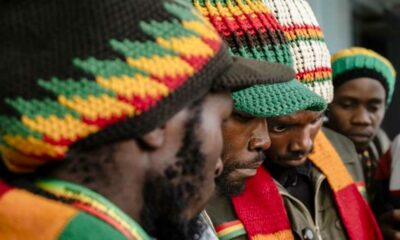
Recognition of the Rastafari movement The recognition by Kenyan courts in 2019 was central to the petitioners’ argument. They contend that this recognition strengthens their claim to protection of religious freedom, including the right to use cannabis as a sacrament.
«Faith vs. the Cannabis Law»: Constitutional Tensions Before the Court
During recent hearings, the plaintiffs’ attorneys argued that Kenya’s drug laws create a direct conflict between state law and constitutional protections.
«The High Court was informed that Kenya’s Narcotics Act has created a direct conflict between freedom of religion and the criminal prohibition of cannabis, with Rastafarians arguing that the law places them in a constitutional dilemma between their faith and compliance with the law.»
The attorneys also highlighted the personal and spiritual nature of cannabis use in the Rastafarian practice. As stated in court:
«They (the Rastafarians) have been placed in a situation where they must choose between obeying the law and remaining true to their beliefs.».
Another argument elaborated on the scope of constitutional protections: «Although the law was enacted in the public interest, it is important for the court to examine the effect of a blanket ban on the private use, consumption, and cultivation of marijuana.».
The petitioners also argue that the law disproportionately infringes on privacy and freedom of conscience: «It encroaches on the most intimate sphere of the private home, of conscience, and of the choices that an adult makes without harming others.».
Comparative legal arguments were also put forward, referring to jurisdictions such as South Africa, where private cannabis use has been decriminalized on constitutional grounds.
A movement shaped by identity, history, and exclusion
Beyond the legal arguments, this case highlights broader social tensions surrounding the Rastafarianism in Kenya. In Kenya, the movement has continued to grow, particularly among young people seeking alternative spiritual paths. Rastas continue to report instances of discrimination and police pressure related to cannabis possession and their appearance. Ras Benaiah Mbucu described constant harassment, including attempts at extortion during his run-ins with the police.
Historian Giulia Bonacci links this marginalization to the colonial legacy and contemporary social norms, emphasizing that physical appearance—such as dreadlocks—can reinforce exclusion in a society where conformity to dominant religious and cultural norms remains influential.
Personal accounts reflect these tensions. The Kenya's first Rastafarian lawyer, Ras Mathenge Mukundi, recalls having faced stigma in academic and professional circles:
«It was tough in college, because that’s when I started growing my dreadlocks,» he explains. «People tried to talk me out of it—both some of my classmates and the faculty.»
When he was sworn in as a member of the bar, he chose not to wear the traditional wig from the colonial era, appearing instead with a blue turban covering his dreadlocks—an image that was widely circulated in the African media.
With the verdict now expected in July, this legal dispute raises a broader question: Can a general ban on cannabis coexist with recognized religious practices that regard it as a sacramental element?


















CBD is said to promote athletic recovery, without improving performance

294 cannabis clubs in Chile: a booming movement with uneven distribution

Chronic Sciatica: New York Approves First Clinical Trial of a THC-Based Medication

United States: The DEA is accelerating the integration of medical cannabis at the federal level

Florida is nearing one million patients using medical cannabis

Uruguay Revives Its Plan to Allow Tourists to Legally Access Cannabis

In Brazil, researchers are developing an innovative CBD eye drop

Autism: Medical Cannabis Is Linked to Reduced Anxiety

The $28 billion U.S. hemp market remains under threat

Jamaica Eases Small Farmers' Access to the Cannabis Market
-
 Business5 days ago
The legal cannabis market in New York exceeds 4 billion $ in revenue
-
Cannabis and driving4 weeks ago
Cannabis and CBD: French Drivers Can Now Lose Their License Even Without a Positive Test Result
-

 Cannabis in France2 weeks ago
Which countries legalized medical cannabis before France?
-
Business2 weeks ago
South Korea is preparing to begin local production of medical cannabis to meet rising demand
-
Cannabis in the Netherlands4 weeks ago
One year after the launch of the Dutch cannabis experiment, the first trends are emerging
-
Cannabis in Thailand2 weeks ago
From the boom in dispensaries to a purely medical approach: Thailand is revising its cannabis policy
-
Cannabis in France4 weeks ago
French medical cannabis remains stalled at the Ministry of Health
-
Cannabis in Argentina3 weeks ago
Argentina Opens Its Market to Hemp Flowers Containing 1% of THC

















You must be logged in to post a comment Login