Kenyan lawyer petitions to legalize cannabis nationwide

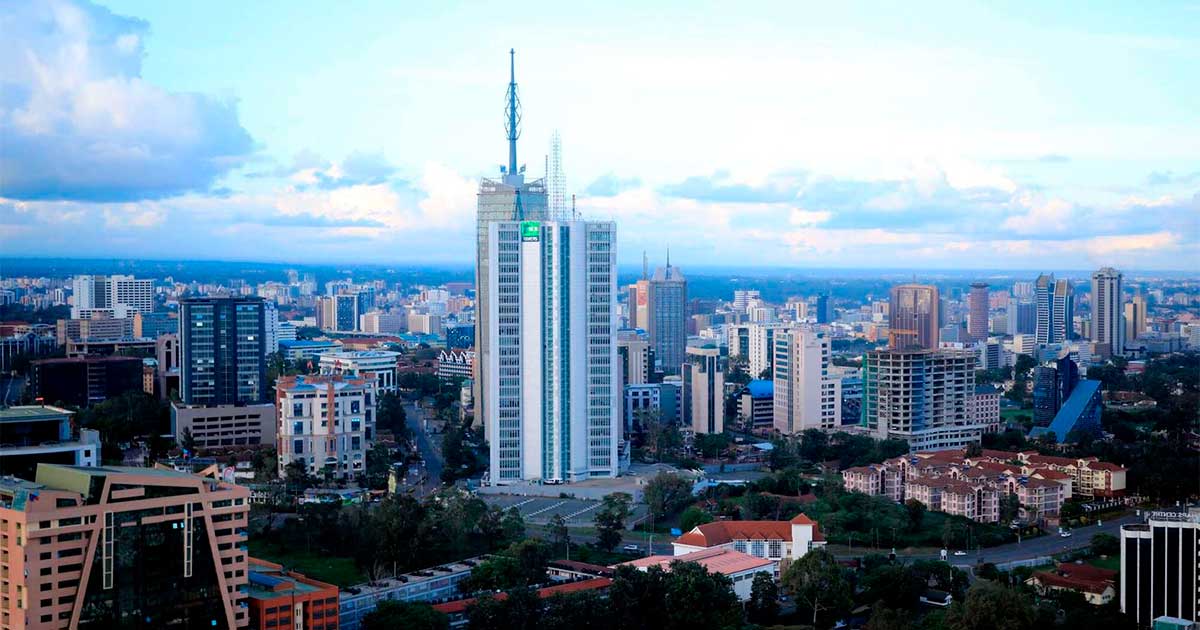
In a statement issued on March 30, the former president of the Law Society of Kenya (LSK), Nelson Havi, has announced its intention to file a constitutional petition in the coming week, with the aim of overturning the criminalization of cannabis in Kenya.
«I will file a constitutional petition next week to declare unconstitutional all sections of the law that criminalize the cultivation, processing, sale and use of marijuana,» he said.
Although Mr. Havi did not specify the exact date of the filing, the announcement has already rekindled conversations about the legalization of cannabis in Kenya.
The controversial vision of Wajackoyah
Havi's approach echoes the bold proposals of the Roots Party, George Wajackoyah, who has made cannabis legalization a central pillar of his campaign for the 2022 general elections. Wajackoyah drew public attention to his claim that legalizing the cultivation of bhang, the local name for cannabis, could hold the key to solving Kenya's exploding public debt.
Quoting Nyeri County as a case study, Wajackoyah estimated that one hectare of cannabis could generate up to 140,000 per harvest. He extrapolated this figure to the whole county - which covers 230,000 hectares - suggesting that a single harvest could yield 40 billion euros (4.6 trillion shillings). With two annual harvests, he said, Nyeri alone could generate 80 billion euros (9.2 trillion shillings).
«If the country grew marijuana in Nyeri alone, the country would build two expressways in every county in Kenya.»
He went even further, proposing that cannabis revenues could provide every Kenyan with an annual dividend cheque of 200,000 shillings (1500€).
Although the Wajackoyah projections were greeted with skepticism, they played an important role in the introduction of cannabis reform in mainstream political discourse. His rhetoric also put the issue in a historical context, drawing parallels between cannabis and colonial-era cash crops in Kenya.
A colonial heritage and a modern struggle
Wajackoyah reminded Kenyans that the region's economic prosperity Mount Kenya was once rooted in today's legalized cultures, such as the coffee and the tea, access to which was limited in colonial times.
«Mount Kenya was enriched by two cash crops, coffee and tea. In fact, the Kikuyu took off economically in 1923, when they were allowed to grow coffee and tea. Before 1923, it was illegal for indigenous Kenyans to grow these two products», he declared.
This historical analogy resonates with those who see current cannabis laws as remnants of colonial policy - laws that continue to limit economic opportunities, particularly for rural farmers.
The debate also focuses on public health, law enforcement resources and the need for a cannabis industry that could generate jobs and tax revenues. Although no prominent Kenyan politician currently holds office on a pro-cannabis platform, the combination of economic arguments and legal activism could tip the balance in favor of cannabis.
As the country awaits the filing of Havi's petition, attention is once again focused on an issue that is becoming urgent not only in Kenya, but throughout Africa: the cannabis reform open up new avenues for development in the 21st century?


















Medical Cannabis in Germany: THC Prices Vary by a Factor of 12

France already has 3,000 cannabis retail outlets. None of them are legal.

Morocco's exports of legal cannabis have expanded to 15 countries

Aurora Cannabis Doubles Its Production Capacity in Germany

Tilray is accelerating its operations in Europe thanks to a license in Portugal

Boston will host the 10th annual State of the Cannabis Industry Conference on October 26

A DEA report confirms that there are no fatal cannabis overdoses

A British patient is challenging the NHS's refusal to reimburse medical cannabis

October 2026 CBD Highlights: 10 Strains and Hash to Discover from 5 French Producers

CBD in France: Traceability, Retail Stores, THC and Driving… What the New Bill Proposes
-
 Business2 weeks ago
The legal cannabis market in New York exceeds 4 billion $ in revenue
-

 Cannabis in France3 weeks ago
Which countries legalized medical cannabis before France?
-
Business3 weeks ago
South Korea is preparing to begin local production of medical cannabis to meet rising demand
-
Cannabis in Thailand3 weeks ago
From the boom in dispensaries to a purely medical approach: Thailand is revising its cannabis policy
-
Cannabis and driving3 weeks ago
Medical Cannabis and Driving: New South Wales Ends Automatic Penalties for THC
-
Cannabis in Argentina4 weeks ago
Argentina Opens Its Market to Hemp Flowers Containing 1% of THC
-
Autism3 weeks ago
Autism and Cannabis: Results from the First Placebo-Controlled Trial of NTI164
-
Cannabis in France2 weeks ago
France’s Drug Policy Chief Defends Cannabis Prohibition... and Runs Into the Facts
















You must be logged in to post a comment Login