The draft law on the legalization of medical cannabis in Morocco translated and annotated

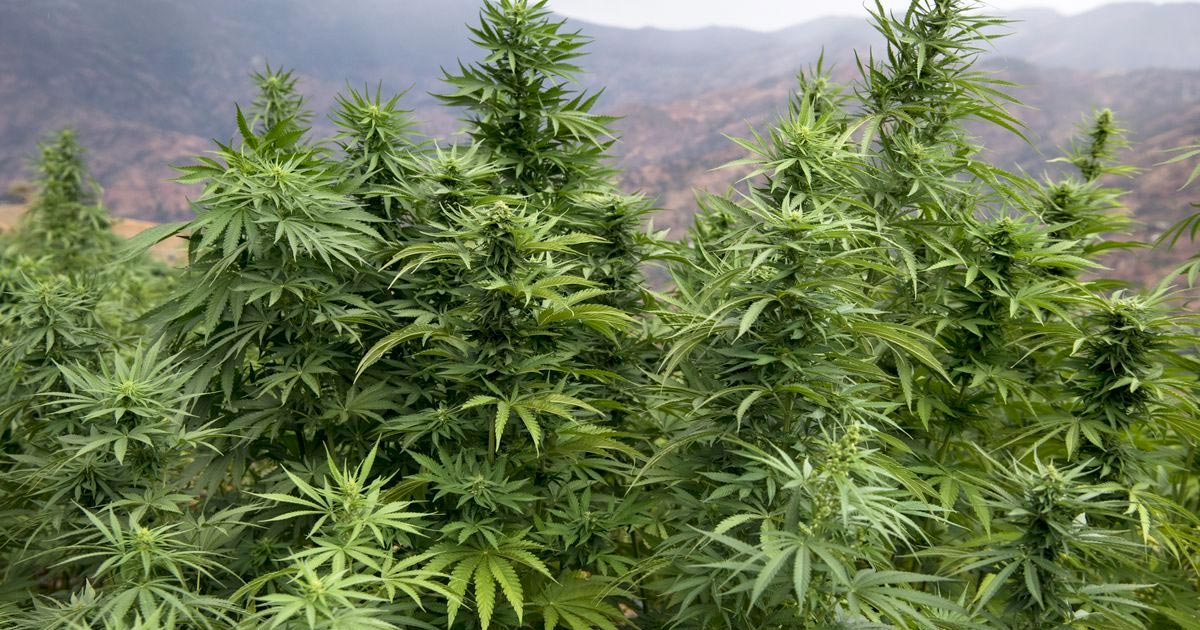
The Morocco is making rapid progress toward legalizing medical cannabis. The Moroccan government has managed to shift from a proposal that resurfaced with every election to a landmark bill on which it is preparing to build a legal industry worth several billion euros.
The project, which was originally available only in Arabic, has been translated and annotated in English by World Morocco News. We are now providing a French translation of this document, which is provided for informational purposes only and does not constitute an official legal document.
Many sections of the bill—primarily those concerning the domestic market—require additional legislation, but the bill in its current form provides a good overview of Morocco’s planned cannabis framework. One notable omission is any mention of the rights and obligations of future users of domestically produced medical cannabis. The government is establishing the structure of a national market but will still need to clarify several other important details in the near future. However, the bill includes most of the provisions related to international exports.
Framework for the Legalization of Cannabis in Morocco: Bill 13-21
SECTION I: General Provisions
Sections 1 through 3 explain how this bill relates to existing, currently effective cannabis legislation.
Section 1 outlines the amendments that the bill will make to the decrees of December 2, 1922, April 24, 1954, and May 21, 1974. These decrees classify cannabis as a «toxic substance and a drug» and criminalize its production, sale, distribution, and use.
Article 1 stipulates that, with regard to the laws established by this bill, the cannabis industry will henceforth be governed by the legal provisions of this bill and the resulting future legislation.
Article 2 attempts to provide a clear definition of numerous terms used in the cannabis industry, such as what is considered a cannabis plant, what the term «cannabis» entails, and its various designations in the bill, including cannabis resin, and what Moroccan law defines as a «drug.».
Article 3 then elaborates on this decriminalization by stipulating that no cannabis-related activity is legal unless the party involved has received a license from what the bill refers to as «the Agency.» The activities are listed as follows:
- Growing Cannabis
- Establishment and Operation of Cannabis Plantations and Farms
- International Cannabis Trade
- The processing of cannabis plants and resin into cannabis-derived products
- The Sale and Marketing of Cannabis
SECTION II: Cannabis Production
Article 4 states that cannabis production will be limited to specific regions, which will be specified in a future decree.
Article 5 specifies that the production quota will be determined (annually) based on demand.
Article 6 states that a THC limit will be set for most cannabis crops. This limit has yet to be determined, with an exception for crops intended for medical and pharmaceutical use.
Article 7: For individuals seeking authorization to cultivate and/or produce cannabis, this article sets forth the eligibility criteria:
- The applicant must be a Moroccan national
- The applicant must be of legal age (18 years or older)
- The applicant must be a registered resident of a region where production is authorized by a future decree (Article 4)
- The applicant must be a member of a cooperative
- If the applicant is not the landowner, they must obtain the landowner’s written approval to grow and produce cannabis before applying for the permit.
- If the applicant is a landowner, he or she must obtain written proof of ownership or operation from the local administrative authorities before applying for the permit
These conditions constitute a large part of the expanded scope of work that this bill introduces.
Article 8 regulates production by setting out the rules for the cultivation and production of cannabis.
First, the article lists a few production rules that must be followed once the permit has been approved; they are listed below:
- The article reiterates the importance of complying with the aforementioned specifications listed in Article 7, which lead to a license for the cultivation and production of cannabis
- Farmers must limit production to state-approved cannabis varieties, which will be determined by the agency’s upcoming legislation
- Farmers must deliver all cannabis crops they produce to their respective cooperatives (as specified in Article 7), and will be paid the price agreed upon in the partnership agreement (which will be outlined in Article 10 of this bill)
The article then details the specifications that it must comply with and report on. These include:
- Standards to be met and followed during the cannabis production and cultivation process
- legal requirements to be followed regarding crop rotation and the number of permitted planting cycles
- rules and regulations governing fertilizers and pesticides, as set forth in existing agricultural laws
Article 9: In this article, the bill addresses the possibility of crop loss or damage and establishes guidelines for the reporting process, stating:
«If the farmer or producer is unable to deliver all or part of the harvest to the cooperative due to unavoidable or accidental damage, he or she must report this to the agency within three days of the incident so that the agency can conduct its own investigation into the matter .».
Article 10 deals with a key entity: cooperatives.
First, the article requires cooperatives to accept the entire expected harvest from their member farmers and producers, and instructs cooperatives to sell it directly to their authorized customers. These are companies and businesses specializing in cannabis processing that have been previously approved by the agency.
During the handover phase (from the cooperative to the company), local authorities and/or local government officials must be present. This article further requires that the officials from the national agency responsible for oversight prepare a written report on the handover they witnessed.
The report must include the identities of the parties involved in the transaction, the date of delivery, the location, the quantities delivered, information about the delivery person, and the destination of the shipment. The report must be signed by a representative of the agency responsible for the delivery patrol.
The article then specifies that any surplus product must be immediately destroyed by the members of the delegation. (The surplus is determined by the quantity agreed upon in the contract between the cooperative and the purchasing company.).
The format and specifications of the contracts between cooperatives and buyers will be determined by future legislation.
Article 11 authorizes direct delivery by the agency to purchasing entities in the event of noncompliance with the delivery guidelines set forth in Article 10.
SECTION III: Oversight of Farms and Plantations
Section 12 specifies that applicants for licenses to cultivate, process, import, and export cannabis must comply with the conditions listed in Section 7. It also specifies that existing laws regarding varieties and seeds apply as well.
Article 13 sets forth the conditions for establishing cannabis plantations, their operation, and the rules governing the import and export of cannabis seeds, specifying:
- that plantation owners are also required to comply with the specifications set forth in Article 8. These include operations carried out after the harvest, such as delivery and specialized storage, in accordance with industry standards
- that farmers are required to grow only cannabis strains approved by the agency
- the importance of ensuring that storage facilities and systems are safe, secure, and adequate
The sale of cannabis varieties to unauthorized parties is explicitly prohibited by this same section. The destruction of these varieties may only be carried out in the presence of local authorities and in accordance with the procedure set forth in Section 10.
SECTION IV: Production of Cannabis-Derived Products
Article 14 lists the criteria that businesses must meet in order to obtain a license to process cannabis plants and seeds and produce cannabis-derived products:
- The company must be registered as a private company under Moroccan law.
- The applicant company must have the financial and human resources necessary to carry out the activity.
- The company is required to have all the permits and authorizations necessary for any industrial or commercial enterprise in Morocco.
In addition to these requirements, the applicant company must have a contract with a registered supplier as specified in Article 10 (cooperative).
Article 15: Industrial companies must provide adequate storage facilities (in accordance with industry standards; this article emphasizes safety rather than quality control requirements) for the cannabis crops they will purchase.
The article also reinforces the provision in the bill prohibiting industrial companies from destroying their cannabis inventory unless a representative from the national agency is present, as stipulated in Article 10.
Article 16: In cooperation with local judicial authorities, industrial companies are also required to comply with the specifications applicable to their operations, in accordance with the guidelines issued by the national agency.
In addition to the relevant laws in effect, the specifications must also include:
- compliance with the rules governing the processing, preparation, and storage of raw cannabis stock in full accordance with industry standards
- compliance with the previously specified standards regarding the transport of cannabis and cannabis products
- the declaration of additives used in the processing of cannabis and the production of its derivatives
- the implementation of industry standards related to quality control and product effectiveness
The specifications in this article also emphasize companies' responsibility to comply with the environmental standards set forth in Moroccan law.
Article 17: The production of cannabis-derived products is also regulated by the THC threshold to be determined by the agency. The article once again exempts manufacturers of medical and pharmaceutical products from this limit.
Article 18 sets forth the packaging requirements for cannabis-derived products during transport. They must be sealed and labeled in accordance with the requirements set forth in Article 8 during transport.
SECTION V: Marketing, Sale, and Export of Cannabis-Derived Products (excluding medical, pharmaceutical, and industrial products)
Article 19 prohibits the «marketing» and export of cannabis and its derivatives, except for those intended for medical, pharmaceutical, and industrial use.
Section 20 sets forth the provisions of this bill relating to the production and sale of pharmaceutical and medical products, referring to Law 17.04 in addition to the legal provisions listed in Section 1.
Article 21 outlines the exceptions to the rules set forth in preexisting legal provisions. It stipulates that cannabis-related activities will be authorized, subject to approval by the national agency, for businesses engaged in the sale, trade, and processing of cannabis and cannabis-derived products. It sets forth the eligibility requirements for these businesses:
- The company must be registered as a private company under Moroccan law
- Companies must have the financial and human resources necessary to carry out the activity
- Companies must have all the permits and authorizations required of any company in Morocco
Article 22 stipulates that companies must also be equipped with adequate and secure storage facilities, and reiterates that companies are not permitted to destroy cannabis without the prior knowledge of the national agency and without the presence of a delegation from the national agency, as specified in Article 10.
Section 23 sets forth the requirements for retailers and exporters of pharmaceutical, medical, and industrial cannabis-derived products:
- Ensure that storage facilities are adequate and safe.
- comply with the transportation standards established by this bill
- implement quality control processes
- comply with environmental regulations regarding production, production waste, etc.
- comply with the packaging guidelines set forth in this bill
SECTION VI: Permit Applications, Approvals, and Denials
Article 24 sets forth the application process for all stages of the cannabis production cycle mentioned above.
According to this article, the national agency has 10 days to issue an administrative follow-up to the application, and 60 days from the date the application is submitted to respond to each permit application, either by approval or by denial.
The agency must provide justification for any denial of a permit, whether for agriculture, production, marketing, or export.
The article also specifies that a delay or lack of response from the agency should not be considered a rejection.
Article 25 directs readers seeking application criteria to Articles 7, 12, 14, and 21. It also specifies that the exact procedure will be established by future regulations issued by the national agency.
Article 26 lists the possible grounds for denying a permit:
- The permit will be denied if the application contains forged documents
- A permit is denied if the national agency determines that the activity for which the permit was requested is harmful or encourages illegal practices and uses, and if the activity is considered a threat to security
- A license will be denied if the entity or individual applying for it has a history of violating the criteria and/or rules set forth in this document or in future legislation governing cannabis production and cultivation.
Article 27 sets the validity period for all licenses at 10 years. All licenses are renewable upon request, following the same procedure.
Article 28: If any of the key points, criteria, or conditions can no longer be met by the entity or individual to whom a permit has been granted, the national agency must be notified 30 days in advance.
Article 29: In this article, the bill confirms a de facto administrative rule: Permit holders may not be transferred.
A change in ownership of an entity or business authorized by the national agency must follow a different procedure for updating the permit, which has yet to be determined by the national agency.
In the event of the death of the person named on the permit, or a change in ownership, etc., the agency may, upon request, issue a temporary permit to the parties directly involved, valid until the harvest is distributed. A new permit application may then be submitted by the parties involved.
Article 30: This article details the possible grounds for license revocation:
- The permit is revoked at the owner's request
- The permit is revoked in the event of a change of ownership, in accordance with Article 29.
- The license will be revoked in the event of a violation of any of the rules and criteria set forth in this text and in future legal documents on this subject.
- The license is revoked if the business ceases operations for a period of two consecutive years
- A license is revoked in the event of a violation of existing and valid laws governing drug regulation.
- The license is revoked if it is found that the license holder is related to a member of the national agency’s board of directors.
The article also specifies that the agency may not revoke permits without written notice to the affected party, and that the permit holder has 15 days to file a legal or administrative appeal.
SECTION VII: The National Agency
Article 31: The national agency will have its headquarters in Rabat, with the option of opening local or regional branches in areas where cannabis-related activity is concentrated.
Article 32: The agency is under the supervision of the State. Its purpose is to ensure compliance with the mechanisms within its jurisdiction, as set forth in this bill, and with the duties assigned to it, and to ensure the implementation of and compliance with legal and organizational provisions relating to all public administrations.
The agency is subject to audits and financial oversight as they apply to all public entities.
Article 33: In light of the powers granted to the agency by this bill, and the legal provisions applicable to all national public entities, the agency shall implement the State’s strategies on the ground regarding the cultivation, production, industrialization, processing, marketing, importation, and exportation of cannabis and cannabis-derived products.
Consequently, the agency is granted the following powers and duties:
- issue, renew, and revoke permits in accordance with the standards established by this bill.
- ensure the enforcement of the provisions of this bill in cooperation with public authorities and relevant parties.
- monitor the status of cannabis reserves (storage facilities, quantities, etc.) in accordance with international standards, and consult with various specialized government agencies.
- monitoring compliance with criteria and land allocation.
- oversight of all crop transfers
- coordination among stakeholders in the cannabis industry and collaboration with the authorities.
- field control
- improving the status of illiterate rural women (who work in the fields)
- data collection
- formalization of previously informal farms in areas designated by the government
- preparation of an annual report
Article 34: The agency shall be managed by a board of directors (executive committee), headed by a director general.
Article 35: The Board of Directors shall consist of the Director General, as well as representatives of the government and representatives of associations and entities in the cannabis sector. The laws detailing the organization of the Executive Board shall be set forth in future organizational legislation.
Article 36: Serving on the Executive Board, being employed by the agency, or working under contract with the agency is incompatible with engaging in the activities that the agency regulates and for which it issues authorizations.
Article 37: The agency’s executive branch is vested with all the authority necessary to manage the agency, and this authority applies to the following matters:
- develop strategies for the agency in accordance with government guidelines.
- determine the agency's work schedule
- approve the agency’s organizational structure and infrastructure, both centralized (within the national agency) and decentralized
- approve the agency's standard procedures regarding recruitment, as well as salaries and benefits.
- regulate the process of entering into contracts and establish standards for the validity of contracts, as set forth in this bill and in accordance with relevant legislation.
- define funding and lending policies
- determine the agency's fees for the services provided
- set limits on the agency's budget, expenditures, and projected revenues.
- approve the financial statements and allocate resources
- approve the annual report prepared by the director general
- manage the real estate assigned to the agency and/or under its responsibility
- manage donations
The Board of Directors may authorize the Chief Executive Officer to handle certain matters.
Article 38: Annual meetings (fiscal year) are invalid if two-thirds of the members are not present.
Article 39: The Executive Board may establish specialized committees from among its members to address a specific issue.
Article 40: The powers of the Director General are set forth as follows:
- carry out the decisions of the board of directors.
- approve, renew, and revoke authorizations.
- negotiate and oversee the transactions referred to in Article 33.
- represent the agency
- legally represent the agency
- attend board of directors meetings and regional meetings (if a branch office is located in a region).
- annual reports
Article 41: Family members of members of the board of directors may not apply for a license to cultivate, sell, or manufacture cannabis-derived products.
Article 42 details the agency's financial resources and expenditures.
RESOURCES:
- Revenue from operations and services provided
- government grants
Article 43: The national agency’s human resources consist of
- government officials
- contractors.
Article 44 concerns the agency’s oversight role. The agency must monitor the entire process—from planting, harvesting, and transportation to destruction and sale—«to ensure that it is not used for illegal purposes.»
Article 45: Records the agency must maintain:
- permit records
- procurement and inventory records
- Documents required from farmers, suppliers, and processing plants:
- Business and Operations
- quantities used or collected
Records must be retained for 10 years. The exact format of the records and the detailed requirements will be specified in future legislation.
Article 46: Specifications for cannabis intended for medical and pharmaceutical use:
- license identification number
- full names of the sender and recipient
- the exact name of the «substance» and the exact quantity
These references must be included with each package throughout the process.
Article 47: Every product containing cannabis must be labeled as such using a unique symbol approved by the government, which will be specified in future legislation.
Article 48: The aforementioned symbol may not be used on products without the agency’s approval or permit.
Article 49: All violations are investigated by the agency, in coordination with local police forces and national authorities.
Article 50: Any violation of the legal provisions established by this bill shall be punished in accordance with previously established laws regarding drug-related charges.
The sanctions will apply to:
- unlicensed business activity
- continuing to operate after the permit has expired
- driving after having one's license revoked
Penalties: A prison sentence of three months to two years and a fine ranging from 5,000 dirhams (555 $) to 100,000 dirhams (11,111 $) will be imposed on:
- planting without a permit, planting for illegal purposes, planting in violation of prescribed quantity limits.
- the falsification of data and documents
- Continuation of Operations Despite Article 36
- failing to turn over the entire harvest as required by Article 7
- unreported destruction of surplus crops
Article 52: A prison term of six months to one year and a fine of 10,000 dirhams (1,111 dollars) to 20,000 dirhams (2,222 dollars) shall be imposed on anyone who obstructs the authorities and agency officials in the performance of their lawful duties.
Article 53 sets a fine ranging from 20,000 dirhams ($2,222) to 100,000 dirhams ($11,110) for failing to have appropriate and secure cannabis storage facilities.
Article 54:
- Failure to maintain required records
- use of seeds that are not authorized and not approved by the government
- incorrectly labeled packages
- violation of the rules set forth in Articles 13, 17, and 48.
These violations are punishable by a fine ranging from 5,000 dirhams ($555) to 50,000 dirhams ($5,550).
Article 55: The penalties referred to in Articles 50 and 54 are doubled in the event of a repeat offense.
Article 56: The laws contained in this bill shall take effect upon their publication in the Official Gazette, and future laws shall take effect upon their publication in the Official Gazette.





















Medical Cannabis in Germany: THC Prices Vary by a Factor of 12

France already has 3,000 cannabis retail outlets. None of them are legal.

Morocco's exports of legal cannabis have expanded to 15 countries

Aurora Cannabis Doubles Its Production Capacity in Germany

Tilray is accelerating its operations in Europe thanks to a license in Portugal

Boston will host the 10th annual State of the Cannabis Industry Conference on October 26

A DEA report confirms that there are no fatal cannabis overdoses

A British patient is challenging the NHS's refusal to reimburse medical cannabis

October 2026 CBD Highlights: 10 Strains and Hash to Discover from 5 French Producers

CBD in France: Traceability, Retail Stores, THC and Driving… What the New Bill Proposes
-
 Business2 weeks ago
The legal cannabis market in New York exceeds 4 billion $ in revenue
-

 Cannabis in France3 weeks ago
Which countries legalized medical cannabis before France?
-
Business3 weeks ago
South Korea is preparing to begin local production of medical cannabis to meet rising demand
-
Cannabis in Thailand3 weeks ago
From the boom in dispensaries to a purely medical approach: Thailand is revising its cannabis policy
-
Cannabis and driving3 weeks ago
Medical Cannabis and Driving: New South Wales Ends Automatic Penalties for THC
-
Autism3 weeks ago
Autism and Cannabis: Results from the First Placebo-Controlled Trial of NTI164
-
Cannabis in France2 weeks ago
France’s Drug Policy Chief Defends Cannabis Prohibition... and Runs Into the Facts
-
CBD1 week ago
In Brazil, researchers are developing an innovative CBD eye drop

















You must be logged in to post a comment Login