Colombia abolishes fines for drug possession


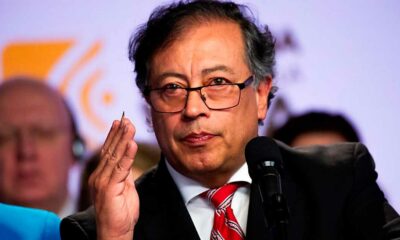
Gustavo Petro's Colombian government has abolished fines for possession of small quantities of drugs to allow police to concentrate on prosecuting coca kingpins rather than fining consumers, the Colombian constitution authorizing personal possession of drugs.
The measure does not change the penalties of up to 20 years' imprisonment for drug trafficking offences, as provided for under Colombian law, but it does put an end to the fines equivalent to around $50 that police impose on users. The decree also removes police powers to seize these substances.
Former conservative president Iván Duque was quick to react, declaring that with this new measure, «the criminals have had their December», which would encourage crime and harm Colombian children, young people and families.
Gustavo Petro is behind a a new approach to the fight against drugs which Colombia is carrying out with economic assistance from the United States, where the main market for South American cocaine is located. He also ordered the security forces to cease operations against small-scale coca leaf growers.
Plans to legalize cannabis
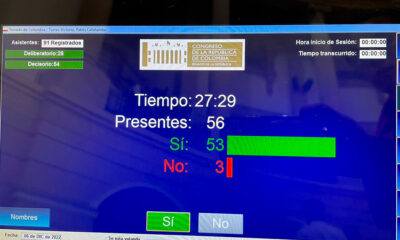
In parallel with this decriminalization of all drugs, Colombian legislators are racing against time to pass a cannabis legalization bill before the end of the year, thus preventing the two-year legislative process from being reset.
Senator María José Pizarro, one of the main proponents of the cannabis legalization bill, supports the urgency of Senate action before the upcoming legislative recess. The bill has gone through three of the eight required debates, winning approval in both the House of Representatives and a Senate committee. However, to avoid restarting the lengthy legislative process, it must be passed by the Senate by December 16. Senator Pizarro points out that if action is not taken, the reform risks «sinking» once again, necessitating swift consideration by the plenary.
Although cannabis legalization was almost enacted this year, the process has had to be relaunched due to the rejection of the last vote in the Senate. Justice Minister Néstor Osuna, echoing sentiments expressed at a Senate hearing, criticizes the impact of a decades-long «failed war» on drugs that has led to bloodshed, armed conflict and criminal enterprises.





















Kentucky now has 26 medical cannabis dispensaries

«Vincy Gold»: Humboldt Seed Company on the Hunt for Saint Vincent Sativas

Cronos Completes the Acquisition of CanAdelaar for 57.5 million euros

Cannabis with a "bloody" twist: Discover Sensi True Blood and Sensi Sangria, the two new strains from Sensi Seeds

Hemp: The Council of the EU Takes a Stand on New Production and Marketing Rules

Missouri's legal cannabis market accounts for 93 % of consumer spending

THC Gummies: How to Read a Certificate of Analysis Before Buying

British patients now have access to THCV-rich cannabis flowers

Spain: Medical Cannabis Is Coming to About 50 Hospitals

JIHE 2026: Japan’s Largest Trade Show Dedicated to Hemp and CBD Returns to Tokyo with More Than 100 Industry Players
-
 Business3 weeks ago
The legal cannabis market in New York exceeds 4 billion $ in revenue
-
Cannabis in France2 weeks ago
France already has 3,000 cannabis retail outlets. None of them are legal.
-
Cannabis in the U.S.2 weeks ago
A DEA report confirms that there are no fatal cannabis overdoses
-
Cannabis in France4 weeks ago
France’s Drug Policy Chief Defends Cannabis Prohibition... and Runs Into the Facts
-
Studies on cannabis2 weeks ago
Cannabis Oil and Endometriosis: A Promising Study for Pain Relief
-
CBD3 weeks ago
In Brazil, researchers are developing an innovative CBD eye drop
-
Business2 weeks ago
Tilray is accelerating its operations in Europe thanks to a license in Portugal
-
Cannabis in France2 weeks ago
CBD in France: Traceability, Retail Stores, THC and Driving… What the New Bill Proposes
















You must be logged in to post a comment Login