
CBD could prevent HIV infection, according to a French study


A new study published in April 2026 in the scientific journal Mucosal Immunology has shown that the CBD may prevent the early stages of HIV transmission.
The article, titled “Cannabidiol prevents mucosal HIV-1 transmission by targeting Langerhans cells, dendritic cells, macrophages, and T cells”, was conducted primarily at the Cochin Institute (Paris) and explores an ambitious scenario: using CBD as a potential preventive tool, in addition to existing strategies such as conventional PrEP.
An infection that begins in the mucous membranes
In most cases, HIV is transmitted during sexual intercourse through the genital mucous membranes (vagina, cervix, penis, foreskin, etc.). Once the virus comes into contact with these tissues, it does not immediately infect the entire body; it must first overcome a series of biological barriers.
This is where certain immune cells found in the skin and mucous membranes come into play. Among them are the Langerhans cells, the dendritic cells, the macrophages and CD4 T cells play a central role. HIV can either directly infect some of these cells or use some of them as “carriers” to reach its primary targets: CD4 T cells.
An Unexpected Target: TRPV1, the “Spicy” Receptor”
The researchers are building on a mechanism that is already known: certain immune cells express a receptor called TRPV1, known for being activated by capsaicin (the molecule that gives chili peppers their spicy taste). When TRPV1 is activated, it can trigger the release of a neuropeptide called CGRP.
This CGRP is particularly interesting because it has anti-HIV effects already observed In previous studies: it limits the ability of Langerhans cells to transfer the virus to T cells.
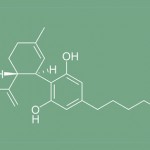
And in fact: CBD, even though it is often described as acting through the CB1 and CB2 cannabinoid receptors, is also a TRPV1 agonist. This is the avenue the team wanted to explore.
CBD inhibits infection in several types of cells
Researchers have tested CBD in various experimental models. The results show that, in the laboratory, CBD reduces HIV infection or transmission in nearly all key cells involved in mucosal transmission. In particular, they show that CBD:
- inhibits direct infection of the macrophages
- reduces infection in CD4 T cells
- reduces the transmission of the virus through Langerhans cells and dendritic cells
The mechanism is sometimes CGRP-dependent (particularly in Langerhans cells and macrophages) and sometimes CGRP-independent (particularly in dendritic cells and T cells).
In CD4 T cells, CBD appears to reduce cellular activation and lower the expression of CCR5, a co-receptor essential for the strains of HIV most commonly transmitted sexually (the so-called “R5” strains).
An ex vivo experiment
The most striking finding of the study does not come from an isolated cell culture, but from a model ex vivo : real human tissue, derived from inner foreskin obtained during medical circumcisions (with consent). The researchers treated this tissue with CBD before exposing it to HIV (via infected cells). They then observed two major effects:
- CBD prevents the formation of “conjugates” between Langerhans cells and T cells (a key step in viral transmission),
- CBD reduces by about 80% infection of CD4 T cells in tissues.
In other words, CBD doesn't just slow down the virus's replication—it blocks the initial biological interactions that allow HIV to take hold.
Toward a “CBD PrEP”?
In their conclusion, the researchers go so far as to propose a new concept: a form of prevention that they call “CBD PrEP”. The idea would be to reposition commercial CBD products (such as CBD-containing personal lubricants) as topical microbicides that can be used before exposure.
They even point out that a lubricant containing just 1% of CBD would have a concentration far higher than those tested in the lab, which could theoretically ensure sufficient absorption through the mucous membranes.
There is also a socioeconomic argument: unlike antiretrovirals, CBD is already widely available, inexpensive, widely accepted, and associated with less stigma.
Note: Promising, but not clinical evidence
Despite the potential enthusiasm, it is crucial to remember that this study does not demonstrate whether CBD actually protects humans against HIV in real-world settings. The results are robust in laboratory and ex vivo studies, but that is still different from a clinical trial. Several questions remain unanswered:
- What dose would be needed under real-world conditions?
- Which form (oil, gel, lubricant, spray) would be effective?
- How long does the effect last?
- Could CBD irritate certain mucous membranes or affect their immune function?
- Are there any interactions with other medications?
The researchers themselves are calling for further studies to test the actual effectiveness of this strategy.


















CBD is said to promote athletic recovery, without improving performance

294 cannabis clubs in Chile: a booming movement with uneven distribution

Chronic Sciatica: New York Approves First Clinical Trial of a THC-Based Medication

United States: The DEA is accelerating the integration of medical cannabis at the federal level

Florida is nearing one million patients using medical cannabis

Uruguay Revives Its Plan to Allow Tourists to Legally Access Cannabis

In Brazil, researchers are developing an innovative CBD eye drop

Autism: Medical Cannabis Is Linked to Reduced Anxiety

The $28 billion U.S. hemp market remains under threat

Jamaica Eases Small Farmers' Access to the Cannabis Market
-
 Business5 days ago
The legal cannabis market in New York exceeds 4 billion $ in revenue
-
Cannabis and driving4 weeks ago
Cannabis and CBD: French Drivers Can Now Lose Their License Even Without a Positive Test Result
-

 Cannabis in France2 weeks ago
Which countries legalized medical cannabis before France?
-
Business2 weeks ago
South Korea is preparing to begin local production of medical cannabis to meet rising demand
-
Cannabis in the Netherlands4 weeks ago
One year after the launch of the Dutch cannabis experiment, the first trends are emerging
-
Cannabis in Thailand2 weeks ago
From the boom in dispensaries to a purely medical approach: Thailand is revising its cannabis policy
-
Cannabis in France4 weeks ago
French medical cannabis remains stalled at the Ministry of Health
-
Cannabis in Argentina3 weeks ago
Argentina Opens Its Market to Hemp Flowers Containing 1% of THC
















You must be logged in to post a comment Login