
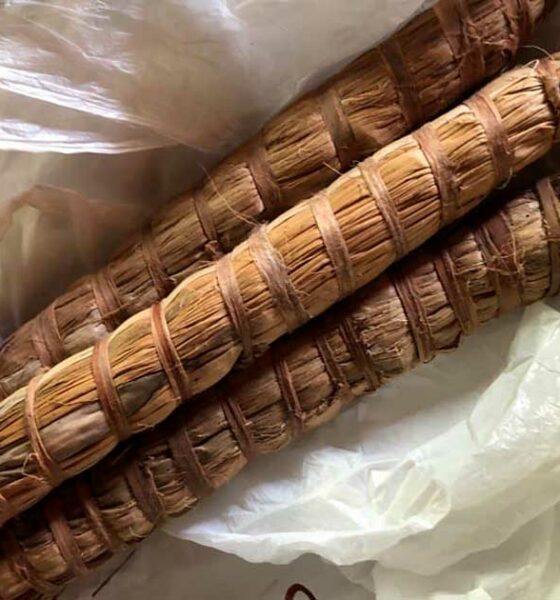
Malawi Cob: the lost art of traditional cannabis fermentation
Deep in the mountains and tropical forests of Southern Africa, an ancient method of processing cannabis seems to have all but disappeared.
The Malawi Cob, a traditional method of fermentation and Storing Cannabis Flowers, embodies peasant ingenuity, tribal spirituality, and a dying art form in the world of cannabis. Yet this process yields a product of exceptional quality, with intense aromas and profound effects. A look back at a forgotten craft, now sacrificed on the altar of global demand.
A thousand-year-old tradition born of the climate and common sense
Before the advent of plastics and corrugated metal roofs, storing a cannabis harvest in the hot, humid regions of sub-Saharan Africa was a real challenge. African growers therefore developed ingenious fermentation techniques using natural materials: banana leaves, goat manure, corn stalks, and even local beer residue. The goal? To produce a product that was not only more stable but also smoother to smoke, more flavorful, and often more potent.
These methods gradually gave rise to the cobs, veritable little cannabis totems: carefully selected flowers, rolled in fresh banana leaves, compressed by hand or with a pestle, and then subjected to controlled fermentation. In some regions, these cobs were placed under the sheepfolds, where the heat from the manure helped the process along. Elsewhere, they were buried in makeshift silos made of earth and ashes. Every tribe and every region had its own method.
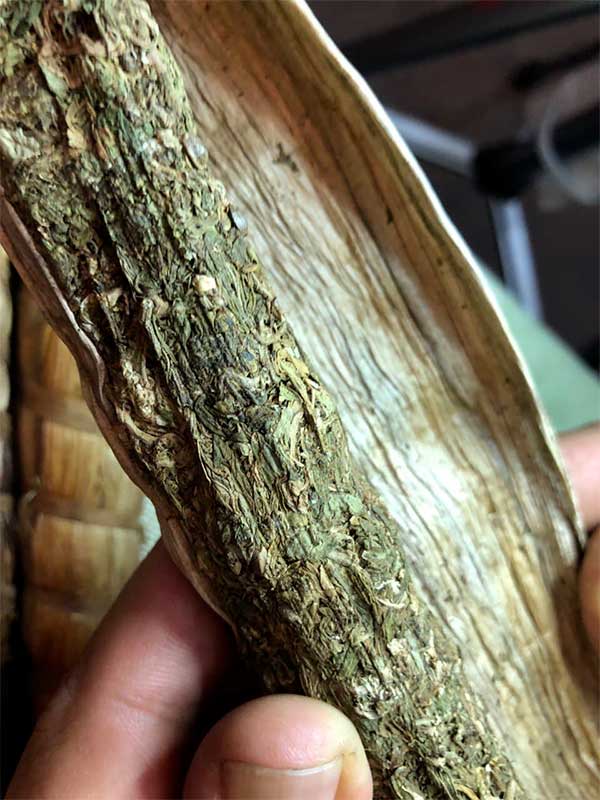
The interior of a Malawi Cob
On a microscopic scale, the magic happens: the trichomes melt, organic acids are converted into sugars, and chlorophyll breaks down. The result: a smoother smoke, deeper aromas, and a gradual high, often described as more psychedelic, almost shamanic. For connoisseurs, the Malawi Cob It's not just fermented cannabis—it's a sensory and cultural experience in its own right.
And back then, this process was no trivial matter: it helped prevent respiratory problems caused by poorly dried or moldy herb. Moreover, it served ritual purposes. Tribal chiefs would consume it before council meetings to promote sound decision-making. Healers smoked the most potent buds to drive away evil spirits. In some cases, the chamba (the local name for cannabis) was even used as a spiritual barrier against occult forces.
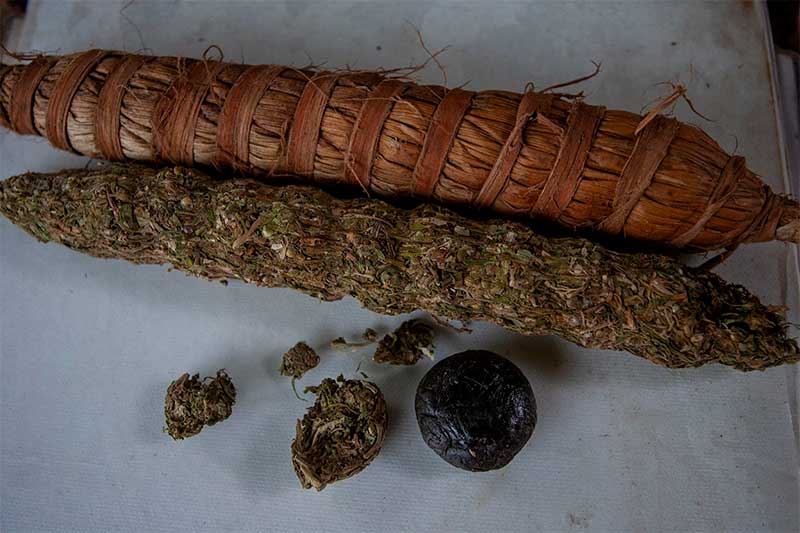
A Traditional Malawi Cob
When Cannabis Myths Kill Tradition
The variety's worldwide fame Malawi Gold, a pure sativa with a fruity and spicy aroma, has driven up demand… to the point of supplanting traditional practices. Today, the majority of “cobs”Those sold in Malawi or South Africa are no longer fermented. They serve merely as packaging: fresh heads wrapped in banana leaves to appeal to tourists or exporters seeking “authenticity.” The contents are often filled with seeds, unripe, and sometimes not even dry. The myth has taken precedence over the product.
There are many reasons for this. First, the rise of cannabis tourism has shifted priorities: growers sell their product quickly, without waiting the long months required for fermentation. Second, the crackdown of the 1990s destroyed many “cannabis forests” where the plants were cultivated on a sustainable basis. Finally, agricultural modernization and the disappearance of certain pastoral traditions (such as elevated sheepfolds) have made traditional fermentation more difficult to carry out.
In recent years, enthusiasts have been rediscovering these forgotten methods. On online forums, some are trying their hand at making cobs at home, using vacuum-sealed banana leaves or even yogurt makers to simulate the heat required for fermentation. This return to traditional methods is raising awareness: that cannabis is not merely a product defined by its THC content, but a cultural heritage, a way of life, and a culture worth preserving.
The Legalization of medical and industrial cannabis in Malawi in 2020 Could it pave the way for a revival of the Malawi Cob ? It’s possible. If the government recognizes the cultural and economic value of this craftsmanship, it could become a premium product, much like natural wines or raw-milk cheese. Provided, of course, that quality is prioritized over quantity.















October 2026 CBD Highlights: 10 Strains and Hash to Discover from 5 French Producers

CBD in France: Traceability, Retail Stores, THC and Driving… What the New Bill Proposes

Organigram Enters the Race for Aurora Cannabis

Medical Cannabis: Augur Associates’ latest report provides an update ahead of the publication of the decrees

Golden Buds is relaunching its Nova High vape pens with a cannabinoid formula that’s out of the ordinary

Cannabis is now Canada's fifth-largest commercial crop

Bedrocan Finally Declared Bankrupt

After CBD, Can Wellness Exist Without Cannabinoids?

Uganda Launches a Cooperative Dedicated to Medical Cannabis

