Cannabis in the United States: reclassification or legalization?

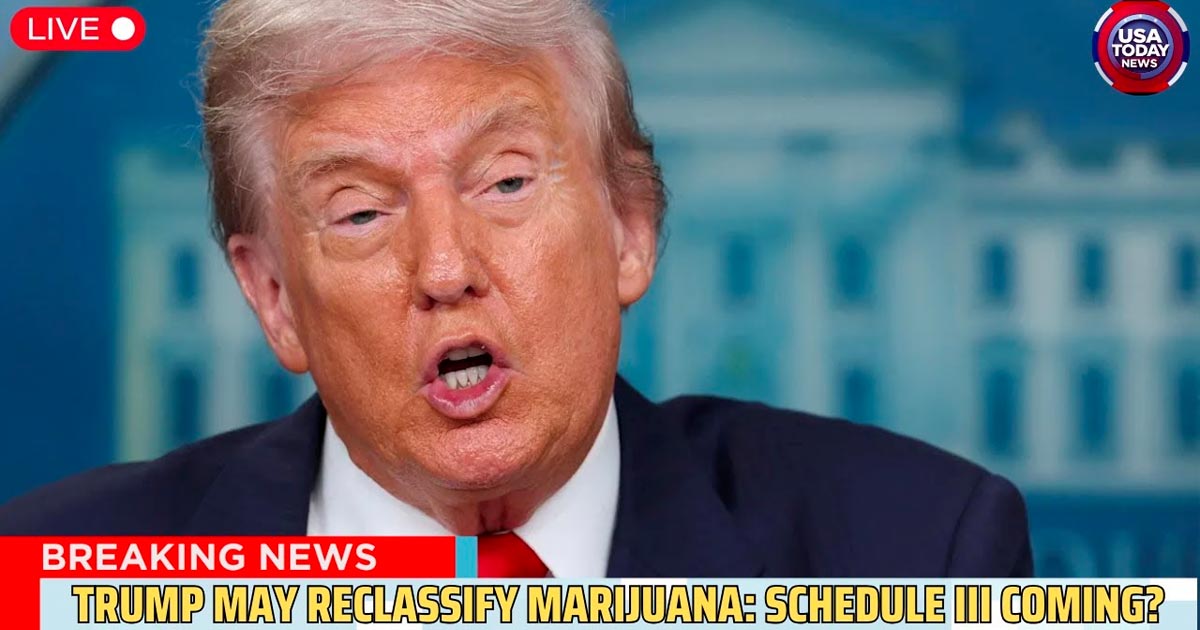
President Donald Trump has confirmed that his administration is examining the possibility of reclassify cannabis in federal legislation. The process was launched in 2024 under the Biden administration, but did not come to fruition before the transfer of power.
At a press conference on federal oversight in Washington, D.C., Trump told reporters that a decision on the cannabis reclassification could be taken «in the coming weeks». According to Wall Street Journal, the question was also raised at a private fundraiser held earlier this summer at Trump's golf club in New Jersey, where tickets cost $1 million each. Among the participants were Kim Rivers, CEO of Trulieve, one of the largest cannabis companies in the U.S., which had wrongly placed its bets, 75 million on cannabis legalization in Florida. Ms. Rivers reportedly urged Mr. Trump to support reclassification and develop medical research.
This new wave of lobbying is an example of the’growing influence of the cannabis industry in the development of federal policy. For businesses, the stakes are high: reclassification would pave the way for standard tax deductions currently blocked by the US tax code due to cannabis' Class I substance status.
What would Category III classification mean?
At present, the cannabis in the U.S. alongside heroin and LSD in category I of the Controlled Substances Act (CSA), A category reserved for substances considered to have no medical use and a high abuse potential. The switch from cannabis to category III would place it in the same category as ketamine, codeine and testosterone.
Such a change would not be tantamount to legalization total. However, it would :
- reduce federal penalties for possession and distribution
- expand the medical research on cannabis
- to enable companies in the cannabis sector to benefit from tax deductions standard.
For an industry that should generate $34 billion in revenues this year, this reform could mark a turning point. Investors and executives say it would unlock new capital, attract traditional banks and accelerate innovation.
Divided public opinion, but growing support
Whereas the Trump administration public opinion goes even further. A survey produced by’Emerson College on August 25 and 26 revealed that 65% of registered voters now think that nationwide legalization would be a «good idea». This figure is up five points on last October.
Support varies greatly according to political opinion and generation:
- Democrats: 79 % for
- Independent : 66 %
- Republicans : 49 %
Age plays a key role, with voters under 30 (71 %) and those in their 40s (74 %) showing the highest levels of support. By contrast, Americans over 70 remain divided, with a slim majority (52 %) opposed to legalization.
For the sounder Spencer Kimball, director of Emerson College Polling, the implications are clear: «If Trump were to make the decision to legalize cannabis, it could really turn the tide in his favor, which has been rather stagnant for the past few months.»
The return of the MORE Act
Reclassification is not the only reform under study. In parallel, 40 Democratic legislators have reintroduced the MORE Act (Marijuana Opportunity, Reinvestment and Expungement Act), which aims to remove cannabis completely from the CSA.
Unlike reclassification, which keeps cannabis on federal controlled substance lists, the MORE Act would treat it more like alcohol or tobacco, leaving regulation largely to the states. The MORE Act includes:
- Erasure from federal cannabis convictions
- Sentence review for those still incarcerated
- Protection against loss of benefits or immigration status for people with cannabis-related criminal records
- A federal tax starting at 5% on cannabis sales, rising to 8% within five years
- Three subsidy programs: community reinvestment, small business loans and fair licensing assistance
For the representative Jerry Nadler, who is leading this initiative, the goal is clear: «It's high time to decriminalize marijuana at the federal level, expunge marijuana-related convictions and facilitate the review of sentences, while reinvesting in the communities most affected by marijuana. war on drugs. »
Other co-sponsors, such as Ilhan Omar and Nydia Velázquez, The new sales teams put the spotlight on equity and economic opportunities, stressing that the legalization must also bring fairness and justice communities historically targeted by prohibition.
Between industrial growth and social justice
The debate highlights a central paradox. On the one hand’legal cannabis industry is flourishing, employing more than 440,000 people and generating tens of billions of dollars a year. On the other, prohibition continues to send thousands of people to prison or into immigration proceedings.
Advocacy groups such as Drug Policy Alliance, NORML and the Last Prisoner Project insist that reclassification is insufficient. As Maritza Perez Medina of the Drug Policy Alliance «As long as marijuana remains in the Controlled Substances Act, it will remain criminalized at the federal level, regardless of which classification it falls into.»
Critics also warn that Category III could primarily benefit pharmaceutical companies, allowing them to dominate the cannabis-based medicines while sidelining the small growers and local businesses that have supported the industry through decades of prohibition.
A political chessboard
Resistance remains strong, particularly among some Republicans. Nine GOP lawmakers recently sent a letter urging Trump to reject reclassification, calling Biden's earlier proposal «corrupt and flawed». They warned that reclassification would give young people the impression that cannabis is harmless, while granting billions of dollars in tax benefits to «cartels and corporations».
Yet 32 state attorneys general have pushed in the opposite direction, calling on Congress to advance legalization and support measures such as the SAFER Banking Act, which would finally give cannabis businesses access to the financial system. They argue that if the cannabis is already legal in most states, blocking access to banking services only increases security risks and hampers tax collection.
What next?
Trump's overhaul could bring the most significant change in the federal cannabis policy for over 50 years. But the way forward remains uncertain: will the administration stop at reclassification, or will pressure from Congress and the public push towards full legalization?
What is clear is that the war on drugs, launched nearly a century ago against a backdrop of racism, has failed to curb consumption while fuelling the’mass incarceration. At the same time, legal markets have become multi-billion dollar engines of economic growth.
Whether through gradual reform under Annex III or radical legislation like the MORE Act, 2025 could be a pivotal year. This choice will determine not only the future of the cannabis industry, but also whether the United States will finally be able to reconcile decades of punitive policy with the realities of modern society.






















A DEA report confirms that there are no fatal cannabis overdoses

A British patient is challenging the NHS's refusal to reimburse medical cannabis

October 2026 CBD Highlights: 10 Strains and Hash to Discover from 5 French Producers

CBD in France: Traceability, Retail Stores, THC and Driving… What the New Bill Proposes

Organigram Enters the Race for Aurora Cannabis

Medical Cannabis: Augur Associates’ latest report provides an update ahead of the publication of the decrees

Golden Buds is relaunching its Nova High vape pens with a cannabinoid formula that’s out of the ordinary

Cannabis is now Canada's fifth-largest commercial crop

Bedrocan Finally Declared Bankrupt

After CBD, Can Wellness Exist Without Cannabinoids?
-
 Business1 week ago
The legal cannabis market in New York exceeds 4 billion $ in revenue
-

 Cannabis in France3 weeks ago
Which countries legalized medical cannabis before France?
-
Business3 weeks ago
South Korea is preparing to begin local production of medical cannabis to meet rising demand
-
Cannabis in Thailand3 weeks ago
From the boom in dispensaries to a purely medical approach: Thailand is revising its cannabis policy
-
Cannabis and driving3 weeks ago
Medical Cannabis and Driving: New South Wales Ends Automatic Penalties for THC
-
Cannabis in Argentina4 weeks ago
Argentina Opens Its Market to Hemp Flowers Containing 1% of THC
-
Autism3 weeks ago
Autism and Cannabis: Results from the First Placebo-Controlled Trial of NTI164
-
Cannabis in France2 weeks ago
France’s Drug Policy Chief Defends Cannabis Prohibition... and Runs Into the Facts

















You must be logged in to post a comment Login