
Canada: first licenses granted for outdoor cultivation, others pending

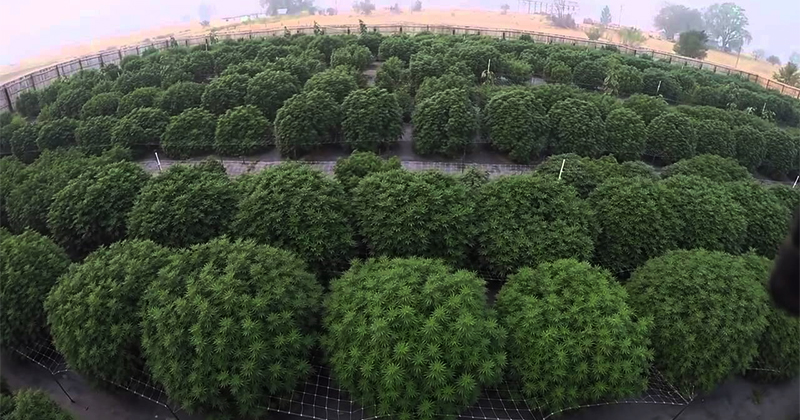
Until now, cannabis production in Canada has been based on the medical cannabis model. Production was carried out indoors, in accordance with medical cannabis production standards. After about six months of legalization, Health Canada has just granted the first outdoor cultivation licenses.
The first licenses
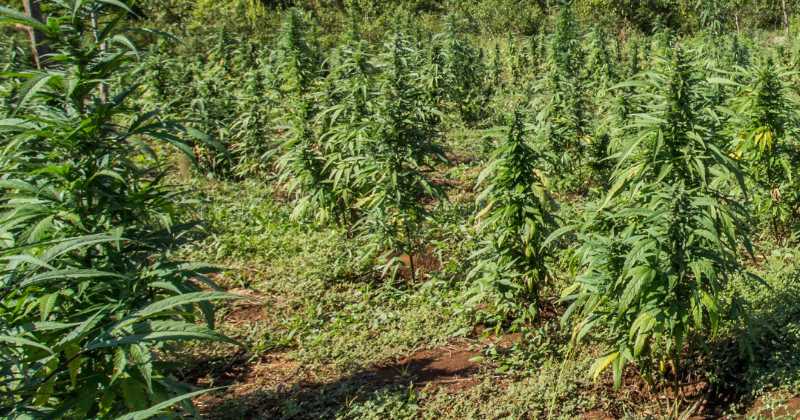
The first license was granted to the family business Good Buds Company. Based on Salt Spring Island, In British Columbia, their production facilities cover an outdoor area of 750,000m², according to a press release. They will be planting around 100,000 plants from June onwards, for a harvest of between 5,000 and 10,000 kilos at the end of the summer. Production will be entirely organic. The site has been chosen to limit contamination by other crops.
https://www.instagram.com/p/BxTGTqChqUd/?utm_source=ig_embed
The second outdoor cultivation license has been awarded to 48North, a company which already has two indoor production facilities. This new license will enable the company to significantly increase its production capacity. In fact, their facilities in Brant County, Ontario, cover 40.5 hectares with a production capacity of 250,000 plants. According to the Canadian press, It's the largest cultivation site in the country. According to Jeannette Vandermarel, co-CEO and director of the company, the site could well be «the largest legal cannabis farm in the world».
Other companies are waiting for a license and hope to start production this summer. This is the case for’Alefia Health, whose 10.5-hectare outdoor cultivation site is ready for operation, from Weed®, which announced that it had applied to amend its production licence to grow 10 hectares of outdoor crops and CannTrust which is awaiting Health Canada licensing approval to start cultivating 33 hectares with an annual production capacity of 75,000kg.
What are the effects on the Canadian market?
The start of outdoor production is bound to have a disruptive effect on the Canadian cannabis market. Indoor cultivation is obviously more energy-hungry and therefore more expensive: around 2$ per gram of product. In the greenhouse, this cost is reduced to 1$; outdoors, to around 25 cents. By extension, lower production costs mean larger cultivation areas: more produce for less money. One of the consequences will be lower market prices.
«This is a turning point for the cannabis industry and I think that outdoor cultivation will become the norm »says Jeannette VanderMarel. Indeed, there's every chance that outdoor cultivation will become increasingly important, simply because it's more profitable. However, this does not mean that indoor cultivation will disappear. For quality control reasons, medical cannabis will always be produced indoors, for example. The two production methods will probably coexist. What's more, outdoor growers are often already producing indoors.
Will the start of outdoor production put an end to cannabis shortages? This production could indeed help limit them, but we must also bear in mind that edibles and concentrates will be legalized next October and their production will require a lot of raw materials. At 48North for example, only 10% of outdoor production will be devoted to direct sales, the rest will be used for extractions used in the manufacture of products such as topicals or edibles.
The «second wave of legalization» will therefore cushion the capacity of outdoor cultivation to offset stock shortages. Opinions differ: some believe that overproduction is no longer such a distant threat, others that shortages will last for years to come. Everything seems to depend on the number of licenses Health Canada will grant. At present, 191 applications including outdoor production are awaiting validation by the agency.





CBD is said to promote athletic recovery, without improving performance

294 cannabis clubs in Chile: a booming movement with uneven distribution

Chronic Sciatica: New York Approves First Clinical Trial of a THC-Based Medication

United States: The DEA is accelerating the integration of medical cannabis at the federal level

Florida is nearing one million patients using medical cannabis

Uruguay Revives Its Plan to Allow Tourists to Legally Access Cannabis

In Brazil, researchers are developing an innovative CBD eye drop

Autism: Medical Cannabis Is Linked to Reduced Anxiety

The $28 billion U.S. hemp market remains under threat

Jamaica Eases Small Farmers' Access to the Cannabis Market
-
 Business5 days ago
The legal cannabis market in New York exceeds 4 billion $ in revenue
-
Cannabis and driving4 weeks ago
Cannabis and CBD: French Drivers Can Now Lose Their License Even Without a Positive Test Result
-

 Cannabis in France2 weeks ago
Which countries legalized medical cannabis before France?
-
Business2 weeks ago
South Korea is preparing to begin local production of medical cannabis to meet rising demand
-
Cannabis in the Netherlands4 weeks ago
One year after the launch of the Dutch cannabis experiment, the first trends are emerging
-
Cannabis in Thailand2 weeks ago
From the boom in dispensaries to a purely medical approach: Thailand is revising its cannabis policy
-
Cannabis in France4 weeks ago
French medical cannabis remains stalled at the Ministry of Health
-
Cannabis in Argentina3 weeks ago
Argentina Opens Its Market to Hemp Flowers Containing 1% of THC
















You must be logged in to post a comment Login