
California asks testing labs not to inflate THC levels

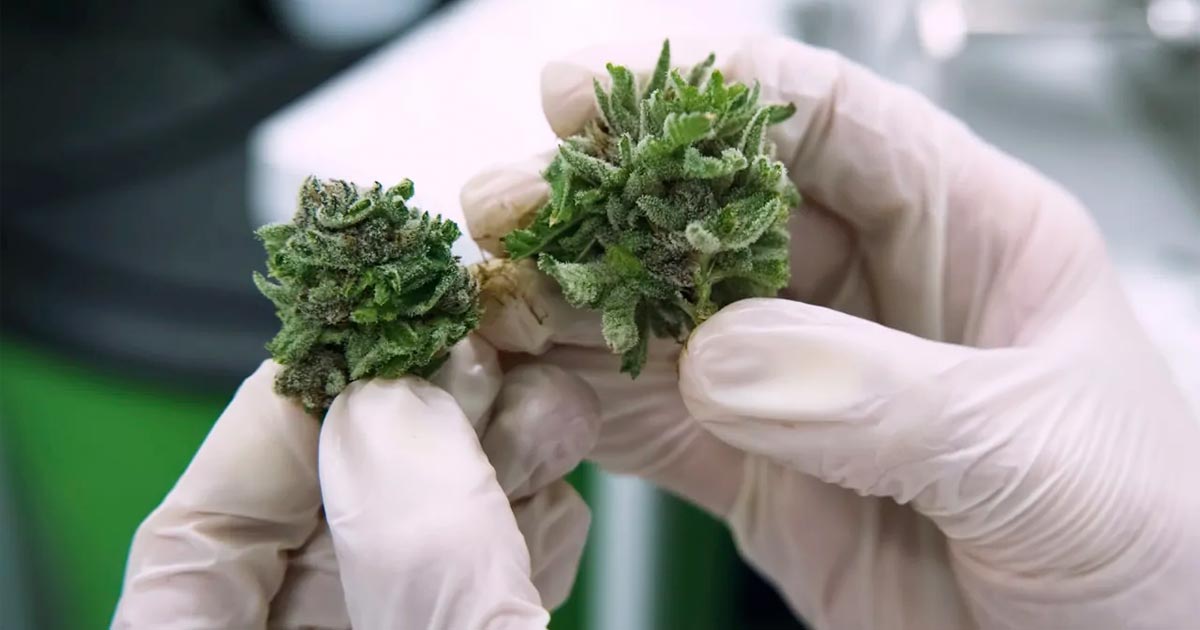
California cannabis regulators have issued several warnings asking the testing laboratories authorized by the state to accurately report test results, under penalty of severe sanctions, including the potential revocation of their license.
The laboratory division of the Department of Cannabis Control (DCC) has begun inspections to confirm (or refute) the test results for cannabis flowers and other products that have already been tested, according to an email notification sent Thursday to accredited laboratories and obtained by MJBizDaily.
«Random testing of over-the-counter products will continue to give consumers confidence that the cannabis products they purchase have been tested and that the test results are accurate,» said Nicole Elliott, director of the DCC, to MJBizDaily by email on Friday.
The letter warns testing laboratories that inflating THC levels and falsifying scientific data constitutes a violation of state law.
«Reporting inaccurate results and falsifying data will result in action being taken against your license, up to and including revocation,» the notice warns.
If the results confirmed by the DCC do not match the results of the tests conducted by the laboratories, companies may be required to relabel their products, the DCC said.
«This may also result in the recall and/or embargo of cannabis or cannabis-based products,» according to the warning.
Why inflate THC levels?
The Studies show such as a product's price, THC percentage, and the recommendations of the budtender are the main factors consumers consider when choosing cannabis. However, there has been a disproportionate emphasis on THC percentage, partly due to the misconception that potency is directly linked to product quality, and partly due to a lack of understanding of the important role played by terpenes and other cannabinoids.
This focus on THC content has prompted companies in the cannabis industry (brands, growers, distributors) to game the system, particularly when economic conditions are difficult for legal operators. While consumers remain fixated on THC content, some companies are willing to deceive customers because they can charge them more.
Products from cannabis with high THC content are selling for higher prices, which has encouraged some cannabis companies and testing laboratories willing to commit fraud to manipulate the results. The industry calls this practice «lab shopping.».
Regulations generally require that the THC content listed on the label fall within a certain percentage range relative to the actual test results. In California, this threshold is 10%, which allows some labs to manipulate results or brands to get creative with their claims.
These questionable practices have led to a systemic problem of power inflation, which is detrimental to all parties involved. The lab shopping has often allowed the worst brands and laboratories to achieve better results, while highly effective brands and science-driven laboratories have suffered.
In recent years, state agencies in Arizona, Colorado, Florida, and Nevada have stepped up enforcement against noncompliant testing laboratories, imposing heavy fines and suspending licenses in some cases.

















Cannabis and the Adolescent Brain: French Scientists Make a Key Discovery

EFSA Gives Initial Approval for Synthetic CBD; Natural Extracts Still Pending

Federal Cannabis Reform Once Again on Hold in the United States

Contest: Win a trip to Quebec to experience the hemp harvest firsthand

Bedrocan on Hold Amid Uncertainty Over Medical Cannabis

Newsweed Launches Its Own AI
A new tax of 0.5% could disrupt the hemp industry in Canada

Medical Cannabis and Driving: New South Wales Ends Automatic Penalties for THC

China's Yongji Health Takes Control of Tasmanian Botanics

Autism and Cannabis: Results from the First Placebo-Controlled Trial of NTI164
-
 Cannabis and driving3 weeks ago
Cannabis and CBD: French Drivers Can Now Lose Their License Even Without a Positive Test Result
-

 Cannabis in France6 days ago
Which countries legalized medical cannabis before France?
-
Cannabis in France3 weeks ago
Cannabis Legalization: The LFI Bill Has a Major Problem—THC
-
Cannabis in the Netherlands2 weeks ago
One year after the launch of the Dutch cannabis experiment, the first trends are emerging
-
Business6 days ago
South Korea is preparing to begin local production of medical cannabis to meet rising demand
-
Cannabis in Thailand6 days ago
From the boom in dispensaries to a purely medical approach: Thailand is revising its cannabis policy
-
Cannabis in Argentina2 weeks ago
Argentina Opens Its Market to Hemp Flowers Containing 1% of THC
-
Cannabis in France2 weeks ago
French medical cannabis remains stalled at the Ministry of Health
















You must be logged in to post a comment Login