Growing consumption of Amanita Muscaria worries researchers

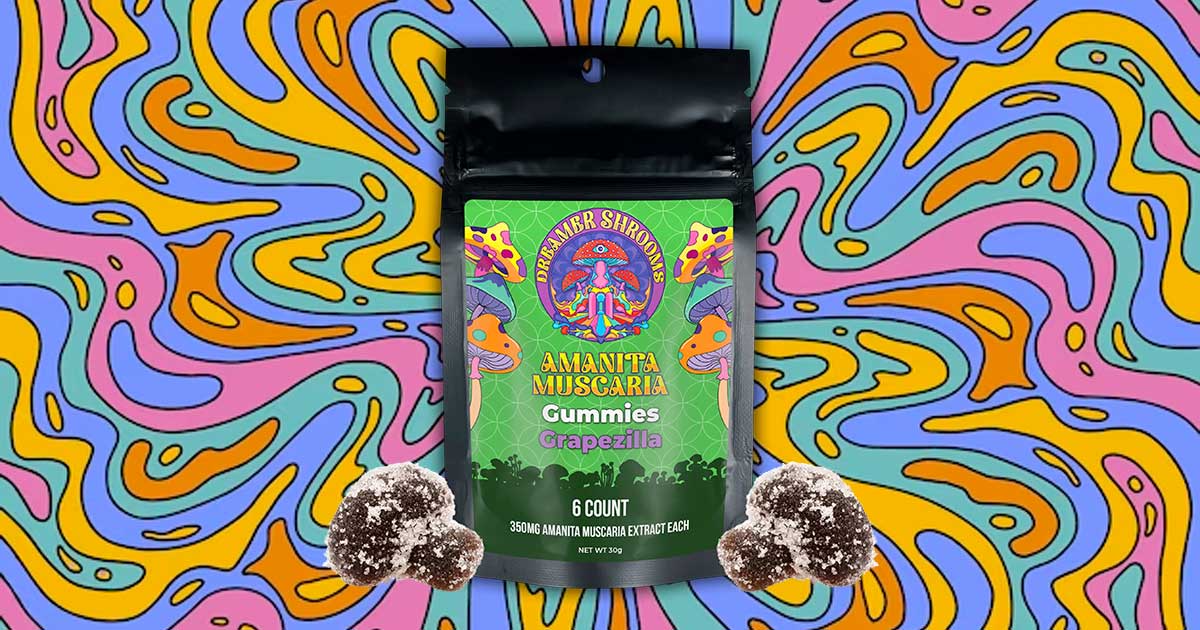
Latest new to the legal psychedelic market, the consumption of products containing mushroom extract Amanita muscaria is experiencing a significant increase in popularity.
A study conducted by the Herbert Wertheim School of Public Health and Human Longevity Sciences at the University of California, San Diego, which tracked Google search trends, notes that searches for this mushroom increased by 1,141% between 2022 and 2023.
Growing interest in psychedelic mushrooms
The study highlights a broader trend in the United States where interest in psilocybin-containing mushrooms has not stopped growing. In 2022, 12.3% of U.S. adults reported having consumed psilocybin-containing mushrooms, compared to 11.4% in 2021. This renewed interest has also spurred a thriving market for other types of mushrooms, notably Amanita muscaria. .
L’Amanita muscaria, also known as’Fly agaric, is known for its distinct psychotropic effects, which include feelings of weightlessness, heightened sensory perception, spatial distortion, a loss of time consciousness, and hallucinations. However, unlike Psilocybin mushrooms, the Amanita muscaria can be more toxic due to the presence of compounds such as muscimol and ibotenic acid.
Legal status and security issues
The legal status of Amanita muscaria is one of the factors contributing to its increased consumption. In most U.S. states, with the exception of Louisiana, and in Europe, the Amanita muscaria remains legal, making it more accessible than psilocybin mushrooms, which are still classified as a controlled substance in many places.
However, researchers worry that many people consume these mushrooms without sufficient knowledge of their effects and potential risks. The study's lead author, Eric Leas, Ph.D., M.P.H., points out that while psilocybin has therapeutic potential, the same cannot be said for Amanita muscaria due to its different pharmacological profile.
«The therapeutic potential of psilocybin is of great interest, and rightly so,» said Leas. «But at the same time, a booming industry could try to capitalize on this interest by commercializing other mushrooms. For example, some manufacturers are calling Amanita muscaria products «magic mushroom candies» and are not disclosing the mushroom they contain, or that Amanita muscaria is a different mushroom from psilocybin and there is virtually no clinical evidence of its use as a therapy.».
Misleading commercial practices and lack of regulation
The study highlights that some manufacturers mislead consumers by marketing products based on Amanita muscaria as if they were more well-known psychedelic mushrooms. This marketing often lacks transparency, failing to disclose the specific type of mushroom used, which can lead to uninformed consumption.
Furthermore, the labeling of products based on Amanita muscaria often resembles that of dietary supplements without the corresponding application being filed.
«We have found that many manufacturers are using dietary supplement labeling, including «Supplement Facts» panels,» Mr. Leas explained. «However, there is a procedure for bringing a supplement to market that involves submitting safety data and filing an application, and we found no evidence that these manufacturers have followed this procedure, making the products currently sold in this manner illegal.».
Potential risks and urgent need for caution
The active compounds in *Amanita muscaria*, such as muscimol and ibotenic acid, pose significant risks, especially when consumed without the necessary knowledge and precautions. Researchers urge caution and emphasize the importance of educating consumers about the potential dangers associated with these mushrooms.
«In my opinion, if a manufacturer wanted to develop a dietary supplement from Amanita muscaria, their application would likely not be approved due to the inherent risks of muscimol and ibotenic acid,» Leas added. «But for now, it's the »Wild West,» and companies are taking advantage of the delayed enforcement of legislation while endangering consumers.".
The fascination with Amanita muscaria is not new. Publications such as High Times have explored the mushroom's effects and historical significance. Writer Tom Robbins delved into Amanita muscaria in the December 1976 issue of High Times, discussing various books that inform readers about the mushroom.
In December 1979, High Times writers examined the links between Santa Claus and theDeath Cap, suggesting that the Santa Claus mythology might be linked to a Siberian shaman who consumed Amanita muscaria.














«Vincy Gold»: Humboldt Seed Company on the Hunt for Saint Vincent Sativas

Cronos Completes the Acquisition of CanAdelaar for 57.5 million euros

Cannabis with a "bloody" twist: Discover Sensi True Blood and Sensi Sangria, the two new strains from Sensi Seeds

Hemp: The Council of the EU Takes a Stand on New Production and Marketing Rules

Missouri's legal cannabis market accounts for 93 % of consumer spending

THC Gummies: How to Read a Certificate of Analysis Before Buying

British patients now have access to THCV-rich cannabis flowers

Spain: Medical Cannabis Is Coming to About 50 Hospitals

JIHE 2026: Japan’s Largest Trade Show Dedicated to Hemp and CBD Returns to Tokyo with More Than 100 Industry Players

New Caledonia: The Courts Clear the Way for the Return of CBD
-
 Business3 weeks ago
The legal cannabis market in New York exceeds 4 billion $ in revenue
-

 Cannabis in France4 weeks ago
Which countries legalized medical cannabis before France?
-
Cannabis in France1 week ago
France already has 3,000 cannabis retail outlets. None of them are legal.
-
Business4 weeks ago
South Korea is preparing to begin local production of medical cannabis to meet rising demand
-
Cannabis in the U.S.1 week ago
A DEA report confirms that there are no fatal cannabis overdoses
-
Cannabis in Thailand4 weeks ago
From the boom in dispensaries to a purely medical approach: Thailand is revising its cannabis policy
-
Cannabis and driving4 weeks ago
Medical Cannabis and Driving: New South Wales Ends Automatic Penalties for THC
-
Cannabis in France3 weeks ago
France’s Drug Policy Chief Defends Cannabis Prohibition... and Runs Into the Facts
















You must be logged in to post a comment Login