
10 things that have changed (or not) about cannabis in 5 years in the US


A lot can happen in five years! Legal sales of cannabis have brought in 6.6 billion euros in the last five years. dollars in the United States. Here are 10 things that have changed (or not) about cannabis in the last 5 years.
What has changed
1) Medicinal cannabis is legal in 29 US states
Five years ago, only 18 American states had legalized medical cannabis. The first state to do so was California in 1996, followed by Oregon, Washington and Alaska in 1998. The West Virginia is the latest to begin the process of legalizing medical cannabis, on April 29.
Read more: Which states have legalized cannabis in the United States?
2) Anyone 21 years of age or older can purchase recreational cannabis in Colorado, Washington, Oregon and Alaska
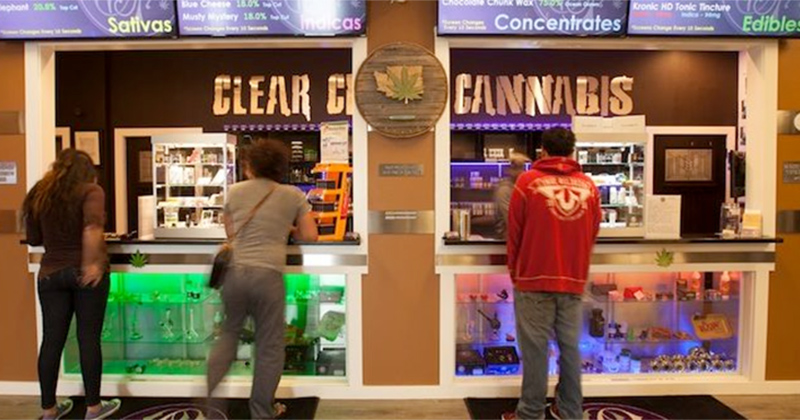
Cannabis dispensaries open to adults of legal age now exist for recreational cannabis in Colorado and Washington since 2014, Oregon since 2015 and Alaska since 2016.
3) The government owns a cannabis dispensary
New cannabis dispensaries mean new profits for the government. The first dispensary to be opened by a municipality, and therefore operated by the government, is Cannabis Corner, which opened in 2015 in Washington state. Estimates for the cannabis business range from $22 billion to $44 billion by 2020.
4) The Rohrabacher-Farr amendment has finally been passed
This amendment stipulates that the Ministry of Justice shall not interfere or spend funds to hinder the implementation of medical cannabis legalization. It had been submitted to Congress in 2003, but was only finally approved in 2014 after six attempts.
5) All three US overseas territories have legalized medical cannabis
Guam and Puerto Rico legalized cannabis for medical purposes in 2014. The US Virgin Islands decriminalized cannabis consumption a year later.
What hasn't changed
1) There's always the risk that you won't get hired or fired if you smoke cannabis.
The United States is very strict when it comes to hiring. Many employers ask for urine tests to detect traces of narcotics, particularly cannabis. The same applies if you're hired, as a test can come your way at any time.
2) Smoking and driving under the influence of cannabis remain prohibited
And it makes sense. Cannabis increases reaction time and decision-making ability, as well as having a negative impact on attention, perception of time and speed. However, this study claims that regular smokers have fewer problems behind the wheel than occasional users, due to their tolerance to cannabis.
3) Smoking cannabis in public places remains prohibited
Cannabis consumption remains prohibited in public places, even in states where it has been legalized.
4) Cannabis is still sold illegally in states that have legalized it
And yes, the black market still exists. Illegal cannabis remains tax-free, while legal cannabis is heavily taxed. In Colorado, taxes are equivalent to 28% of the purchase price. In Washington State, the tax is 37%. Medical cannabis is less taxed than recreational cannabis, but the black market price still rivals the dispensary price.
5) U.S. government prohibition still in effect
Donald Trump's administration, notably Attorney General Jeff Sessions, is rather inclined to continue the «War On Drugs». Donald Trump openly says he doesn't care about recreational cannabis sales. Bad!
Mehdi Bautier






What if CBD enhanced the effects of THC? A comprehensive analysis challenges a common misconception

Medical cannabis: A U.S. study finds a 6.9% reduction in absences from work

Andorra Paves the Way for Medical Cannabis Cultivation

Aurora Rejects Curaleaf's Hostile Bid and Opens the Door to Other Suitors

Cannabis in Quebec: The 21-Year-Old Age Requirement in the Spotlight

Drought: Could Hemp Become the New Hope for French Farmers?

United States: Congress Rejects Ban on THC Derived from Hemp

Quick Hit August 2026: What We Missed in Recent Weeks

U.S. Congress Comes to the Rescue of THC-Infused Beverages

New York Opens Its Farmers' Markets to Small-Scale Cannabis Producers
-
 Business3 weeks ago
New York Opens Its Farmers' Markets to Small-Scale Cannabis Producers
-
 Cannabis in Africa4 weeks ago
Rwanda: A New License Revives the Country's Ambitions in Medical Cannabis
-
 Cannabis in India4 weeks ago
India Approves a Synthetic CBD Drug for Anxiety
-
 Cannabis in Europe4 weeks ago
The EU Simplifies Regulations Governing Hemp Cultivation
-
 Cannabis in the U.S.3 weeks ago
U.S. Congress Comes to the Rescue of THC-Infused Beverages
-
 Business4 weeks ago
Curaleaf Announces a Takeover Bid for Aurora Cannabis
-
 Cannabis in Europe2 days ago
Andorra Paves the Way for Medical Cannabis Cultivation
-
 Cannabis in France3 days ago
Drought: Could Hemp Become the New Hope for French Farmers?
You must be logged in to post a comment Login