Study: banning drugs makes them cheaper and more dangerous

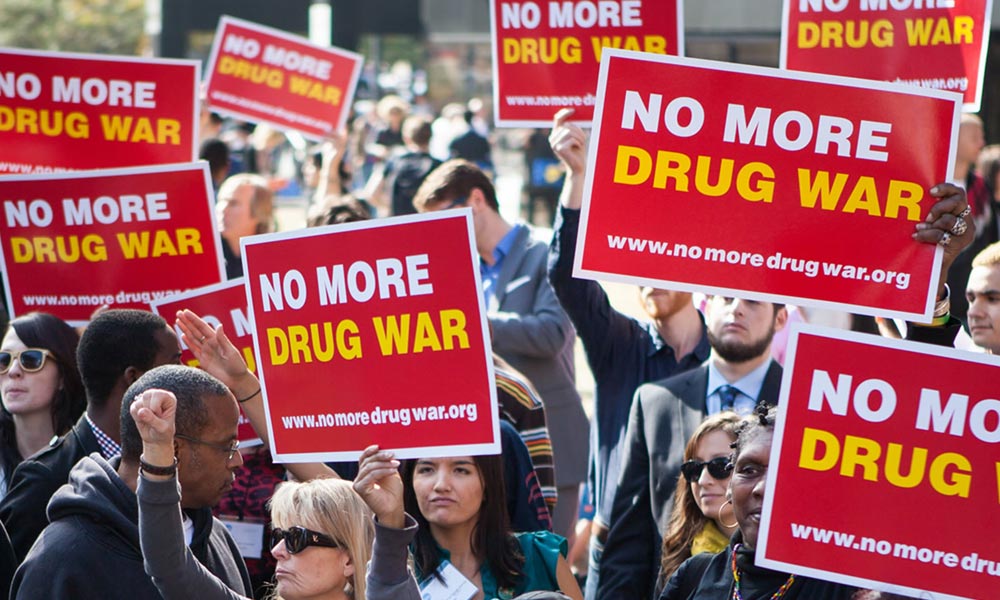
While global drug policy over the past 40 years has largely been limited to criminalizing drugs and imprisoning offenders in an attempt to reduce drug trafficking, the opposite has in fact occurred, according to a new report from the Drug Policy Alliance (DPA), one of the main associations campaigning for the end of the war on drugs.
«Between 1980 and 2011, sentence enhancements played a significant role in the 35% increase in average prison sentences for federal drug law offenses.», says the report published Tuesday by the DPA. «But rather than seeing a reduction in drug use or an increase in prices over this period, drug use has increased while prices have fallen dramatically.»
And the effects of Reagan- and Clinton-era drug control policies are even worse, according to the DPA. «When law enforcement intervenes in drug markets, suppliers are incentivized to market highly concentrated products, which can be more easily hidden than less potent, bulkier products,» the report says. «This dynamic may have encouraged the introduction of fentanyl into the illegal opioid market, initiated by high-level players at the top of the supply chain.»
Synthetic opioids contributed to 28400 overdose deaths in the United States in 2017. Fentanyl, a synthetic opioid 30 to 50 times stronger than heroin, has been found in other illicit drugs such as heroin, but also in methamphetamine and cocaine, which do not originally contain opioids. Sellers and consumers are not necessarily aware that the products they are carrying contain fentanyl, which further increases the risk of accidental overdose.
The report also highlights new psychoactive substances such as synthetic cannabinoids that chemical manufacturers are creating faster than legislators can enact new laws to ban them.
The report suggests that decriminalization and legalization of certain drugs will benefit communities more than simply using the police to put drug dealers in jail. «It is not the drugs themselves that cause violence,» it says, «but rather the exclusion of those who sell and distribute drugs from the types of asset protection and dispute resolution mechanisms available to those who operate legal businesses.».
DPA recommends that governments and law enforcement agencies adopt immediate reforms to address drug distribution and sales without further criminalizing communities.
«Policymakers should urgently reform all criminal laws and sentencing guidelines that result in disproportionate penalties for those convicted of drug sales or distribution offenses,» the report states. «This includes reforming criminal history sentencing enhancements, expanding safety valve provisions and eliminating mandatory minimum sentences.»
In addition to the report, the DPA has also put online portraits of drug dealers to dispel the myth of crack dealers outside nursery schools.


















Medical Cannabis in Germany: THC Prices Vary by a Factor of 12

France already has 3,000 cannabis retail outlets. None of them are legal.

Morocco's exports of legal cannabis have expanded to 15 countries

Aurora Cannabis Doubles Its Production Capacity in Germany

Tilray is accelerating its operations in Europe thanks to a license in Portugal

Boston will host the 10th annual State of the Cannabis Industry Conference on October 26

A DEA report confirms that there are no fatal cannabis overdoses

A British patient is challenging the NHS's refusal to reimburse medical cannabis

October 2026 CBD Highlights: 10 Strains and Hash to Discover from 5 French Producers

CBD in France: Traceability, Retail Stores, THC and Driving… What the New Bill Proposes
-
 Business2 weeks ago
The legal cannabis market in New York exceeds 4 billion $ in revenue
-

 Cannabis in France3 weeks ago
Which countries legalized medical cannabis before France?
-
Business3 weeks ago
South Korea is preparing to begin local production of medical cannabis to meet rising demand
-
Cannabis in Thailand3 weeks ago
From the boom in dispensaries to a purely medical approach: Thailand is revising its cannabis policy
-
Cannabis and driving3 weeks ago
Medical Cannabis and Driving: New South Wales Ends Automatic Penalties for THC
-
Cannabis in Argentina4 weeks ago
Argentina Opens Its Market to Hemp Flowers Containing 1% of THC
-
Autism3 weeks ago
Autism and Cannabis: Results from the First Placebo-Controlled Trial of NTI164
-
Cannabis in France2 weeks ago
France’s Drug Policy Chief Defends Cannabis Prohibition... and Runs Into the Facts

















You must be logged in to post a comment Login