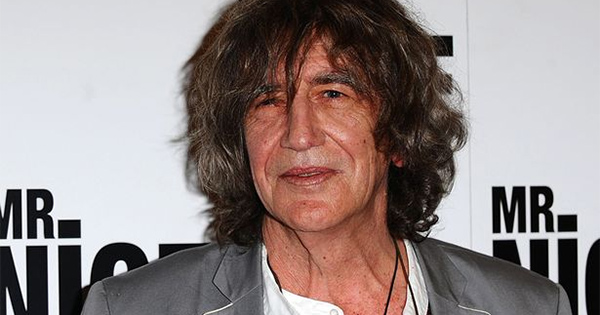
Howard Marks is one of the most colorful and paradoxical figures in the history of cannabis. A graduate of Oxford with degrees in nuclear physics and philosophy, he became one of the biggest international hashish traffickers of the 1970s and 1980s, before reinventing himself as a best-selling author and legalization advocate. He died on April 10, 2016, in Leeds, at the age of 70, from bowel cancer.
Born on August 13, 1945, in the mining village of Kenfig Hill in Wales, Howard Marks grew up in a modest Catholic family. A brilliant student, he attended Balliol College at Oxford in the 1960s. It was there that he discovered cannabis and realized that the plant demonized by the authorities was a source of pleasure and enlightenment, far removed from the image that prohibition had attached to it.
After graduating from Oxford, he rejected the traditional career path. At the request of Hamilton McMillan, a friend who had become an MI6 agent, he began using his connections in cannabis-producing countries (Pakistan, Lebanon, Afghanistan) to export cannabis to the United States and the United Kingdom. What began as a favor turned into a calling.
At the height of his career in the 1980s, Howard Marks controlled nearly 10% of the global hashish trade. He operated under 43 false identities, with 89 phone lines and 25 shell companies scattered across Europe, North America, Asia, and Australia. His most famous alias, Mr. Nice, came from a fake passport issued in the name of a convicted murderer, Donald Nice.
His method: nonviolent, sophisticated, and backed by a network of contacts ranging from Britain’s MI6 to the U.S. CIA, including the Irish IRA and the Mafia. He hid the hashish in the furniture of diplomats moving abroad, in the equipment of fictional rock bands heading out on tour in the United States, and in containers concealed within legitimate cargo shipments.
In 1988, after years on the run across the globe, the U.S. Drug Enforcement Administration (DEA) tracked him down in Spain. He was arrested, extradited to the United States, and sentenced to 25 years in prison at the Terre Haute Federal Penitentiary in Indiana. It was there that he began writing his memoirs. He was released in 1995 after serving seven years, due to good behavior.
In 1996, a year after his release, he published his autobiography, *Mr. Nice*, an international bestseller translated into ten languages and selling over a million copies. The book recounts his adventures with a unique blend of humor, wit, and self-deprecation that has made him an icon of British counterculture. In 2010, the biopic Mr. Nice was adapted for the big screen by Bernard Rose, starring Rhys Ifans in the title role and Chloë Sevigny.
After his release, Marks did not return to drug dealing. He became a public speaker and an activist for cannabis legalization, and even ran in the 1997 British general election with legalization as his sole platform. He collaborated with Shantibaba to create several cannabis strains through Mr Nice Seedbank, including genetics that have influenced thousands of seed banks around the world.
Close to Ben Dronkers and the team Sensi Seeds, he was a regular visitor to the Hash, Marijuana & Hemp Museum in Amsterdam, where a portrait by the artist Goldie is dedicated to him. High Times presented him with a Cannabis Culture Award in 2014.
“I’ve never dealt in hard drugs. Just cannabis. Because I’ve never believed it deserved to be illegal.”