
Ireland considers the decriminalization of drugs and experts are in favor

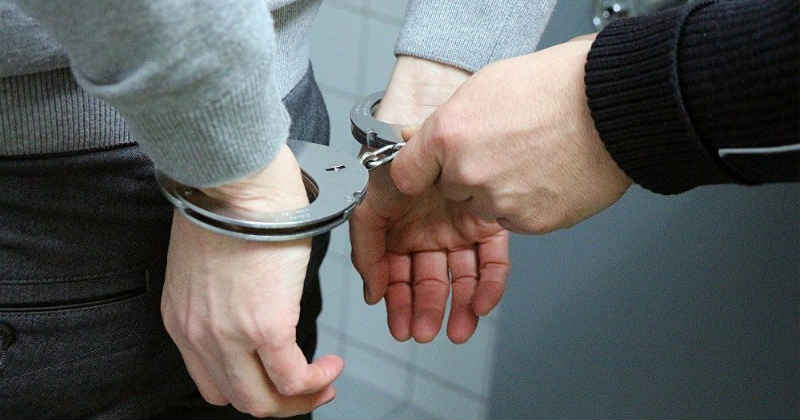
Ireland is currently considering decriminalizing drug possession for personal use. To guide lawmakers' decision-making, experts from the Ana Liffey Drug Project (a support service for people with substance use disorders) and the London School of Economics, have drafted a joint report analyzing the costs and benefits of such a measure. Published on October 8, the report, titled Not Criminals: Underpinning a Health-Led Approach to Drug Use (not criminals: promoting a public health approach to drug use), argues in favor of decriminalization.
A public health perspective rather than a legal one
In July 2017, the Irish Ministry of Health published its new national drug strategy. It is titled «Reducing Risks and Promoting Recovery» and thus clearly adopts a public health perspective. In the introduction, Dr. Leo Varadkar, the Irish Prime Minister, notes: «Treating substance use and addiction issues as public health issues rather than criminal justice issues helps individuals, families, and communities.» A few months earlier (in May), lawmakers had also established a legal framework for the opening of safer consumption rooms.
On the international stage, former UN Secretary-General General Ban Ki-Moon called for this shift in perspective in 2015, on the International Day Against Drug Abuse and Illicit Trafficking: «[We must] consider alternatives to the criminalization and incarceration of drug users and focus the justice system’s efforts on those involved in the supply chain. We must refocus our efforts on public health, prevention, treatment, and care.» Portugal has been one of the pioneers in this field by decriminalizing the use of all drugs in 2001, with conclusive results presented in the report. Since then, this practice has become widely adopted within the international community where 20 countries have already decriminalized possession of drugs in various forms and up to certain quantity limits.
Under the current Irish system, fines ranging from £300 to £1,000 are imposed for cannabis possession, with up to one year of imprisonment for repeat offenders. For other drugs, prison sentences can be up to three years. In practice, this criminalization has a significant impact, as in 2017, there were 12,201 arrests for drug possession for personal use. These cases accounted for 72% of all drug-related arrests.
As part of its new national drug strategy, which is set to run through 2025, the government has convened a working group to determine the appropriateness of decriminalization. The group is expected to release its report soon, sometime in December, and the findings will therefore be decisive for the next seven years. The report Not criminals is intended as a contribution from civil society to this policy discussion and seeks to guide the working group’s decision by providing evidence of the merits of decriminalization.
The report recommends decriminalization
The report highlights a very simple observation: «Criminalizing the mere possession of drugs yields almost no benefits but causes significant harm; it is therefore clear that this is not a good policy.» Criminalization has, in fact, no significant impact on drug use statistics. In other words, it is not a deterrent and is therefore ineffective, and there is no reason for an ineffective policy to continue.
In addition to being ineffective, this policy has unintended consequences: «[Criminalization] is harmful to the individual and to our society. It’s expensive, ineffective, unnecessary, and it promotes marginalization rather than inclusion,» explains Father Peter McVerry in the report. Criminalization negatively impacts the lives and reputations of people who use drugs and limits their access to the labor and housing markets. It seems completely at odds with a health-based approach: «Instead of drawing people who need help toward our services, [criminalization] pushes them away and makes it harder for them to focus on the reasons behind their drug use,» explains Dawn Russell of the Ana Liffey Drug Project. «This isn’t a smart approach; we should be helping people reduce the harm that drugs cause in their lives, not adding to it.».
The report concludes that decriminalization is highly relevant and has proven effective in other countries. With the aim of implementing an effective public health policy, the experts offer pragmatic recommendations, including:
- A threshold high enough to be realistic. It should serve as a guideline rather than a rigid standard; above all, it is the concept of intent that must come into play at the time of the stop.
- Health-focused sanctions that build on existing structures and recognize that not all uses are problematic.
- Training for healthcare professionals, educators, law enforcement, and judicial officials on the objectives and implementation of this new system.

















Medical Cannabis and Driving: New South Wales Ends Automatic Penalties for THC

China's Yongji Health Takes Control of Tasmanian Botanics

Autism and Cannabis: Results from the First Placebo-Controlled Trial of NTI164

Which countries legalized medical cannabis before France?

From the boom in dispensaries to a purely medical approach: Thailand is revising its cannabis policy

South Korea is preparing to begin local production of medical cannabis to meet rising demand

In the United States, cannabis use among high school students has reached an all-time low

Medical cannabis use surges by 64 % in Denmark

Canopy Growth Enters the U.K. Market with Four Canadian Strains

CBD: Full-Spectrum Extracts Under Threat in Greece
-
 Cannabis and driving2 weeks ago
Cannabis and CBD: French Drivers Can Now Lose Their License Even Without a Positive Test Result
-

 Cannabis in France1 day ago
Which countries legalized medical cannabis before France?
-
Cannabis in France3 weeks ago
Cannabis Legalization: The LFI Bill Has a Major Problem—THC
-
Cannabis in the Netherlands2 weeks ago
One year after the launch of the Dutch cannabis experiment, the first trends are emerging
-
Cannabis in France2 weeks ago
French medical cannabis remains stalled at the Ministry of Health
-
Cannabis in Argentina1 week ago
Argentina Opens Its Market to Hemp Flowers Containing 1% of THC
-
Business2 weeks ago
The United Kingdom Is Moving Closer to a Regulated CBD Market
-
Cannabis in France1 week ago
Rima Hassan: When «Drugs» Become a Political Weapon















You must be logged in to post a comment Login