
F.O.G. revolutionizes pest and pathogen control in agriculture with BOOST UV

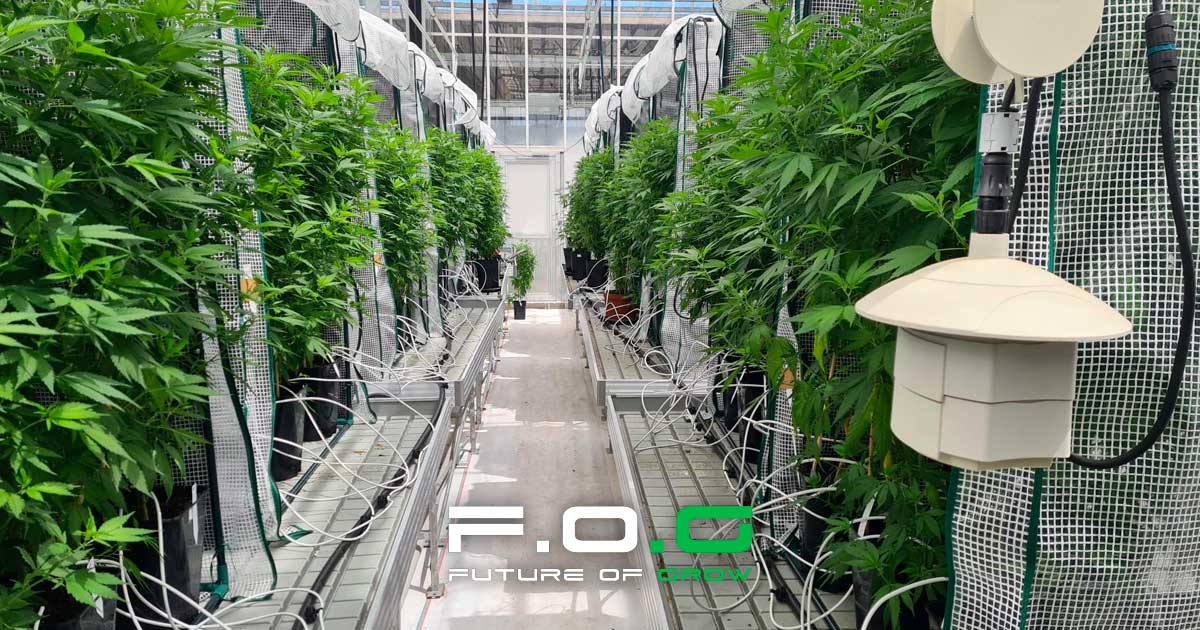
In the ever-changing landscape of agriculture, innovations are constantly reshaping the way we address agricultural challenges. One such groundbreaking initiative comes from the company Future of Grow (FOG), which, in collaboration with the prestigious HEPIA (Geneva School of Landscape Architecture, Engineering, and Architecture), has conducted an in-depth study on the use of UV radiation against pests and pathogens in crops, particularly Fragaria x ananassa ‘Darselect’ strawberries and Cannabis sativa L.
UV Lamps and Their Effectiveness
The study aimed to evaluate the effectiveness of three prototype UV lamps emitting wavelengths of 222 nm, 275 nm, and 310 nm. FOG, a company based in Aigle, Switzerland, provided these lamps for the tests. The objective was clear: to evaluate their impact on controlling pests such as powdery mildew and mites in strawberry and cannabis crops.
The study’s findings revealed interesting insights, laying the groundwork for specific guidelines on energy consumption, suspension height, and operating time for each light fixture in commercial settings.
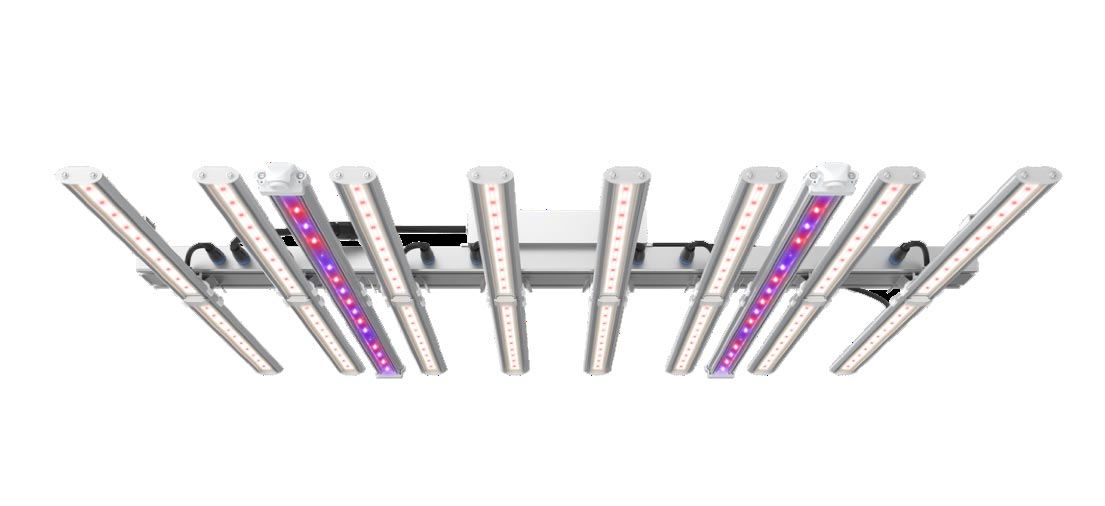
Future of Grow's UVA-UVB-IR Boosts
UV Treatment for Strawberries
In the case of Fragaria x ananassa ‘Darselect’ strawberries, the study showed that a lamp emitting light at a wavelength of 275 nm, at a specific dose, demonstrated exceptional attractiveness. The treated plants showed a significant reduction in average chlorophyll loss throughout their growth cycle compared to untreated plants or those treated with Armicarb®.
According to the study, «the treated plants lost an average of 104.215 mg/m² less chlorophyll than the untreated plants, and 27.011 mg/m² less than those treated with Armicarb® (p = 0.00002) .».
Furthermore, UV exposure had no significant effect on the dry weight of the strawberries or on the fruit’s sugar content.
UV Treatment for Cannabis
In the cannabis trial, UV treatment at a wavelength of 310 nm, administered at a specific dose, resulted in a remarkable rate of 90% of healthy plants free of powdery mildew. This proportion is comparable to the results obtained with Armicarb® treatment.
Furthermore, in cases of mite infestations on the apical parts of cannabis plants, the 310 nm UV treatment resulted in the lowest proportion of mite infestations, with 80% healthy plants. This result is better than that of the Armicarb® treatment, which yielded only 40% of mite-free plants.
The study also examined stem diameter increase and chlorophyll changes in the final experiment on Cannabis plants and found no significant differences between the UV-treated groups and the control groups.
Agronomic Implications and Future Directions
UV radiation has emerged as a multifaceted solution, demonstrating its potential in combating powdery mildew and mites, increasing chlorophyll concentration in strawberry plants, and reducing stress at specific doses. On cannabis plants, the UVA-UVB-IR Boosts from Future of Grow They can also be used to increase the levels of active compounds, terpenes, and resin during flowering, as well as to reduce pathogens and mites.
The study also notes that «further UVB tests will be conducted in 2024 and 2025 as part of a master’s thesis project with the University of Bern in Switzerland» to provide new insights into the broader applications of UV radiation in agriculture.



















CBD is said to promote athletic recovery, without improving performance

294 cannabis clubs in Chile: a booming movement with uneven distribution

Chronic Sciatica: New York Approves First Clinical Trial of a THC-Based Medication

United States: The DEA is accelerating the integration of medical cannabis at the federal level

Florida is nearing one million patients using medical cannabis

Uruguay Revives Its Plan to Allow Tourists to Legally Access Cannabis

In Brazil, researchers are developing an innovative CBD eye drop

Autism: Medical Cannabis Is Linked to Reduced Anxiety

The $28 billion U.S. hemp market remains under threat

Jamaica Eases Small Farmers' Access to the Cannabis Market
-
 Business6 days ago
The legal cannabis market in New York exceeds 4 billion $ in revenue
-

 Cannabis in France2 weeks ago
Which countries legalized medical cannabis before France?
-
Business2 weeks ago
South Korea is preparing to begin local production of medical cannabis to meet rising demand
-
Cannabis in the Netherlands4 weeks ago
One year after the launch of the Dutch cannabis experiment, the first trends are emerging
-
Cannabis in Thailand2 weeks ago
From the boom in dispensaries to a purely medical approach: Thailand is revising its cannabis policy
-
Cannabis in France4 weeks ago
French medical cannabis remains stalled at the Ministry of Health
-
Cannabis in Argentina3 weeks ago
Argentina Opens Its Market to Hemp Flowers Containing 1% of THC
-
Cannabis and driving2 weeks ago
Medical Cannabis and Driving: New South Wales Ends Automatic Penalties for THC
















You must be logged in to post a comment Login