
EU Court of Justice recognizes the right to grow hemp indoors


The Court of Justice of the European Union (CJEU) has issued an important ruling regarding the possibility of growing hemp indoors while remaining eligible for direct agricultural payments under the Common Agricultural Policy (CAP).
This case originates in Romania, where national authorities have banned the cultivation of hemp using indoor hydroponic systems, out of concern that this method could raise the THC level above the national limit of 0.2%.
The case in question
The central issue in this case revolves around a legal dispute between Biohemp Concept SRL, a company seeking to grow hemp, and a Romanian provincial agricultural authority.
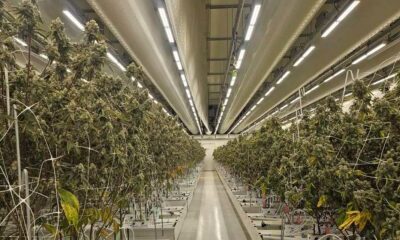
Biohemp has applied for a permit to grow hemp on 0.54 hectares of land, including an indoor facility using a hydroponic system. The provincial authority granted a permit for only 0.50 hectares, excluding the indoor space because it was not considered agricultural land under Romanian law.
Biohemp challenged this decision, arguing that European legislation does not require hemp to be grown exclusively in open fields and that the indoor cultivation using hydroponic systems, which results in a higher cannabidiol (CBD) content, should be authorized.
The provincial authority responded by citing Romanian and European regulations, suggesting that hemp cultivation is generally considered to take place in open fields. The Alba Iulia Court of Appeals referred a question to the CJEU, asking whether EU regulations and the provisions of the treaties preclude national laws from prohibiting the indoor cultivation of hemp using hydroponic systems.
The case therefore centers on the question of whether national restrictions on indoor cultivation are contrary to EU law, particularly with regard to the free movement of goods and agricultural production standards.
Key Aspects of the Decision
- Definition of the Agricultural Zone and Hemp Cultivation: The CJEU ruling clarifies the concept of «agricultural area» as defined in Regulation No. 1307/2013. The Court emphasized that indoor hemp cultivation using hydroponic systems can still be considered «arable land» and an agricultural area eligible for direct payments, even though it is carried out in a closed environment. The definition of arable land includes areas located under greenhouses or other fixed structures, and the ruling rejects the notion that interaction with the ground is a necessary condition for classification as agricultural land.
- Hydroponics as a farming method: The ruling also acknowledges technological advances in the field of agriculture, particularly the use of hydroponic systems. Hydroponics, which does not require soil, offers proven benefits such as reduced water consumption, decreased pesticide use, and lower emissions resulting from transport due to their proximity to urban areas. These characteristics are consistent with the objectives of the CAP, namely increasing agricultural productivity and the rational use of resources. The CJEU ruled that the absence of interaction with the soil does not prevent hydroponic systems from being considered agricultural production.
- THC and CBD Levels in Hemp: The CJEU addressed Romania’s concerns regarding the increase in THC levels in indoor-grown hemp. The Court emphasized that, under EU law, hemp varieties eligible for direct payments must contain THC levels below 0.3%. Biohemp, the party involved in the case, argued that indoor hydroponic cultivation increases CBD levels without increasing the THC content. The Court noted that while national authorities have the right to regulate hemp cultivation to protect public health, any restrictions must be proportionate and applied consistently throughout the country.
- The Romanian Ban and the Principle of Proportionality: The ruling emphasized the importance of proportionality in the implementation of national restrictions. Romania’s blanket ban on indoor hemp cultivation was deemed potentially excessive. The Court suggested that, rather than outright banning hemp cultivation, strict monitoring and testing of samples for THC levels in hemp could constitute a more proportionate response to public health concerns. Furthermore, the CJEU questioned whether the measures taken by Romania were applied uniformly throughout the country, given that certain provinces had authorized indoor cultivation in the past.
The CJEU’s decision sets a precedent for the treatment of non-traditional farming methods, such as hydroponics, under the CAP. Technological advances in agriculture should therefore not be hindered by outdated regulations.
Indoor hemp cultivation using hydroponic systems may be eligible for direct payments, provided that THC content limits are met, and national restrictions must be proportionate and applied consistently.

















CBD is said to promote athletic recovery, without improving performance

294 cannabis clubs in Chile: a booming movement with uneven distribution

Chronic Sciatica: New York Approves First Clinical Trial of a THC-Based Medication

United States: The DEA is accelerating the integration of medical cannabis at the federal level

Florida is nearing one million patients using medical cannabis

Uruguay Revives Its Plan to Allow Tourists to Legally Access Cannabis

In Brazil, researchers are developing an innovative CBD eye drop

Autism: Medical Cannabis Is Linked to Reduced Anxiety

The $28 billion U.S. hemp market remains under threat

Jamaica Eases Small Farmers' Access to the Cannabis Market
-
 Business5 days ago
The legal cannabis market in New York exceeds 4 billion $ in revenue
-
Cannabis and driving4 weeks ago
Cannabis and CBD: French Drivers Can Now Lose Their License Even Without a Positive Test Result
-

 Cannabis in France2 weeks ago
Which countries legalized medical cannabis before France?
-
Business2 weeks ago
South Korea is preparing to begin local production of medical cannabis to meet rising demand
-
Cannabis in the Netherlands4 weeks ago
One year after the launch of the Dutch cannabis experiment, the first trends are emerging
-
Cannabis in Thailand2 weeks ago
From the boom in dispensaries to a purely medical approach: Thailand is revising its cannabis policy
-
Cannabis in France4 weeks ago
French medical cannabis remains stalled at the Ministry of Health
-
Cannabis in Argentina3 weeks ago
Argentina Opens Its Market to Hemp Flowers Containing 1% of THC
















You must be logged in to post a comment Login