
Will hemp save the bees?

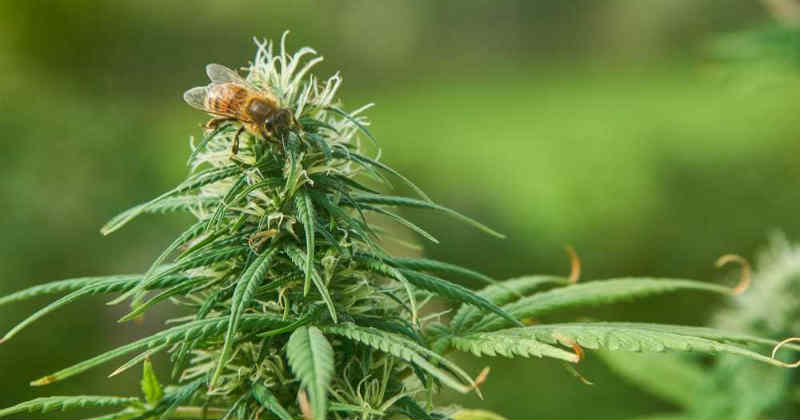
Researchers at the University of Colorado have found that the Hemp could be an effective food source for bees and thus help preserve the populations of these important pollinators. This is a crucial ecological discovery in light of declining bee populations worldwide and the consequences this has for agriculture.
The Disappearance of Bees
Since 1995, global honey production has fallen to one-third of its former level, and the mortality rate of honeybees has risen from 5 to 10% under normal conditions to more than 20% in many European countries. This accelerated decline of both honeybees and wild bees is due to a series of factors, including the increased use of pesticides, intensive agriculture, the accidental introduction of Asian hornets in 2004, and the homogenization of landscapes. The problem is that bees are the most important pollinators. They contribute to 80% of the reproduction of the plant species we consume as food. Their disappearance is a true ecological disaster.
Hemp: A Step Toward a Solution?
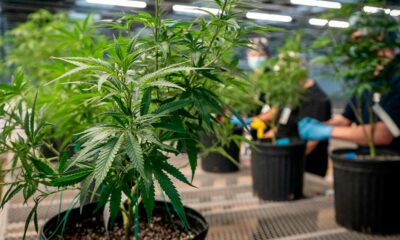
Hemp is already grown in many countries because of its many industrial uses. It has also just been legalized in the United States and its global production is set to skyrocket. However, the hemp plant produces a significant amount of pollen that attracts bees. In the Colorado study, published in the Biomass and Bioenergy, Researchers set up traps in industrial hemp fields to estimate the bee population during the flowering period. They found more than 2,000 bees representing 23 different species. Most (38%) were honeybees, but many wild bees were also present.
Read more: The French beekeeper who made cannabis honey
The researchers concluded that «industrial hemp could play an important role as a sustained food source for bees during the growing season.» By improving their habitat, hemp crops enhance the longevity and ecosystem of bees and may thus prove effective in managing bee populations. The researchers believe that «further studies analyzing the nutritional value of hemp pollen would provide substantial evidence supporting its ecological benefits.».
However, in anticipation of the expansion of intensive hemp cultivation, researchers are warning against the overuse of pesticides (which is fortunate, since hemp doesn’t need them) and calling for smart pest management that does not endanger pollinators and biodiversity.












CBD is said to promote athletic recovery, without improving performance

294 cannabis clubs in Chile: a booming movement with uneven distribution

Chronic Sciatica: New York Approves First Clinical Trial of a THC-Based Medication

United States: The DEA is accelerating the integration of medical cannabis at the federal level

Florida is nearing one million patients using medical cannabis

Uruguay Revives Its Plan to Allow Tourists to Legally Access Cannabis

In Brazil, researchers are developing an innovative CBD eye drop

Autism: Medical Cannabis Is Linked to Reduced Anxiety

The $28 billion U.S. hemp market remains under threat

Jamaica Eases Small Farmers' Access to the Cannabis Market
-
 Business6 days ago
The legal cannabis market in New York exceeds 4 billion $ in revenue
-

 Cannabis in France2 weeks ago
Which countries legalized medical cannabis before France?
-
Business2 weeks ago
South Korea is preparing to begin local production of medical cannabis to meet rising demand
-
Cannabis in the Netherlands4 weeks ago
One year after the launch of the Dutch cannabis experiment, the first trends are emerging
-
Cannabis in Thailand2 weeks ago
From the boom in dispensaries to a purely medical approach: Thailand is revising its cannabis policy
-
Cannabis in France4 weeks ago
French medical cannabis remains stalled at the Ministry of Health
-
Cannabis in Argentina3 weeks ago
Argentina Opens Its Market to Hemp Flowers Containing 1% of THC
-
Cannabis and driving2 weeks ago
Medical Cannabis and Driving: New South Wales Ends Automatic Penalties for THC
















You must be logged in to post a comment Login