
Australia has a long history of treating cannabis as a non-criminal offense, prioritizing harm reduction over criminalizing users. Support for legalization has continued to grow, as has cannabis use in the country.
On February 24, 2016, Australia legalized medical cannabis at the federal level. Prior to that, each state had the authority to legislate on the therapeutic uses of cannabis.
Cannabis remains illegal at the federal level in Australia, although the Australian Capital Territory (ACT) legalized cannabis use for adults in 2020 and South Australia has decriminalized cannabis possession.
Medical
Medical cannabis is legal in Australia.
Where in the world is cannabis legal?The Australian medical cannabis program is administered by the Therapeutic Goods Administration (TGA), but patients can only access it through a licensed healthcare professional.
According to the Commonwealth Department of Health, Nabiximols (a cannabinoid spray marketed under the name Sativex) is the only cannabis-based product considered a registered medicine in the country. No cannabis-based products are subsidized by the Pharmaceutical Benefits Scheme (PBS), and the price is set by the supplier. This also means that the TGA has not verified the safety, quality, or efficacy of these medications.
Patients who wish to access these medications can import them from Canada or Europe, including cannabis flower for vaping, oils, liquids, and oral sprays. Medical cannabis products must be purchased at a pharmacy, but they are often out of stock and must be ordered.
Under Australian law, doctors can apply to the TGA’s «Special Access Scheme» to obtain access to unapproved medications such as cannabis. Doctors who have also been certified as authorized prescribers do not need this approval to gain access. It is unclear exactly to what extent this special certification is necessary or how it speeds up the process, and at least one estimate suggests that 98% of cannabis prescriptions are written by general practitioners who are not pre-authorized to recommend cannabis.
A physician who submits an application to the TGA on behalf of a patient must provide a clinical justification. According to the TGA, the justification must include:
In addition, starting in early 2021, it became legal to purchase over-the-counter CBD oil in Australia.
According to TGA regulations, there are currently «no restrictions on the medical conditions for which a prescriber may apply through the SAS for access to an unapproved medical cannabis product for their patient, provided that the prescriber has appropriate knowledge of the condition being treated and of the medicinal cannabis product they wish to prescribe.».
That said, the TGA notes that it may request supporting evidence for certain new indications.
Conditions for which medical cannabis may be prescribed in Australia include:
There is currently only one cannabis-based product that is a registered medicine in Australia: Nabiximols (marketed under the name Sativex).
There is, however, a wide range of unapproved cannabis-based medicinal products—including oil, tinctures, extracts, and flowers—that are not listed in the Australian Register of Therapeutic Goods (ARTG). Physicians must obtain the patient’s informed consent before they can apply to the TGA for access to an unapproved product.
But "unapproved" or "unregistered" does not mean "illegal.".
Australian law permits the importation of unapproved medications for use by an individual or their immediate family under the personal importation scheme. The law allows for the importation of a three-month supply, subject to certain restrictions.
L’Office of Drug Control has published a list of manufacturers and suppliers of medical cannabis products available in Australia. According to the’Office of Drug Control, these products can only be obtained through the Special Access Scheme, by a licensed healthcare professional, or as part of a clinical trial.
The high cost of medical cannabis is one of the main barriers to access in Australia.
Estimates vary—and depend largely on the type and quantity of cannabis product—but ABC News reported in February 2020 that medical cannabis can easily cost patients $600 a month. The Australian cannabis education platform Honahlee estimated in March 2021 that the average monthly cost of medical cannabis is $384 per patient.
In July, the online medical cannabis marketplace CanView reported that medical cannabis prices had fallen by 11% compared to the previous year and that the number of available products had more than doubled.
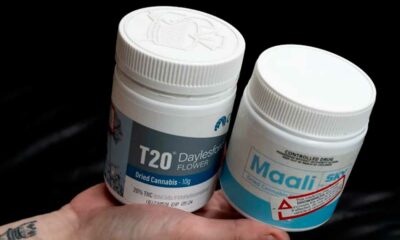

In response to the surge in medical cannabis prescriptions, the Therapeutic Goods Administration (TGA), Australia’s regulatory agency, plans to review the rules governing access to products...


The government of South Australia is launching a new phase of trials to identify hemp varieties capable of thriving with reduced water requirements, according to...
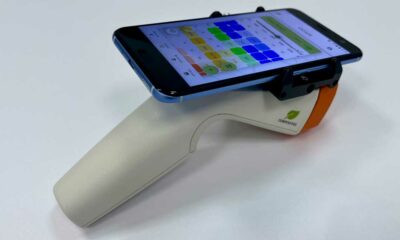

Scientists at the University of Adelaide (Australia), in collaboration with the German technology company Compolytics, have developed a non-destructive scanning technique capable of predicting...


After three years of coordinated Industrial Hemp Variety Trials (IHVT) conducted by AgriFutures Australia, Australian hemp growers now have the first guide...

Australia and Germany are taking opposite paths in the medical cannabis market. While both countries are seeking to control the rapid growth of their...

Two major professional organizations, the Australian Medical Association (AMA) and the Pharmacy Guild of Australia, are calling on the Australian government to take urgent action to combat...

Australian medical cannabis producers are warning of an existential threat to the domestic industry: increased imports of price-smashing products...


Researchers at the University of South Australia claim to have succeeded in significantly increasing the solubility of cannabidiol (CBD) and improving its absorption in the gastrointestinal tract. In...

Outside North America, investors and entrepreneurs in the cannabis sector tend to focus on Germany, Poland and...

The Australian medical cannabis market is experiencing an unprecedented boom since its legalization in 2016, with projections suggesting that sales will quadruple from...

The Australian Senate has halted progress on the Legalising Cannabis Bill 2023, voting 13-24 in favour...


The Australian Parliament is set to vote on a cannabis legalization bill later this month, put forward by the local Green Party. A national framework...

Australian company ECS Botanics has secured an exclusive partnership with Californian breeder Terphogz to grow and sell its cannabis flowers in Germany, Australia...


The movement to legalize cannabis for adult use in Australia has hit a major roadblock. The Legislative Committee of the...


Last week, the Australian Senate's Legal and Constitutional Affairs Legislative Committee held its first hearing on the legalization of adult...


The government of the Australian state of Victoria has said it is open to discussions on decriminalizing the personal use of cannabis, raising the possibility of a...

As regular Newsweed consumers will have noticed, we've been on hiatus for the past 2 weeks. But since there's no news to wait for us, here's a...


The leaders of three states in Australia - Victoria, New South Wales and Western Australia - simultaneously introduced bills on 20...


Australia has become the first country in the world to legalize the use of psychedelics to treat certain mental disorders. Under the new regulations, which are...


A new study by an Australian government agency highlights the fact that the country's aborigines are treated very differently from non-aboriginals when they...




