
Do bangs make for healthier eating?

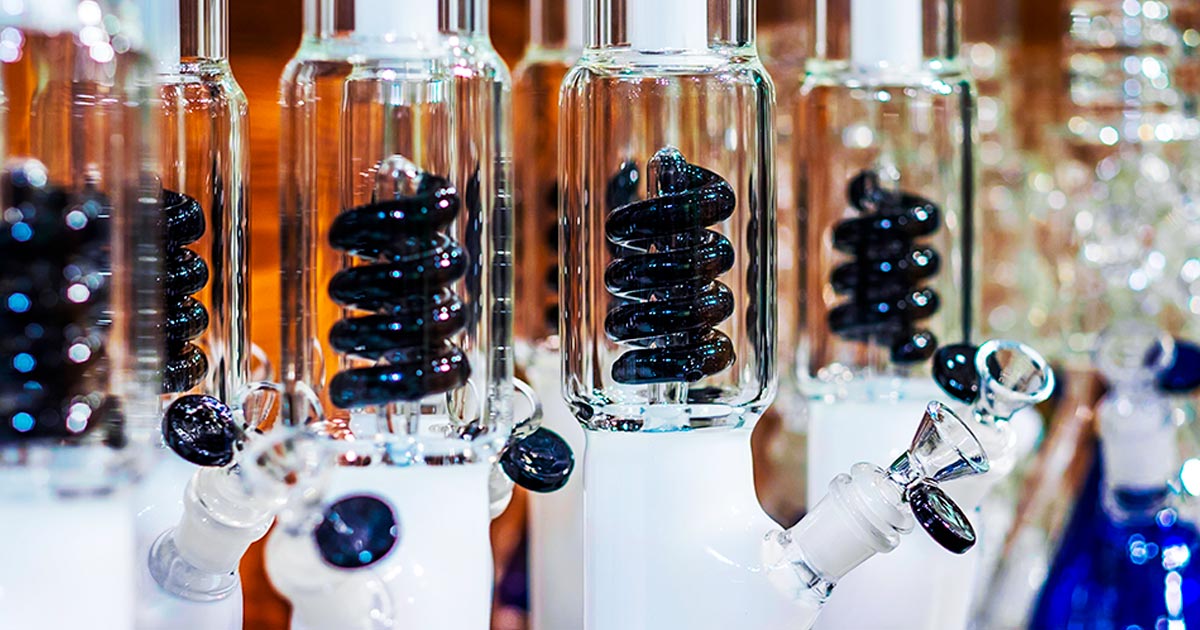
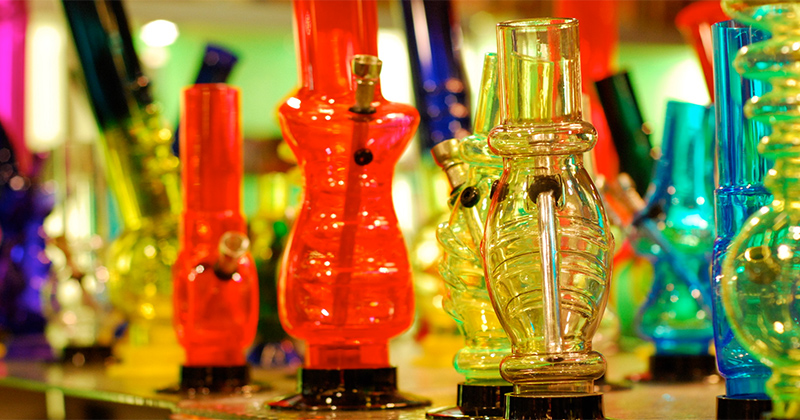
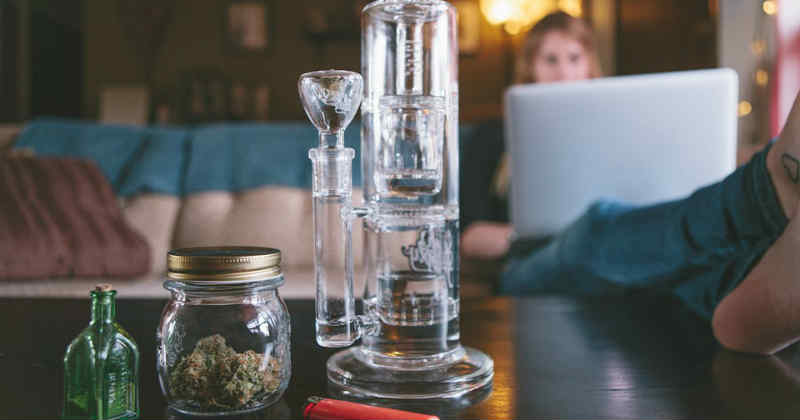
What actually happens inside a bong? What’s the science behind the water pipe? Do the water and bubbles really make inhaling healthier?
As is often the case, it's more complicated than it seems. Burning dried herbs produces a stream of smoke that contains everything you could want—the active ingredients in these herbs – and a lot of things you don't want, like hot smoke, tar, and fine particles.
The term «tar» is actually a catch-all term for the hundreds of unpleasant compounds produced by combustion. Aside from nicotine, cannabis smoke is qualitatively similar to tobacco smoke, containing many polycyclic aromatic hydrocarbons (PAHs) that you don’t want in your lungs.
A bong, also known as a «water pipe,» immediately cools the smoke by passing it through water, making for a smoother smoking experience. The water also filters out ash that might otherwise be inhaled into the mouth or respiratory tract. The’Water acts as a filter in this way, which is why its color eventually turns brown.
However, no one knows to what extent the cannabinoids are filtered out. All we know is that water does not do a good job of dissolving cannabinoids or terpenes, so the loss is negligible.
What’s in the water can also change the nature of the smoke. Dirty water will produce a terrible taste, and there’s a risk of inhaling mold if the water has been sitting in the guebish for too long.
Furthermore, it is not recommended to use alcohol instead of water, as inhaling alcohol vapors is toxic. Furthermore, cannabinoids and terpenes are more likely to dissolve in alcohol than in water, which effectively strips the smoke of its most desirable compounds.
Gas-liquid exchange occurs only between the surface of each bubble and the surrounding liquid. A a diffuser that produces many small bubbles offers a relatively high surface-to-volume ratio, allowing for greater gas-liquid exchange and, presumably, a higher degree of filtration.
Bangs and Science
Very few studies have been conducted on cannabis and bongs. One such study was conducted in California in the mid-1990s by Dale Gieringer, NORML’s state coordinator in California, in collaboration with MAPS, the Multidisciplinary Association for Psychedelic Studies. They wanted to test the effectiveness of bongs, joints, and vaporizers. They discovered that unfiltered joints were actually far more effective than bongs. The bong, they reported, «produced 30% more tar per cannabinoid than the unfiltered joint.» The vaporizer—at the time, one of the first on the market—far outperformed all the others, delivering significantly more cannabinoids per unit of tar.
One of the problems is, written According to Gieringer at the time, the researchers were forced to use low-quality cannabis supplied by the National Institute on Drug Abuse, with THC levels of 2.3 %.
«We were surprised and a little disappointed at the time,» Mr. Gieringer recalled. «But we learned that the spraying seemed to work well, even with what was, at the time, a truly rudimentary device.».
Also in the mid-1990s, pharmacologist Nicholas V. Cozzi of the University of Wisconsin reviewed Existing studies on water pipes, most of which date from the 1960s and 1970s. He found that these devices «can be effective at removing components of cannabis smoke that are known toxic substances, while allowing THC to pass through relatively intact.».
The conflicting results were confusing, to say the least, and underscored the need for further research. However, the researchers focused their attention more on studies of vaporizers, which are considered a healthier way to consume cannabis.
In the meantime, Gieringer had some advice for those seeking a healthier way to use cannabis: «The easiest way for most smokers to avoid the harmful toxins in smoke,» he writes, «might simply be to smoke stronger cannabis.» But in smaller quantities.




















France’s Drug Policy Chief Defends Cannabis Prohibition... and Runs Into the Facts

Cannabis and the Adolescent Brain: French Scientists Make a Key Discovery

EFSA Gives Initial Approval for Synthetic CBD; Natural Extracts Still Pending

Federal Cannabis Reform Once Again on Hold in the United States

Contest: Win a trip to Quebec to experience the hemp harvest firsthand

Bedrocan on Hold Amid Uncertainty Over Medical Cannabis

Newsweed Launches Its Own AI
A new tax of 0.5% could disrupt the hemp industry in Canada

Medical Cannabis and Driving: New South Wales Ends Automatic Penalties for THC

China's Yongji Health Takes Control of Tasmanian Botanics
-
 Cannabis and driving3 weeks ago
Cannabis and CBD: French Drivers Can Now Lose Their License Even Without a Positive Test Result
-

 Cannabis in France1 week ago
Which countries legalized medical cannabis before France?
-
Cannabis in France4 weeks ago
Cannabis Legalization: The LFI Bill Has a Major Problem—THC
-
Cannabis in the Netherlands3 weeks ago
One year after the launch of the Dutch cannabis experiment, the first trends are emerging
-
Business1 week ago
South Korea is preparing to begin local production of medical cannabis to meet rising demand
-
Cannabis in Thailand1 week ago
From the boom in dispensaries to a purely medical approach: Thailand is revising its cannabis policy
-
Cannabis in Argentina2 weeks ago
Argentina Opens Its Market to Hemp Flowers Containing 1% of THC
-
Cannabis in France3 weeks ago
French medical cannabis remains stalled at the Ministry of Health














You must be logged in to post a comment Login