
Spain: OECCC denounces opaque licensing process for cannabis cultivation

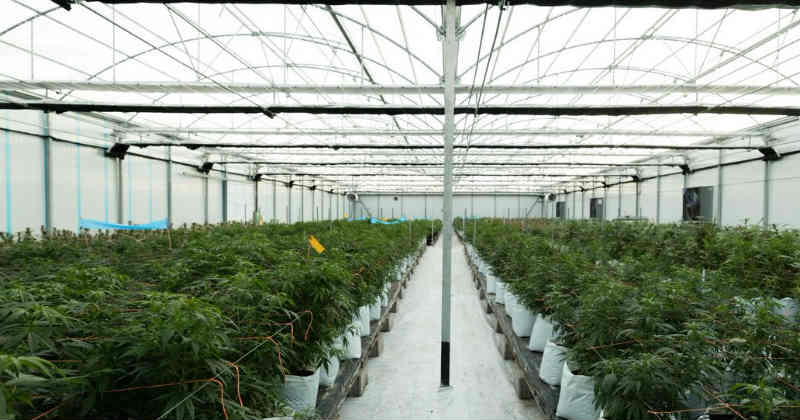
During 2018, while growing interest in cannabis Spanish parliamentarians around the world have addressed questions about the current production of cannabis on Spanish territory to the relevant authorities. The Observatoire Européen de Culture et de Consommation du Cannabis, a non-profit organization working to reform cannabis laws, has just published a document analyzing these responses.
Ayer, desde Monsanto Cartagena, presentamos un informe que denuncia la falta de transparencia de #LicenciasCannabis at #España 5 documentos oficiales, 5 versiones. No se ponen de acuerdo ni en número de licencias. Descarga informe y documentos en https://t.co/mMJg0oCHiv
- Observatorio Europeo Cultivo y Consumo Cannabis (@ObsCannabis) February 13, 2019
The questions were addressed to the Spanish Agency for Medicines and Health Products (AEMPS), a body which reports to the Ministry of Health and has the authority to grant cultivation licenses for cannabis. In reviewing the AEMPS responses, the OECCC found that the Spanish government has been granting cultivation licenses for cannabis for some time now, but without any formal administrative procedure and in total opacity.
The absence of a national procedure
The production of medical cannabis is authorized in Spain, to a lesser extent, for research and export purposes only. The laws governing this production refer to the provisions of international treaties on narcotics, standards that predate the last Spanish constitution and are considered by many countries to be outdated. The Observatory points to the absence of national legislation on the subject and, by extension, the lack of an administrative procedure to regulate the allocation of licenses in a transparent manner.
Since 2011, 179 applications have been submitted, and probably no more than 12 have been granted. To account for this high number of rejections, AEMPS explains that the applications did not comply with the standards in force and the criteria they establish, namely: the presence of an authorized manufacturer to whom to deliver the crop and proof of the seeds' legal origin. However, after investigation, the OECCC points out that certain seed varieties grown in Spain do not appear in the official registers. More generally, the Observatory notes an extremely restrictive system with extremely vague criteria.
Lack of transparency
Comparing the various responses from AEMPS, the OECCC found inconsistencies and omissions. In a response dated December 2017, the agency mentions 6 licenses granted to 5 companies, on January 15, 2018 it speaks of only one license, in February of 12 and in December of 8 granted to 7 companies. Nor does this information match the information published on the agency's website on December 18. The latter mentions companies not mentioned in the replies, such as Cafina and Oils4Cure Sl, and does not mention other companies mentioned in the replies, such as Parque Etnográfico Pirámides de Güimar S.A.U and DJT Plants.
So it's impossible to know exactly which companies have production licenses and how many there are. Especially as some licenses have changed hands, such as the one awarded to Alcaliber, now held by Linneo Health, a company owned by GHO, a British fund operating from the tax haven of the Cayman Islands. This license is partly owned by opioid magnate and multi-millionaire Juan Abello. now reconverted to cannabis. The Observatory denounces the creation, unbeknownst to public opinion, of an oligopoly in cannabis cultivation between major pharmaceutical companies. In fact, it launched its report from Monsanto's facilities in Cartagena, also suspected of hosting cannabis crops.
As a government body, AEMPS is bound by Law 19/2013 of December 9 on transparency of procedures, access to public information and good governance, to provide truthful information in a totally transparent way. It also has a duty to establish clear criteria and procedure to guarantee equal opportunities and legal certainty for all companies wishing to embark on such a project. In conclusion to its analysis, which it has sent to parliamentarians and lobby groups, the OECCC recommends the creation of a government agency specifically dedicated to cannabis and the processing of such applications.















CBD: Full-Spectrum Extracts Under Threat in Greece

Medical Cannabis and Back Pain: Opioid Use Has Dropped by 90 % in 10 Years

Cannabis: Wisconsin Could Finally Legalize It in 2027

Argentina Opens Its Market to Hemp Flowers Containing 1% of THC

The French Socialist Party still doesn't know how to approach the legalization of cannabis

Science in the City International: Paris at the Heart of Transatlantic Scientific and Medical Dialogue

Christine Fréchette is alienating Quebec’s cannabis industry

Rima Hassan: When «Drugs» Become a Political Weapon

From Marathons to Ultratrails: How Extreme Running Affects the Endocannabinoid System

Four days of THC may make breast cancer less aggressive, according to a new study
-
 Cannabis and driving2 weeks ago
Cannabis and CBD: French Drivers Can Now Lose Their License Even Without a Positive Test Result
-
Cannabis in France2 weeks ago
Cannabis Legalization: The LFI Bill Has a Major Problem—THC
-

 Cannabis in the Netherlands1 week ago
One year after the launch of the Dutch cannabis experiment, the first trends are emerging
-
Cannabis in France1 week ago
French medical cannabis remains stalled at the Ministry of Health
-
Cannabis in Argentina4 days ago
Argentina Opens Its Market to Hemp Flowers Containing 1% of THC
-
Business1 week ago
The United Kingdom Is Moving Closer to a Regulated CBD Market
-
Cannabis in Europe3 weeks ago
Andorra Paves the Way for Medical Cannabis Cultivation
-
Cannabis in France6 days ago
Rima Hassan: When «Drugs» Become a Political Weapon













You must be logged in to post a comment Login