
Cannabinoid-delivering «nano-drones» to fight lung cancer

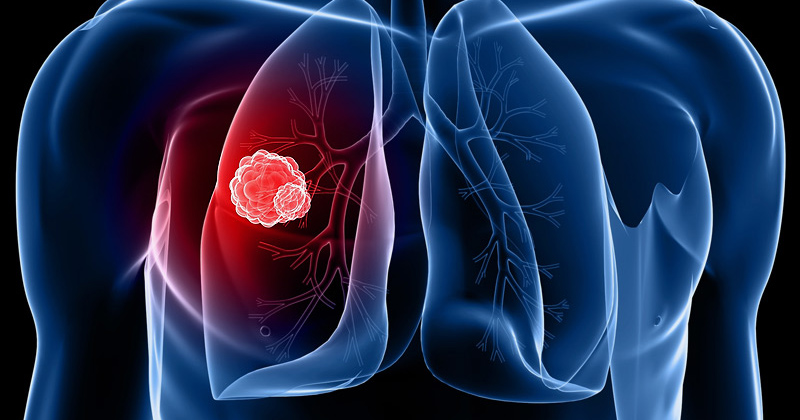
It sounds like science fiction, but this is exactly what the future of medicine might look like. A team of researchers in Boston suggested the use of «nano-drones»—smart nanoparticles—to improve the treatment of lung cancer.
Nanotechnology aims to create and use systems at the molecular or even atomic scale. Some nanotechnologies exist in nature, such as the molecular bonds in silk that inspired Kevlar and give it its strength. Others are created artificially, such as the coating used on airplanes to reduce drag.
Earlier this year, tests conducted by Durham University (England), and published in the journal Nature, have shown high success rates using «motorized molecules» to attack prostate cancer cells, which are killed within 1 to 3 minutes after being pierced by the nanodrones.
A team of researchers in Boston has published a report proposing that similar nanodrones be used to target lung cancer cells. These nanomachines could carry payloads of cannabinoids and radiosensitizers (substances that reduce cancer cells' resistance to radiation therapy), and deliver them directly to the target cells.
«There are biocompatible radiosensitizers with relatively low toxicity,» the report states. «They can easily interact with photons via the photoelectric effect and emit electrons like micrometer-sized projectiles, thereby substantially enhancing the effects of radiation therapy on cancer cells.».
This would make it possible to treat cancers with lower doses of radiation, while maintaining their effectiveness and reducing radiation-induced collateral damage to tissues and related side effects.
As for cannabinoids, they are reportedly used for their therapeutic effects, without necessarily producing psychoactive effects. The report specifically cites the palliative effects of cannabinoids in cancer patients, particularly in alleviating nausea, vomiting, and pain, and adds that in vitro and in vivo studies have shown that the cannabinoids may inhibit the growth of cancer cells.









A new tax of 0.5% could disrupt the hemp industry in Canada

Medical Cannabis and Driving: New South Wales Ends Automatic Penalties for THC

China's Yongji Health Takes Control of Tasmanian Botanics

Autism and Cannabis: Results from the First Placebo-Controlled Trial of NTI164

Which countries legalized medical cannabis before France?

From the boom in dispensaries to a purely medical approach: Thailand is revising its cannabis policy

South Korea is preparing to begin local production of medical cannabis to meet rising demand

In the United States, cannabis use among high school students has reached an all-time low

Medical cannabis use surges by 64 % in Denmark

Canopy Growth Enters the U.K. Market with Four Canadian Strains
-
 Cannabis and driving2 weeks ago
Cannabis and CBD: French Drivers Can Now Lose Their License Even Without a Positive Test Result
-

 Cannabis in France2 days ago
Which countries legalized medical cannabis before France?
-
Cannabis in France3 weeks ago
Cannabis Legalization: The LFI Bill Has a Major Problem—THC
-
Cannabis in the Netherlands2 weeks ago
One year after the launch of the Dutch cannabis experiment, the first trends are emerging
-
Cannabis in France2 weeks ago
French medical cannabis remains stalled at the Ministry of Health
-
Cannabis in Argentina1 week ago
Argentina Opens Its Market to Hemp Flowers Containing 1% of THC
-
Business2 days ago
South Korea is preparing to begin local production of medical cannabis to meet rising demand
-
Business2 weeks ago
The United Kingdom Is Moving Closer to a Regulated CBD Market















You must be logged in to post a comment Login