
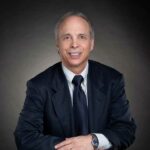
Ethan Russo isn't a cannabis activist. He's a board-certified neurologist, a rigorous psychopharmacologist, and one of the scientists who has done the most to transform the way medicine understands the cannabis plant and its interactions with the human body. His career has spanned the neurological clinic in Missoula, Montana, the clinical trials of GW Pharmaceuticals, and the theories behind
modern medical cannabis.
Ethan Russo graduated in psychology from the University of Pennsylvania (1973) and in medicine from the University of Massachusetts (1978). He completed his training in pediatrics and then neurology at the University of Washington, and practiced as a clinical neurologist in Missoula, Montana, for some twenty years, while holding faculty positions in pharmaceutical sciences at the University of Montana and the University of Washington School of Medicine.
It was in clinical practice that his interest in cannabis was born: faced with patients suffering from refractory migraines, chronic pain and treatment-resistant epilepsy, Russo began to explore the historical literature on the medical uses of cannabis, a plant used as an analgesic for at least 4,000 years before being banned from modern pharmacopoeias for political rather than scientific reasons.
In 2011, Russo publishes British Journal of Pharmacology a seminal article entitled « Taming THC: Potential Cannabis Synergy and Phytocannabinoid-Terpenoid Entourage Effects »(Mastering THC: potential cannabis synergies and the entourage effects of phytocannabinoids and terpenoids). In it, he develops and formalizes the concept of’entourage effect Cannabinoids: the idea that the cannabinoids, terpenes and flavonoids in cannabis act synergistically, producing therapeutic effects superior to those of each individual molecule.
This publication became one of the most cited in cannabinoid literature. It established the scientific justification for full-spectrum extracts in the face of purified molecules, and directly influenced the formulation decisions of numerous pharmaceutical companies, including GW Pharmaceuticals with the Sativex (ratio 1:1 THC:CBD, a formulation inspired in part by the work of Russo and Geoffrey Guy).
Today, Russo is considered the world's leading authority on the entourage effect. His thesis is consistent: with pure cannabinoids, the dose-response curve is biphasic - too low or too high a dose reduces efficacy. With a complete extract, the curve is linear and more predictable.
He explains in an interview that «the entourage effect was first described around endocannabinoids. Researchers observed that inactive chemical materials placed with components such as CBD and THC significantly enhanced anti-inflammatory effects. And that's where the entourage effect comes in: the overall effect is more powerful than the individual components. As a researcher, this really appealed to me; it was a concept I'd always felt was present in cannabis. Since then, I've done a lot of work trying to establish some of these relationships.»
And strongly favors synergistic approaches over isolated extracts, for one simple reason: «With pure cannabinoids, there can be a biphasic dose-response curve. This means that a low dose doesn't necessarily treat pain, a medium dose does, but at a higher dose, you lose the benefits. When you have an extract, you get a dose-response that is a constant upward slope; in other words, you get benefits on pain at any dose and you don't get that drop at lower and lower doses.»
From 2003 to 2014, Russo was Senior Medical Advisor and Medical Investigator for GW Pharmaceuticals. He oversaw several phase I to III clinical trials of Sativex for opioid-resistant cancer pain, and participated in clinical studies of the’Epidiolex for refractory pediatric epilepsy. His work directly contributes to the regulatory approval of the only two cannabis-derived medicines in the world.
Another area Ethan Russo has been working on is using cannabis to reduce the damage caused by the American opiate crisis.
He notes that medical cannabis has been used since the early 19th century in the UK, noting that cannabis was used to reduce’intensity of withdrawal symptoms morphine and avoid the gastrointestinal distress that can accompany opiate consumption. But above all, he bases his thinking on the action of cannabis on the body compared to opiates.
«Opioids kill 80 Americans a day. Cannabis has never killed anyone. The reason? The way cannabinoid receptors are deployed in the brain. Opioid overdoses regularly cause death by overloading opioid receptors in the brain's cardiorespiratory centers, resulting in «respiratory depression» that causes users to simply stop breathing and die. While the brain is rich in cannabinoid receptors, there are almost no cannabinoid receptors in the cardiorespiratory centers of the brain», and thus cardiorespiratory arrest for cannabis users.
Russo is also the author of a therapeutic hypothesis that is attracting growing interest: clinical endocannabinoid deficiency (Clinical Endocannabinoid Deficiency). He proposes that certain chronic pathologies (migraine, fibromyalgia, irritable bowel syndrome) could result from insufficient functioning of the endocannabinoid system, and that medical cannabis could compensate for this deficit in a similar way to a hormonal supplement.
In 2014, Russo co-founded PHYTECS, a biotech company dedicated to research into the human endocannabinoid system. In 2020, he founded CReDO Science with Nishi Whiteley, focused on the development of disruptive technologies affecting the endocannabinoid system. He also serves as Chief Medical Officer at Andira Pharmaceuticals and Senior Medical Advisor at Canurta.
Russo is past president of the International Cannabinoid Research Society (ICRS) and past president of the International Association for Cannabinoid Medicines (IACM). He has published over 70 articles in peer-reviewed journals, written seven books on cannabis and medicinal plants, and trained healthcare professionals in over 30 countries.
He was photographed with Raphael Mechoulam, the father of cannabinoid research, who isolated CBD in 1963 and THC in 1964, an image that symbolizes the continuity of a cannabis science built patiently, decade after decade, against stigma and prohibition.

Ethan Russo and Raphael Mechoulam
In an episode of the podcast Cannabis Enigma, Ethan Russo declared that «the best is yet to come» when it comes to medical cannabis.
«For the most part, around the world, we're still dealing with cannabis that is primarily rich in THC and myrcene, which is going to be very sedative, producing what we colloquially call, the effect couch-lock, It's not good for the person who might need to work or study, and stay functional, especially with pain. »So that may be fine for the person trying to get to sleep, but it's not at all good for the person who might need to work or study, and remain functional, especially with chronic pain.«
As our understanding of the plant's compounds and the effects they provide deepens, Dr Russo suggests that we're only just scratching the surface of cannabis' therapeutic potential.
«We'd really benefit from having better profiles that have less myrcene, more balance between THC and CBD, which is going to decrease the side-effect profile and also have a beneficial terpenoid profile that, again, can reduce associated adverse events and potentially help with other parameters, whether it's inflammation or mood,« he explains. »We really haven't seen the capabilities of cannabis properly exploited at this stage".
Dr Russo also explains how medical cannabis users continue to benefit from the plant's therapeutic properties over the long term, even as their tolerance increases.
«The beauty of cannabis is that, even if you get used to the psychoactive effects, the benefits on whatever you're treating remain. In other words, if we have a patient with chronic pain and they benefit from cannabis use, as long as that condition is stable - it doesn't get worse - we don't see an increase in dose over time and, in fact, there are many people who have taken cannabis therapeutically for decades and are using the same dose,» he adds.


In one of the first human trials of CBG, the cannabinoid showed promise in reducing anxiety and improving memory, without side effects...


The entourage effect is often summed up by the interaction of different cannabinoids. But this is to overlook the fact that the Cannabis plant contains other active compounds, all of which...

It is both the «father» of all cannabinoids, and a virtual unknown. Cannabigerol (CBG) is the subject of a first-ever study...

It now accounts for up to 10 % of edible sales in some US states. CBN - cannabinol for those in the know - is increasingly...
For the fifth year running, the International Symposium on Pharmacological Advances and the Therapeutic Use of Cannabinoids was held. Researchers gathered in the...
The Union Francophone pour les Cannabinoïdes en Médecine is organizing the 5th (and only) French international conference on therapeutic cannabis in Strasbourg on October 21. The event is free and open to...




