
Bicycle Day: where do we stand 80 years after the first LSD trip?

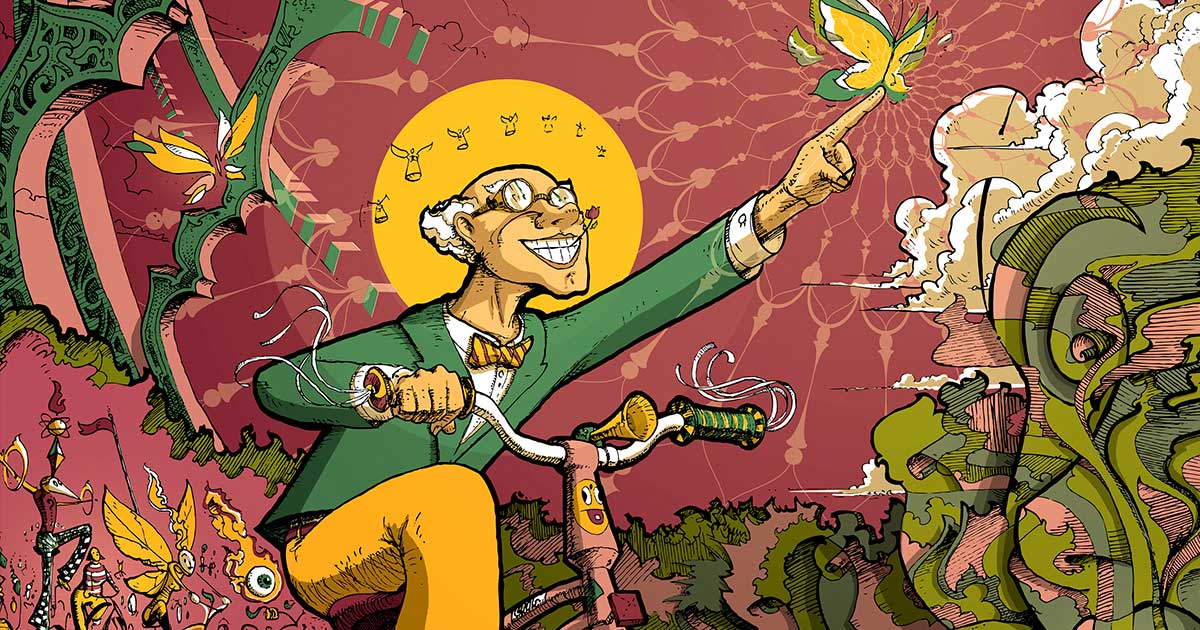
80 years ago in Switzerland, the first voluntary LSD trip took place. On April 19, 1943, chemist Albert Hofmann absorbed 250 micrograms of diethyllysergamide and went for a bike ride when the effects began to be felt. Thus was born Bicycle Day, a celebration of the first «voluntary» LSD trip. Voluntary, because Albert Hofmann had already experimented with LSD, unbeknownst to him.
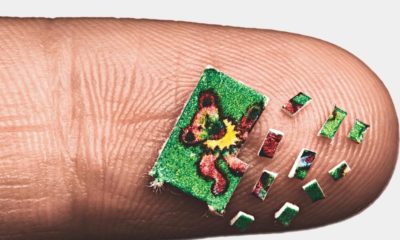
In 1938, Hofmann synthesized LSD from rye ergot for use as an active pharmaceutical ingredient. After putting the compound aside, Hofmann decided to return to it in 1943. After accidentally absorbing a small amount of LSD left on his finger, he felt the first effects. Hofmann returned of his own accord 3 days later. at 4:20 p.m. - You can't make it up - and from then on, he called LSD «sacred».
Hofmann's condition was rapidly affected as he struggled with feelings of anxiety, believing in turn that the neighbor was a malevolent witch, that he was going mad and that the LSD had poisoned him. When one of his doctor friends arrives, he detects no physical abnormalities, apart from a pair of incredibly dilated pupils.
Hofmann is reassured, and his terror soon gives way to a feeling of luck and pleasure, as he would later write:
«... Little by little, I began to appreciate the unprecedented colors and play of shapes that persisted behind my closed eyes. Fantastic, kaleidoscopic images flooded over me, alternating, variegating, opening and then closing in circles and spirals, exploding in colorful fountains, rearranging and hybridizing in a constant flow. It was particularly remarkable that every acoustic perception, like the sound of a door handle or a passing car, was transformed into optical perceptions. Each sound generated a changing image, with its own shape and color.
Hofmann realized that he had made an important discovery: a psychoactive substance of extraordinary potency, capable of inducing significant changes in consciousness at incredibly low doses. Hofmann saw LSD as a powerful therapeutic and psychiatric tool.
Research and prohibition
Since 1943, LSD has forged a rich history. Fuelling the counter-cultural revolution of the 1960s and enlivening the minds of great writers, poets, musicians and artists, LSD has been a key ingredient in the development of the world's most popular drug. LSD has been the subject of research for a number of different uses.
One of the great researchers was Stanislav Grof, who studied LSD in its therapeutic use on various mental disorders and for drug addiction. This research has shown promising results and limited side effects.
However, the compound also has its dark side. It was used as part of the CIA's secret MK Ultra program (1953-1973). This program studied techniques such as hypnosis and used psychoactive substances for mind control and psychological torture tactics to combat the Soviet bloc during the Cold War.
In one experiment, Operation Midnight Climax, the CIA employed prostitutes to lure men, after using LSD and observing the men's behavior. Acid Test pioneer Ken Kesey, the famous writer and advocate of psychedelics, is also said to have volunteered for the MK Ultra program.
As the Grateful Dead continued to play psychedelic concerts and more and more young people began to experiment with psychedelic drugs, the Grateful Dead became a major force in the world of psychedelic music, Nixon declared the «war on drugs» on a worldwide scale in 1971. Nixon called drug use 'America's public enemy number one», specifically targeting racial minorities, which led to the inclusion of psychedelics and cannabis in the highest category of the United Nations Convention on Psychotropic Substances, alongside so-called hard drugs such as heroin and cocaine.
Since this listing, the last 50 years have been marked by major scientific censorship. Scientists and researchers have been unable to study the compound, as well as other psychedelics, for their potential therapeutic uses, despite earlier research showing them to be promising.
In recent years, a handful of organizations and researchers have returned to the subject of psychedelics, thanks to the various decriminalizations of psychedelics around the world and the authorization of their medical use. for specific pathologies.
Although the cultural impact of psychedelics is readily apparent, the spotlight is now on the revolutionary potential of LSD and other psychedelics to help the millions of people around the world living with poor mental health and addiction. From macrodosing to microdosing, from LSD to assisted psychotherapy, a new wave of scientific research is being born.









Cannabis Oil and Endometriosis: A Promising Study for Pain Relief

CBD is said to promote athletic recovery, without improving performance

294 cannabis clubs in Chile: a booming movement with uneven distribution

Chronic Sciatica: New York Approves First Clinical Trial of a THC-Based Medication

United States: The DEA is accelerating the integration of medical cannabis at the federal level

Florida is nearing one million patients using medical cannabis

Uruguay Revives Its Plan to Allow Tourists to Legally Access Cannabis

In Brazil, researchers are developing an innovative CBD eye drop

Autism: Medical Cannabis Is Linked to Reduced Anxiety

The $28 billion U.S. hemp market remains under threat
-
 Business7 days ago
The legal cannabis market in New York exceeds 4 billion $ in revenue
-

 Cannabis in France2 weeks ago
Which countries legalized medical cannabis before France?
-
Business2 weeks ago
South Korea is preparing to begin local production of medical cannabis to meet rising demand
-
Cannabis in the Netherlands4 weeks ago
One year after the launch of the Dutch cannabis experiment, the first trends are emerging
-
Cannabis in Thailand2 weeks ago
From the boom in dispensaries to a purely medical approach: Thailand is revising its cannabis policy
-
Cannabis in France4 weeks ago
French medical cannabis remains stalled at the Ministry of Health
-
Cannabis in Argentina3 weeks ago
Argentina Opens Its Market to Hemp Flowers Containing 1% of THC
-
Cannabis and driving2 weeks ago
Medical Cannabis and Driving: New South Wales Ends Automatic Penalties for THC













You must be logged in to post a comment Login